When it comes to weeknight comfort food, few dishes can rival the sheer indulgence of a perfectly executed Creamy Pesto Pasta. This recipe transforms simple pantry staples into a restaurant-quality meal in under 20 minutes. The star of the show is a thick, vibrant, light-green creamy pesto sauce that clings beautifully to every single noodle.
If you have ever struggled with pesto sauces that separate or turn excessively oily, this method will change your culinary life. By introducing a rich dairy base and utilizing starchy pasta water, we create an unbreakable emulsion. The result is a glossy texture that feels incredibly luxurious on the palate.
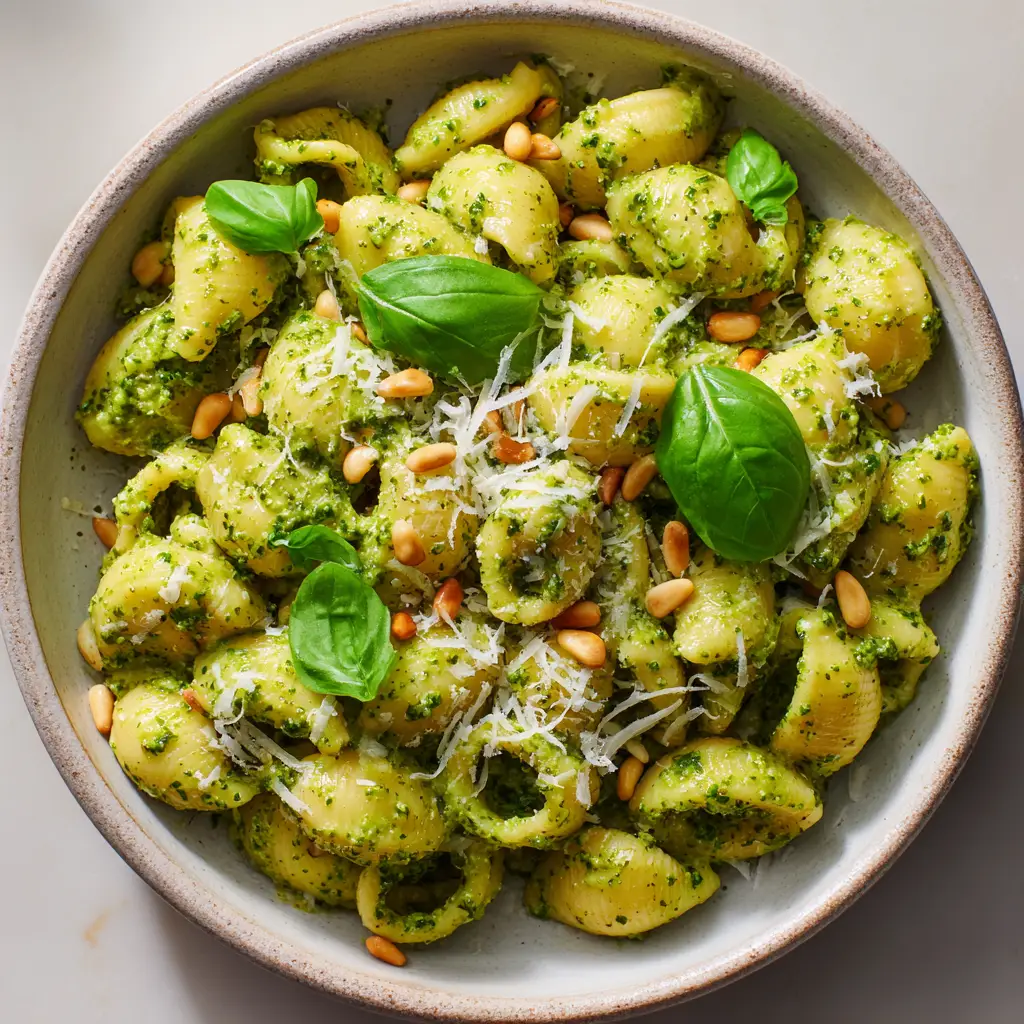
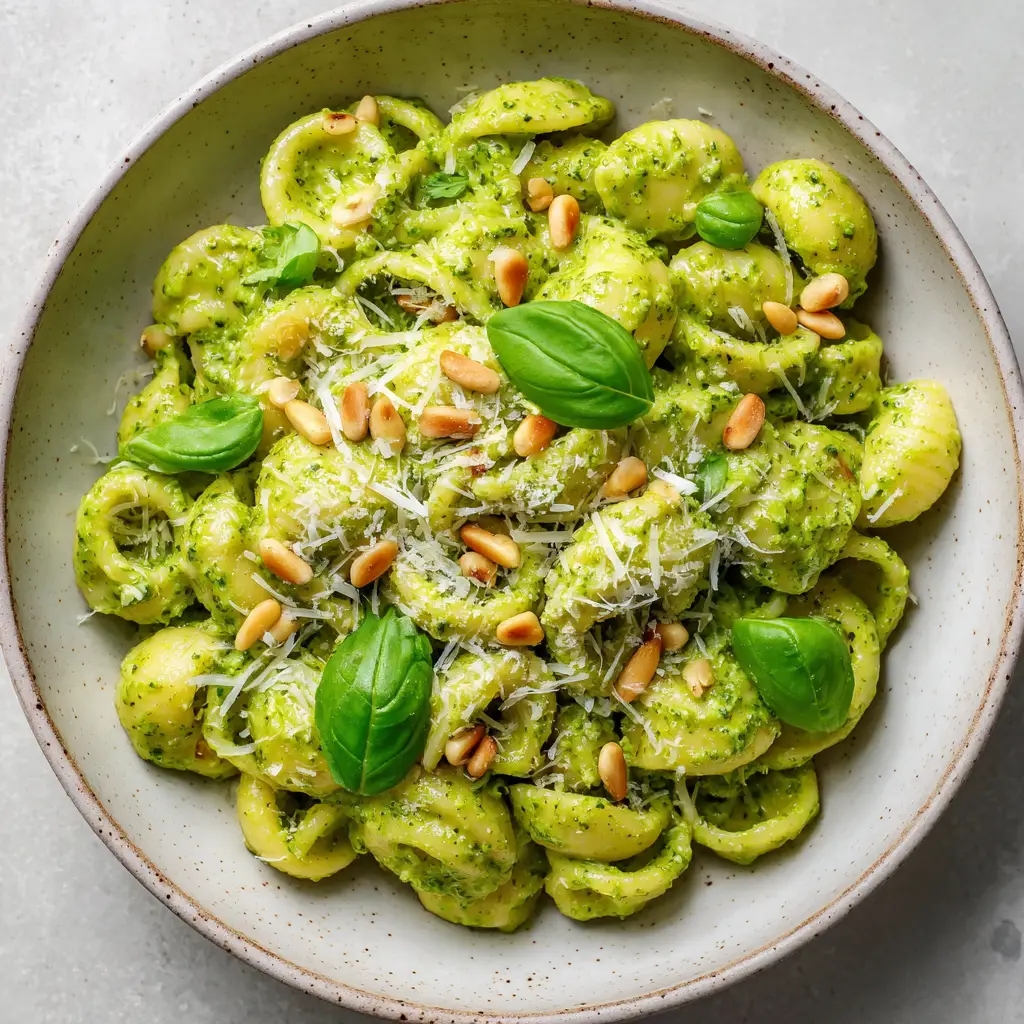
Served in a shallow, rustic ceramic bowl, this dish is a feast for the eyes before you even take your first bite. Prepare to experience perfectly al dente pasta generously topped with freshly grated parmesan cheese flakes, scattered whole fresh green basil leaves, and a delicate sprinkle of lightly toasted golden pine nuts.
Why This Vibrant Green Basil Pasta Will Transform Your Dinner Routine
- Unmatched Glossy Texture: The combination of heavy cream and starchy pasta water guarantees a thick, velvety sauce that completely coats your cooked short pasta.
- Sensory Perfection: The visual contrast of vibrant green sauce against off-white ceramic, combined with the earthy aroma of toasted pine nuts, creates a multi-sensory dining experience.
- Speed and Simplicity: Despite its gourmet appearance, this Creamy Pesto Pasta comes together in the time it takes to boil water and cook the noodles.
- No More Broken Sauces: Professional culinary techniques are built into the steps to ensure your pesto never separates or pools with oil.
Essential Building Blocks for a Flawless Creamy Pesto Pasta
Cooked Short Pasta: You will need 16 oz (450g) of high-quality dried short pasta, such as rigatoni, penne, or fusilli. The ridges and hollow centers of short pasta are scientifically designed to trap and hold a thick creamy light-green pesto sauce.
Heavy Cream: Grab 1 cup (240ml) of heavy cream (double cream) to serve as the stabilizing foundation of our sauce. Its high fat content prevents the basil from oxidizing too quickly while providing that irresistible glossy finish.
High-Quality Basil Pesto: Use 3/4 cup (180ml) of premium basil pesto, either homemade or store-bought from the refrigerated section. This provides the dominant flavor profile and the signature vibrant green hue.
Parmesan Cheese Flakes: You will want 1/2 cup (50g) of freshly grated parmesan cheese flakes. Shaving a block of aged Parmigiano-Reggiano with a vegetable peeler creates large, beautiful flakes that melt gently into the warm pasta.
Golden Pine Nuts: Measure out 1/4 cup (35g) of raw pine nuts to add an essential textural crunch. Lightly toasting them unlocks an earthy, buttery aroma that elevates the entire Creamy Pesto Pasta experience.
Whole Fresh Green Basil Leaves: Reserve about 1/2 cup (15g) of scattered whole fresh green basil leaves for the final garnish. This raw, aromatic herb provides a necessary pop of freshness to cut through the rich, heavy cream.
Butter and Garlic (The Invisible Foundation): Use 1 tbsp (15g) of unsalted butter and 2 cloves of finely minced fresh garlic. Sautéing the garlic in butter creates a deeply savory baseline that bridges the flavor gap between the dairy and the basil.
Starchy Pasta Water: Reserve exactly 1/2 cup (120ml) of the cloudy, starchy water from your boiling pasta pot. This acts as culinary glue, emulsifying the fats in the pesto with the heavy cream for a seamless, thick sauce.
Must-Have Tools to Achieve the Perfect Glossy Emulsion
To execute this Creamy Pesto Pasta flawlessly, you need a large, heavy-bottomed pot for boiling the pasta with plenty of space for the noodles to move. A wide, deep skillet or sauté pan is critical for building the creamy sauce and tossing the pasta evenly.
Keep a liquid measuring cup nearby to carefully scoop out that vital starchy pasta water before draining. Finally, a sharp vegetable peeler or a wide-slotted cheese grater is essential for creating those beautiful, rustic freshly grated parmesan cheese flakes.
Mastering the Method: Crafting the Silkiest Green Sauce
Boiling the Pasta to Al Dente Perfection
Bring a large pot containing 4 quarts (3.8 liters) of generously salted water to a rolling boil. Add your 16 oz (450g) of short pasta and stir immediately to prevent the noodles from sticking together.
Cook the pasta exactly 1 minute shy of the package instructions for “al dente.” The pasta should still have a slight chalky resistance in the center, as it will finish cooking in our thick creamy light-green pesto sauce.
Right before draining, carefully scoop out 1/2 cup (120ml) of the starchy pasta water. Set this liquid gold aside; it is the secret to achieving that restaurant-quality glossy texture.
Toasting the Golden Pine Nuts
While the pasta is boiling, place a dry skillet over medium-low heat. Add your 1/4 cup (35g) of raw pine nuts, spreading them into a single even layer.
Toast the nuts for 3 to 5 minutes, shaking the pan continuously. Watch carefully for the visual cue of the nuts turning a light golden-brown, and inhale the deeply nutty, fragrant aroma.
Immediately remove the lightly toasted golden pine nuts from the hot pan and transfer them to a cool plate. If left in the skillet, residual heat will quickly burn them and ruin their delicate flavor.
Building the Creamy Garlic Base
In your large, wide skillet, melt 1 tbsp (15g) of unsalted butter over medium heat. Once the butter begins to foam and sizzle gently, add the 2 cloves of minced garlic.
Sauté the garlic for exactly 30 to 60 seconds. You are looking for a highly fragrant aroma without any browning; browned garlic will introduce a bitter undertone to your Creamy Pesto Pasta.
Slowly pour in the 1 cup (240ml) of heavy cream, stirring constantly with a wooden spoon or whisk. Allow the cream to come to a very gentle simmer, reducing the heat slightly to prevent it from boiling rapidly.
Emulsifying the Thick Pesto Sauce
Let the cream simmer for 2 to 3 minutes until it thickens slightly, enough to lightly coat the back of your spoon. Remove the skillet completely from the heat source to prevent the fragile basil from oxidizing.
Whisk in the 3/4 cup (180ml) of high-quality basil pesto until completely combined. You will instantly see the sauce transform into a vibrant, thick creamy light-green pesto sauce.
If the sauce looks too thick or slightly oily, splash in 1/4 cup (60ml) of your reserved starchy pasta water. Whisk vigorously; the starch will immediately bind the fats, creating an irresistibly glossy emulsion.
The Final Glossy Toss and Garnish
Add your hot, drained cooked short pasta directly into the skillet with the green pesto cream sauce. Toss the noodles gently but thoroughly for 1 to 2 minutes, allowing the pasta to absorb the flavors and the sauce to thicken around each piece.
Transfer the steaming pasta to a shallow, rustic, off-white ceramic bowl to recreate that stunning visual presentation. Generously crown the dish with your freshly grated parmesan cheese flakes.
Finish by carefully arranging the scattered whole fresh green basil leaves across the top. Finally, sprinkle your beautifully lightly toasted golden pine nuts over the bowl, adding a crucial textural crunch to every bite.
Expert Culinary Forensics: Avoiding Broken, Oily Pesto
- Never Boil the Pesto: Heating basil pesto over a direct flame causes the olive oil to separate and the basil to turn an unappetizing brown. Always remove your pan from the heat before stirring in the pesto.
- The Starch is Essential: Do not skip the reserved pasta water. The natural starches act as a binder, guaranteeing your Creamy Pesto Pasta has a velvety, unified texture rather than an oily sheen.
- Fat Content Matters: Use genuine heavy cream (at least 36% fat). Lower-fat alternatives like half-and-half or milk lack the structural integrity to hold the emulsion, leading to a watery sauce.
- Pre-Warm Your Bowls: A thick cream sauce can congeal quickly when it hits cold ceramic. Rinse your serving bowls in hot water and dry them before plating to keep the sauce delightfully warm and fluid.
Preserving the Gloss: Storage and Reheating Secrets
If you have leftover Creamy Pesto Pasta, allow it to cool to room temperature before transferring it to an airtight container. Store it in the refrigerator for up to 3 days to maintain the best flavor and texture.
Reheating cream-based sauces requires a gentle touch to prevent separation. Place the leftover pasta in a skillet over low heat, adding a splash of milk or a tiny bit of water to loosen the sauce.
Stir gently and continuously until the dish is warmed through and the glossy texture is restored. We do not recommend freezing this recipe, as heavy cream and fresh basil pesto often break and turn grainy during the thawing process.
Perfect Pairings for this Rich Italian Feast
This lush, vibrant Creamy Pesto Pasta serves beautifully as a standalone vegetarian main course. However, it also acts as a brilliant canvas for a variety of fantastic side dishes and proteins.
For a protein-packed dinner, serve this pasta alongside some savory lemon garlic chicken bites. The bright citrus notes of the chicken brilliantly cut through the richness of the heavy cream.
If you prefer seafood, our flaky Mediterranean baked salmon makes an elegant, restaurant-tier companion. The healthy fats in the salmon complement the earthy pine nuts and basil perfectly.
Hosting a dinner party? Start the evening with a crisp, refreshing Mediterranean quinoa salad to awaken your guests’ palates. You can also round out an incredible Italian-inspired buffet by serving this dish next to a hearty creamy mushroom parmesan pasta for the ultimate pasta night spread.
Resolving Your Top Pasta Making Queries
We highly recommend using heavy cream. Lower-fat dairy like milk or half-and-half lacks the fat structure needed to emulsify with the pesto, which can result in a thin, watery sauce.
While you can use long noodles like spaghetti, short pastas like rigatoni or penne are ideal. Their hollow centers and exterior ridges are specifically designed to trap and hold thick, creamy sauces.
Toast pine nuts in a dry skillet over medium-low heat, shaking the pan continuously for 3-5 minutes. The moment they turn golden brown and fragrant, immediately transfer them to a cool plate to stop the cooking process.
Pasta water is packed with starch released during boiling. Adding it to your cream and pesto mixture acts as a binder, emulsifying the fats and liquids into a smooth, glossy, unbreakable sauce.
Pesto separates when exposed to direct, high heat. Always remove your skillet from the heat source completely before whisking the basil pesto into the simmering heavy cream.
The Official Blueprint for Our Signature Creamy Pesto Pasta
Luxurious Creamy Pesto Pasta: The Ultimate 20-Minute Dinner Masterpiece
Ingredients
Equipment
Method
- Bring a large pot of salted water to a boil. Cook the 16 oz (450g) of short pasta 1 minute shy of al dente. Reserve 1/2 cup (120ml) of starchy pasta water before draining.
- In a dry skillet over medium-low heat, toast the 1/4 cup (35g) of pine nuts for 3-5 minutes until golden and fragrant. Remove from pan and set aside.
- In a wide skillet, melt 1 tbsp (15g) butter over medium heat. Sauté the 2 cloves of minced garlic for 30-60 seconds until fragrant. Pour in the 1 cup (240ml) heavy cream and simmer for 2-3 minutes until slightly thickened.
- Remove the skillet entirely from the heat. Whisk in the 3/4 cup (180ml) basil pesto. If the sauce is too thick or separating, vigorously whisk in 1/4 cup (60ml) of the reserved pasta water to emulsify.
- Add the drained hot pasta to the creamy pesto sauce, tossing gently for 1-2 minutes. Serve in shallow bowls and generously top with parmesan cheese flakes, toasted pine nuts, and whole fresh green basil leaves.
Notes
Tip 2: Rinsing your bowls in hot water before plating keeps the cream sauce warm and perfectly glossy.
Share Your Kitchen Success!
Creating a perfectly glossy, vibrant Creamy Pesto Pasta at home is a culinary victory worth celebrating. The contrast of the rich, thick creamy light-green pesto sauce against the scattered whole fresh green basil leaves is simply stunning.
Did you achieve that flawless restaurant-quality emulsion? We would love to hear about your experience! Leave a rating and a comment below to let us know how your pasta turned out.
Do not forget to snap a photo of your beautiful rustic ceramic bowl filled with pasta and share it with us. Pin this recipe to your favorite dinner boards on Pinterest to keep this 20-minute miracle close at hand!