The quest for the ultimate Grilled Pork Chop Marinade ends here. We have all experienced the disappointment of a dry, colorless pork chop that feels more like a chore to chew than a culinary delight. To achieve that restaurant-quality finish—specifically those deep, charred cross-hatch marks and a glistening amber glaze—you need a marinade that balances acidity, sugar, and fat with surgical precision.
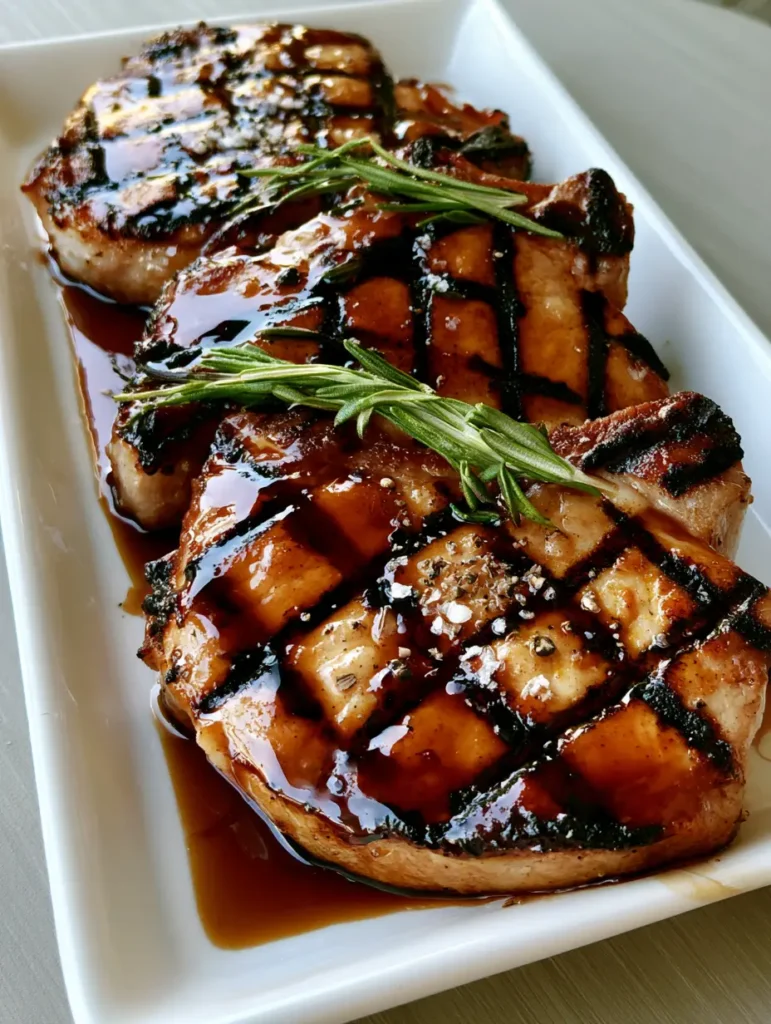
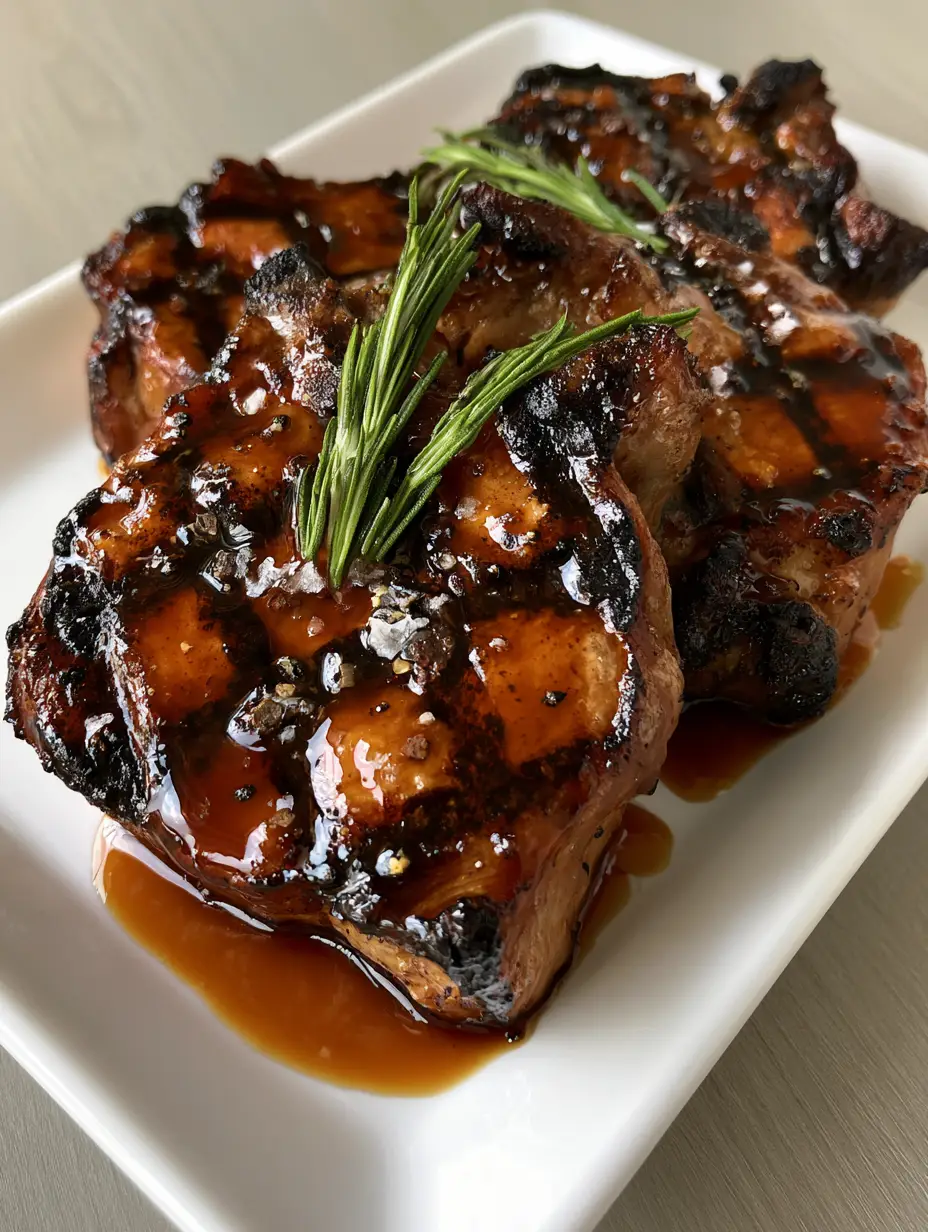
This recipe isn’t just about adding flavor; it is about changing the cellular structure of the meat to ensure every bite is moist and tender. When you look at the thick-cut chops resting on a white ceramic platter, gleaming under natural daylight, you aren’t just seeing dinner; you are seeing the result of a perfectly executed Maillard reaction and a balsamic-reduction glaze. Whether you are a weekend griller or a seasoned pro, this method will redefine your expectations of what pork can be.
The Anatomy of a High-Performance Amber Glaze
To recreate the stunning visual of a glistening, honey-hued crust, we must look at the science of our ingredients. A superior Grilled Pork Chop Marinade requires four distinct pillars: acid to tenderize, oil to conduct heat, sugar to caramelize, and aromatics to provide depth. This specific blend uses high-quality balsamic vinegar and honey to create that signature amber color that looks incredible against the dark brown grill marks.
- Texture: Expect a slightly tacky, viscous coating that clings to the meat rather than sliding off into the grates.
- Visuals: Distinct, dark brown cross-hatch marks that pop against the amber-toned surface of the pork.
- Aromatics: The scent of charred rosemary and caramelized balsamic will fill your kitchen long before the first bite.
- Tenderness: Thanks to the enzymatic breakdown from the vinegar, even thick-cut 1.5-inch (3.8 cm) chops remain dripping with juice.
Essential Components for Your Signature Pork Marinade
Every ingredient in this Grilled Pork Chop Marinade serves a specific forensic purpose to match our visual blueprint. We do not use “fluff” ingredients; every item is calculated for its contribution to the final charred aesthetic and savory profile.
Thick-Cut Bone-In Pork Chops: Use chops at least 1.5 inches (3.8 cm) thick. Thin chops will overcook before you can achieve those beautiful charred cross-hatch marks visible in the professional photography.
Balsamic Vinegar of Modena: This provides the acidic base that softens muscle fibers. Its natural sugars are what develop into that glistening amber glaze as the liquid reduces over the flame.
Extra Virgin Olive Oil: You need 1/2 cup (120ml) of high-quality oil. This acts as a heat conductor, ensuring the heat of the grill reaches the meat evenly while preventing the pork from sticking to the grates.
Raw Honey or Brown Sugar: This is the “glue” for your glaze. It lowers the burning point just enough to create a dark, rich caramelization without turning the meat bitter.
Fresh Rosemary Sprigs: Do not use dried rosemary here. Fresh sprigs provide the essential oils needed for that woodsy aroma and serve as the vibrant green garnish seen on the final white ceramic platter.
Garlic Cloves: Smashed and minced, garlic provides the foundational savory note. Use 4 large cloves (20g) to ensure the flavor penetrates deep into the thick-cut meat.
Coarse Sea Salt and Cracked Black Peppercorns: These are your finishing “jewelry.” The coarse texture provides a visual pop and a burst of salinity that cuts through the sweetness of the amber glaze.
Precision Tools for Professional Grilling Results
To achieve the visual cues of a top-down, handheld smartphone photo where the meat looks moist and the marks are sharp, you need more than just a flame. You need the right gear to control the environment of the cook.
Heavy-Duty Cast Iron Grill Grates: These hold heat better than stainless steel, which is the secret to getting those dark brown, defined cross-hatch marks. If you’re using a gas grill, let it preheat for at least 15 minutes.
Instant-Read Digital Thermometer: This is the only way to ensure the meat is “moist and tender” as described. We are aiming for an internal temperature of 145°F (63°C).
Silicone Basting Brush: You will be applying extra marinade during the final minutes of cooking. A silicone brush allows you to “paint” the amber glaze onto the chops without knocking off the peppercorns.
Large Non-Reactive Glass Dish: Avoid metal bowls when marinating with vinegar, as it can impart a metallic taste to the pork. A glass dish or a heavy-duty zip-top bag works best.
Mastering the Sear: Step-by-Step to the Perfect Cross-Hatch
Phase 1: The Deep Marination Soak
In your glass dish, whisk together the balsamic vinegar, olive oil, honey, minced garlic, and one sprig of finely chopped rosemary. Place your three thick-cut pork chops into the Grilled Pork Chop Marinade, ensuring every inch is submerged. Seal and refrigerate for at least 4 hours, though 12-24 hours is the “sweet spot” for maximum tenderness.
Phase 2: Tempering and Preheating
Remove the chops from the refrigerator 30 minutes before grilling. This is a critical step; cold meat will seize on the grill, leading to a tough texture. While the meat comes to room temperature, preheat your grill to high heat (approximately 450°F / 232°C). You want the grates screaming hot to create that instant sear.
Phase 3: Achieving the Visual Cross-Hatch Marks
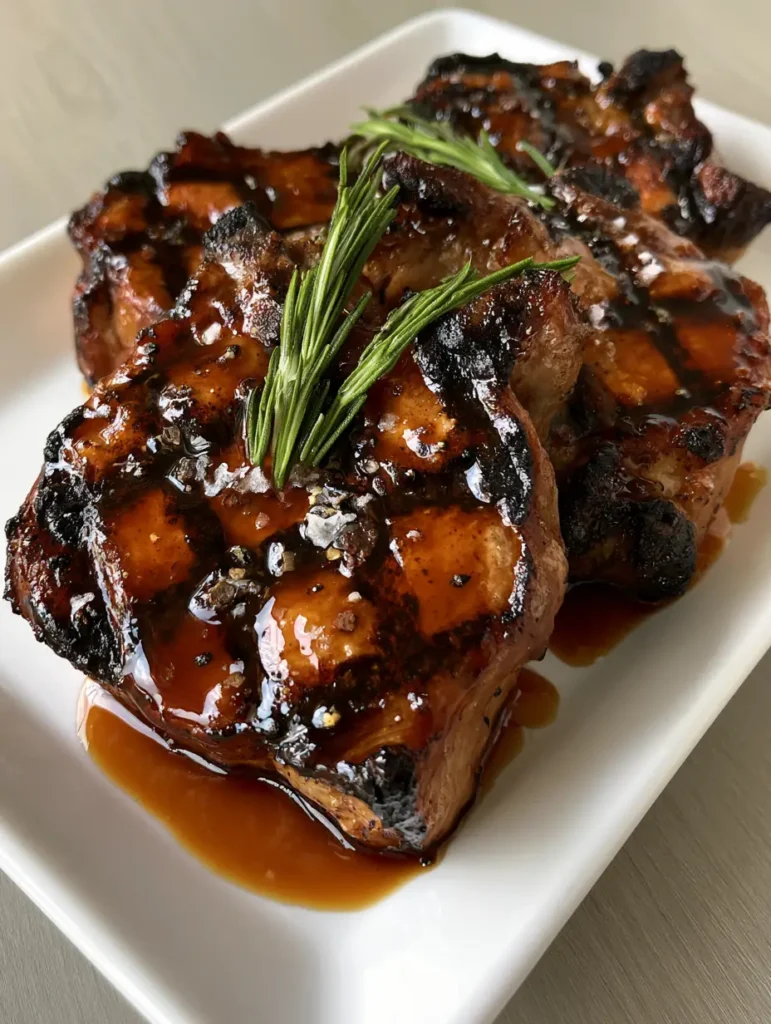
Place the chops on the grill at a 45-degree angle to the grates. Close the lid and do not touch them for 3-4 minutes. You should hear a vigorous sizzle. To get the cross-hatch, rotate the chops 90 degrees while keeping them on the same side. Cook for another 3 minutes. Flip the chops and repeat the process on the other side.
Sensory Cue: Look for the edges of the pork to turn opaque and the balsamic sugars to begin bubbling and darkening into a thick, syrupy consistency. The smell should be a mix of sweet caramel and savory toasted garlic.
Phase 4: The Amber Glaze Finish
During the last 2 minutes of grilling, use your basting brush to coat the chops with a final layer of the reserved marinade (ensure you have boiled any used marinade or used a fresh batch). This creates the “glistening” effect seen in our visual blueprint. Remove the chops when the internal temperature hits 140°F (60°C); the residual heat will carry them to 145°F (63°C) as they rest.
Phase 5: The Rest and Garnish
Transfer the chops to a white rectangular ceramic plate. Let them rest for 5-8 minutes. This allows the juices to redistribute, ensuring the meat appears “moist and tender” when cut. Just before serving, place two fresh sprigs of green rosemary across the chops. Dust the surface with a generous pinch of coarse sea salt and freshly cracked black peppercorns.
Pro Tips for the Ultimate Grilled Pork Experience
- The Sugar Balance: If you notice the chops are darkening too quickly, move them to a cooler part of the grill. The honey in the Grilled Pork Chop Marinade can burn if left over direct flame for too long.
- Avoid the “Gray Ring”: Ensure your grill is hot enough. If the grill is luke-warm, the meat will steam instead of sear, resulting in a gray exterior rather than a charred one.
- Pat Dry: Before placing the chops on the grill, you can lightly pat the surface with a paper towel. A dry surface sears faster, though the oil in our marinade usually facilitates this well.
- Bone-In vs. Boneless: Always opt for bone-in. The bone acts as an insulator, preventing the center of the chop from overcooking while the exterior develops that amber glaze.
Pairing Your Glazed Chops with Seasonal Sides
A dish this rich and visually striking needs sides that provide contrast. To cut through the sweetness of the balsamic amber glaze, consider a summer peach burrata salad. The creaminess of the cheese and the acidity of the peaches mirror the flavors in the pork perfectly.
For a more Mediterranean flair, these chops are incredible when dipped into a homemade Greek tzatziki. The cool cucumber and yogurt provide a refreshing counterpoint to the charred, peppery crust. If you are looking for something heartier, a classic Mexican street corn salad offers a smoky, creamy texture that stands up well to the thick-cut pork.
Finally, if you want to double down on the balsamic profile, drizzle your side greens with a tangy balsamic dressing to tie the entire plate together.
Frequently Asked Questions
Yes, but be careful with cooking times. Boneless chops are leaner and cook much faster; reduce the grilling time by 2-3 minutes per side to prevent drying out.
Start with a very hot grill. Place the meat at a 45-degree angle, cook for 3-4 minutes, then rotate 90 degrees without flipping. This creates the signature diamond pattern.
For thick-cut chops, marinate for a minimum of 4 hours. For the best results and deepest flavor penetration, 12 to 24 hours is recommended.
Remove the pork from the grill at 140°F (60°C). During the rest period, the temperature will rise to the USDA-recommended 145°F (63°C), ensuring it stays moist.
Balsamic vinegar provides acidity to tenderize the meat and high natural sugar content which caramelizes into the glistening amber glaze seen in professional photos.
The Ultimate Grilled Pork Chop Marinade Recipe
Grilled Pork Chop Marinade: The Secret to Juicy, Amber-Glazed Chops
Ingredients
Equipment
Method
- In a non-reactive dish, whisk balsamic vinegar, olive oil, honey, garlic, and chopped rosemary.
- Submerge pork chops in the mixture and refrigerate for 4-24 hours.
- Place chops on a high-heat grill at a 45-degree angle. Cook 4 minutes, then rotate 90 degrees to create cross-hatch marks.
- Flip chops and repeat. During the last 2 minutes, brush with extra marinade until a glistening amber glaze forms.
- Remove at 140°F (60°C). Rest on a white platter for 5 minutes before adding sea salt, cracked pepper, and rosemary garnish.
Notes
Bone-in chops provide much more flavor and moisture than boneless.
Conclusion: Bring the Steakhouse Home
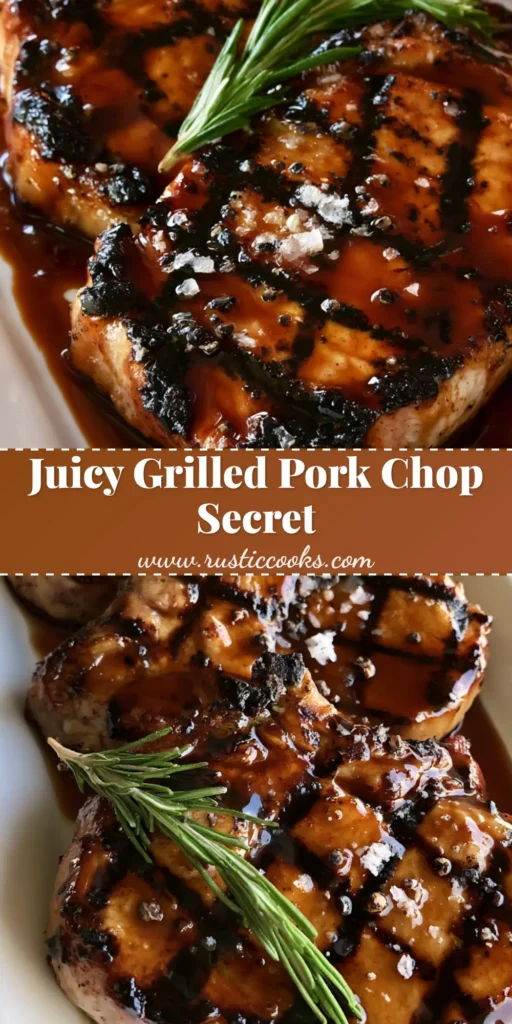
Mastering the Grilled Pork Chop Marinade is about more than just a single meal; it is about adding a versatile, high-impact technique to your culinary repertoire. By focusing on the visual cues—the cross-hatch marks, the amber glaze, and the fresh rosemary garnish—you create an experience that satisfies both the eyes and the palate.
We invite you to try this recipe and see the difference that a scientifically balanced marinade makes. If you enjoyed this guide, please leave a comment below and share your results! Don’t forget to follow us on Pinterest for more visually stunning recipe inspirations.