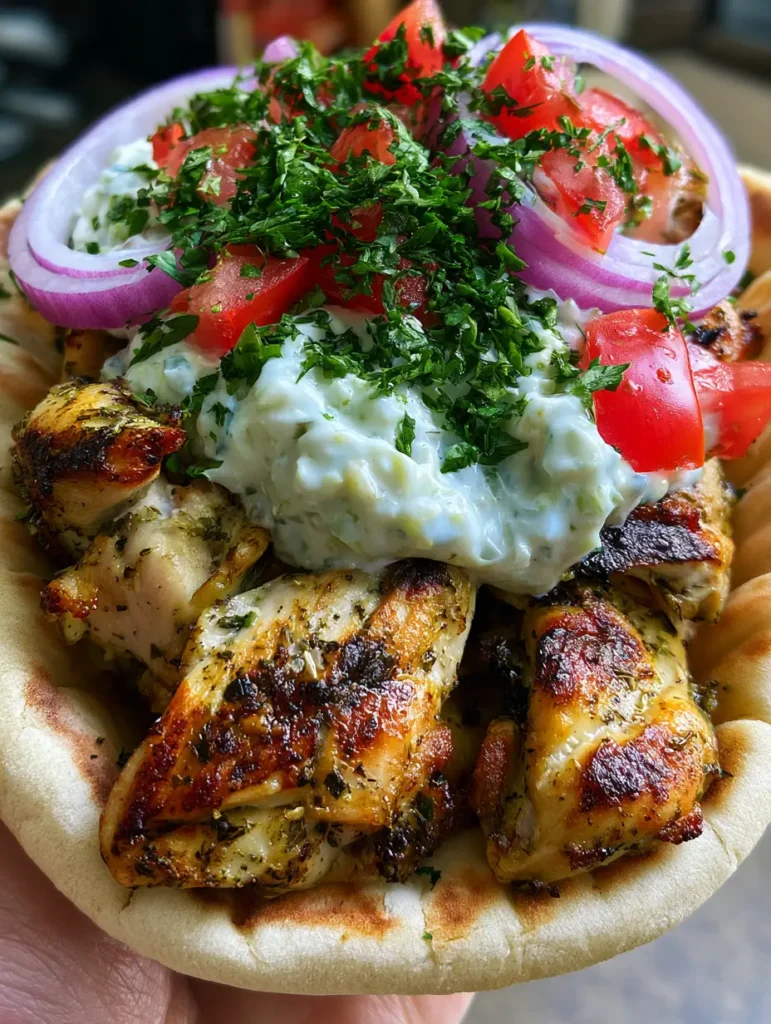
There is nothing quite like the sensory explosion of a handheld Greek Chicken Gyros, fresh and brimming with vibrant Mediterranean flavors. Imagine biting into a warm, pillowy soft toasted pita bread that yields to reveal succulent, herb-marinated chicken strips with those signature charred, golden-brown edges. This recipe captures the essence of a sun-drenched Greek summer, bringing the authentic texture and taste of a bustling Athens street corner directly to your kitchen.
When you look at a perfectly assembled Greek Chicken Gyros, the contrast is what makes it legendary. The thick, dolloped creamy white tzatziki sauce provides a cooling counterpoint to the seared chicken, while the bite of thinly sliced red onions and the juiciness of diced bright red tomatoes add layers of freshness. A heavy sprinkle of freshly chopped green parsley isn’t just a garnish; it’s the final herbaceous note that ties this masterpiece together, just like the handheld smartphone photo that inspired this very dish.
Creating this meal at home isn’t just about following a recipe; it’s about mastering the textures that define the Greek street food experience. From the snap of the fresh vegetables to the specific “sear” on the chicken thighs, every element has been meticulously designed to ensure your result looks exactly like a professional food blog photograph. Get ready to elevate your weeknight dinner rotation with a meal that is as visually stunning as it is delicious.
Why You’ll Fall in Love with These Greek Chicken Gyros
- Visual Perfection: This recipe is engineered to match the “forensic blueprint” of the perfect gyro, featuring golden-brown seared chicken thighs with visible charred edges.
- Textural Harmony: We balance the soft, thick pita bread with the crunch of red onion half-moons and the velvety thickness of authentic tzatziki.
- Science-Backed Searing: Using high-heat techniques ensures your chicken strips aren’t just cooked through, but carry that deep, savory umami crust.
- Freshness Factor: The combination of diced tomatoes and a heavy sprinkle of parsley ensures every bite feels light and revitalizing.
The Essential Components for Authentic Flavor
Boneless Skinless Chicken Thighs: We use 1.5 lbs (680g) of thighs because they contain more fat than breasts, which is essential for achieving those seared, charred edges without drying out the meat. This is the secret to that “rotisserie-style” depth of flavor at home.
Soft Thick Pita Bread: You will need 4 pieces of high-quality pita bread. Unlike thin pocket pitas, these should be thick and “pillowy” so they can be lightly toasted until pliable enough to wrap around the generous fillings.
Extra Virgin Olive Oil: Use 3 tbsp (45ml) for the marinade and searing. Olive oil has a specific flavor profile that is foundational to Greek cuisine and helps the herb seasoning adhere to the chicken strips.
Fresh Lemon Juice: 2 tbsp (30ml) of citrus acidity is required to tenderize the chicken fibers and brighten the overall flavor profile of the marinade.
Dried Oregano and Garlic: These are the “herb seasonings” visible in the visual blueprint. 1 tbsp (5g) of oregano and 3 cloves of minced garlic create that unmistakable Mediterranean aroma as soon as the chicken hits the pan.
Full-Fat Greek Yogurt: For the tzatziki, use 1 cup (245g) of thick, strained yogurt. This ensures the sauce stays “dolloped” on top rather than running off the sandwich.
English Cucumber: Half a cucumber (approx. 150g), grated and squeezed dry, provides those tiny green bits of texture visible in the creamy white sauce.
Red Onion and Roma Tomatoes: One small red onion (100g) sliced into thin half-moons and two firm tomatoes (200g) diced small provide the structural “crunch” and “juiciness” required by the visual prompt.
Fresh Parsley: A large bunch (approx. 30g) of flat-leaf parsley, finely chopped, provides the heavy green sprinkle that finishes the dish.
Tools Required for Culinary Success
Achieving the perfect Greek Chicken Gyros requires a few specific tools to ensure the textures are spot on. First, a heavy-bottomed cast iron skillet or a high-quality non-stick pan is non-negotiable for achieving the charred edges on the chicken strips. You want a surface that can hold high heat consistently.
A box grater is essential for the cucumber in the tzatziki sauce, allowing you to create those “tiny bits” mentioned in the visual description. You will also need a clean kitchen towel or cheesecloth to squeeze every drop of moisture out of the grated cucumber—this prevents a watery sauce. Finally, a sharp chef’s knife is required to get those paper-thin red onion half-moons and cleanly diced tomatoes.
Mastering the Art of the Perfect Gyro Sear
Phase 1: The Herb-Infused Marinade
In a large bowl, whisk together 2 tbsp (30ml) of olive oil, the lemon juice, minced garlic, dried oregano, 1 tsp (6g) of sea salt, and 1/2 tsp (1g) of black pepper. Slice your chicken thighs into 1-inch (2.5cm) wide strips. This size ensures the chicken cooks quickly while maximizing the surface area for searing.
Toss the chicken strips in the marinade, ensuring every piece is coated. Let this sit for at least 30 minutes, or up to 4 hours in the refrigerator. The acidity of the lemon and the salt will begin to “dry brine” the meat, ensuring it remains juicy even when exposed to the high heat of the skillet.
Phase 2: Creating the Thick Creamy Tzatziki
While the chicken marinates, prepare your homemade tzatziki sauce. Grate the cucumber and use a kitchen towel to squeeze out all the excess water—don’t skip this, or your sauce will be runny. In a medium bowl, fold the cucumber bits into the thick Greek yogurt with a splash of olive oil and a pinch of salt.
The goal is a “dollop-able” consistency. If the sauce isn’t thick enough to hold its shape on a spoon, you haven’t squeezed the cucumber enough. Set this aside in the fridge to allow the flavors to meld; the garlic will mellow and the cucumber will infuse the yogurt with freshness.
Phase 3: Achieving the Golden-Brown Char
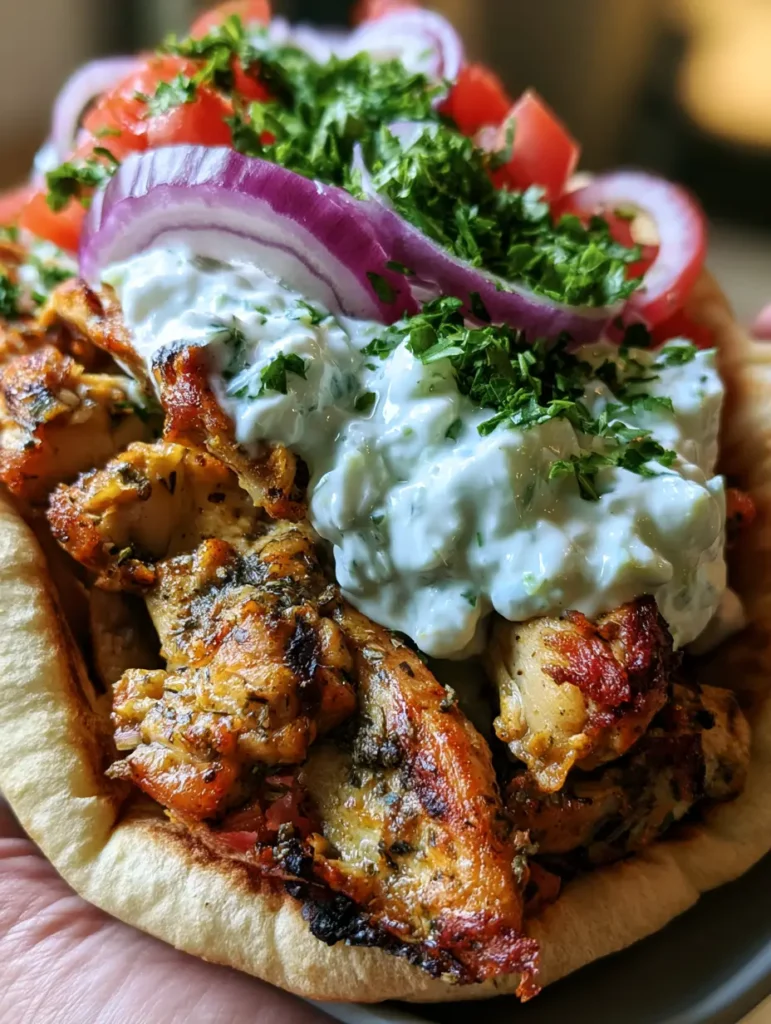
Heat your skillet over medium-high heat with the remaining 1 tbsp (15ml) of oil. Once the oil is shimmering (almost smoking), add the chicken strips in a single layer. Do not overcrowd the pan; work in batches if necessary. Let the chicken sit undisturbed for 3-4 minutes.
Listen for a vigorous sizzling sound—this is the moisture evaporating and the Maillard reaction beginning. Flip the chicken once you see deep golden-brown, charred edges forming. Continue cooking for another 3-5 minutes until the chicken is fully cooked through and carries a visible herb-crusted exterior. Remove from heat and let rest for 2 minutes.
Phase 4: Toasting the Pita and Assembly
Clean your skillet and place it back over medium heat. Lightly mist your pita bread with a tiny bit of water or oil and toast for 30 seconds per side. You want the pita to be soft and pliable, with just a hint of golden warmth. It should feel pillowy, not crunchy.
To assemble, lay the toasted pita flat. Place a generous heap of the seared chicken strips in the center. Top with a heavy dollop of the tzatziki sauce, followed by the thin red onion half-moons and diced tomatoes. Finish with a heavy sprinkle of freshly chopped green parsley. Fold the pita over the fillings, and if you’re eating on the go, wrap the bottom in parchment paper or foil.
Expert Tips for Visual and Flavor Excellence
- The “Squeeze” Secret: For the tzatziki, the drier the cucumber, the thicker the sauce. A thick sauce is what creates that professional “dolloped” look from the Midjourney prompt.
- Don’t Overcrowd the Pan: If you put too much chicken in the skillet at once, the temperature drops and the chicken will steam rather than sear. For those charred edges, give the chicken space!
- Pita Pliability: If your pita bread feels a bit dry, wrap it in a damp paper towel and microwave for 15 seconds before toasting it in the pan. This restores the “soft toasted” texture.
- Rest the Meat: Letting the chicken rest for 2 minutes after searing allows the juices to redistribute, ensuring every bite is moist.
Storage, Reheating, and Meal Prep
Greek Chicken Gyros are an excellent candidate for meal prep. You can store the seared chicken in an airtight container in the refrigerator for up to 4 days. To maintain the charred texture, reheat the chicken in a dry skillet over medium heat rather than the microwave.
The tzatziki sauce will keep for 3 days, though it may release a little water over time—simply stir it before using. Keep the fresh vegetables (onions, tomatoes, parsley) in separate containers and slice them fresh if possible for the best “snap” and visual appeal. Do not assemble the gyros until you are ready to eat, as the sauce will eventually make the pita bread soggy.
What to Serve With This Mediterranean Feast
If you are looking to round out your meal, these gyros pair beautifully with a variety of sides. For a light and refreshing option, try a peach and burrata salad to lean into those summer vibes. If you want to keep the Mediterranean theme going, a Mediterranean chicken orzo side dish provides a great textural contrast.
For those who love a bit of variety in their grains, a roasted vegetable orzo salad is the perfect make-ahead side that complements the herb seasoning in the gyro chicken. If you’re feeling like a fusion night, these flavors even work surprisingly well alongside a small portion of Mexican street corn salad for a global street food extravaganza.
Frequently Asked Questions
Yes, but for the best ‘street food’ texture, a skillet is preferred. If using an oven, broil the chicken strips on a high setting on the top rack to mimic the sear of a pan.
The secret is in the cucumber. You must grate the cucumber and then use a kitchen towel or cheesecloth to squeeze out as much moisture as possible before stirring it into full-fat Greek yogurt.
A minimum of 30 minutes is required for the lemon and salt to penetrate the meat, but 2 to 4 hours will provide the most intense flavor and tender texture.
Boneless, skinless chicken thighs are best. They have a higher fat content than breasts, which allows them to achieve those signature charred edges while remaining juicy during high-heat searing.
Look for ‘Greek-style’ pita or Mediterranean flatbread. These are thicker and lack a pocket, making them much easier to wrap around generous amounts of chicken and sauce without tearing.
The Ultimate Greek Chicken Gyro Recipe
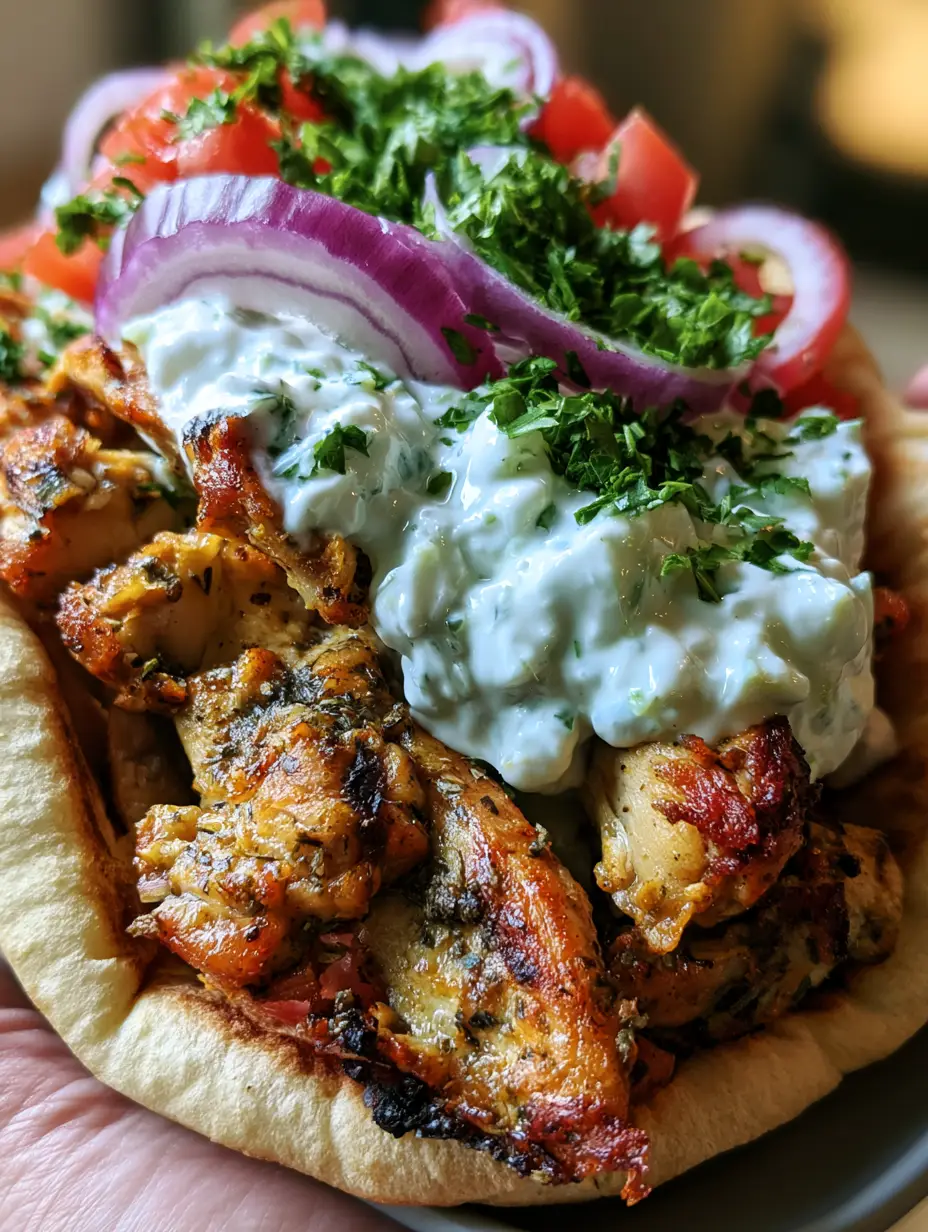
Greek Chicken Gyros: The Ultimate Street Food Experience at Home
Ingredients
Equipment
Method
- Whisk olive oil, lemon juice, garlic, and oregano. Toss with chicken strips (1.5 lbs / 680g) and let sit for 30 minutes.
- Grate cucumber (150g), squeeze out all water with a towel, and stir into Greek yogurt (245g) with salt.
- Heat skillet over medium-high. Add chicken strips in a single layer. Sear until golden-brown and charred on edges, about 4-5 minutes per side.
- Wipe skillet and toast pita bread for 30 seconds per side until soft and warm.
- Place chicken on pita. Top with a thick dollop of tzatziki, red onion half-moons, diced tomatoes, and a heavy sprinkle of parsley.
Notes
Use high heat to get the signature charred edges on the chicken strips.
Bring the Taste of Greece Home
These Greek Chicken Gyros are more than just a sandwich; they are a celebration of fresh ingredients and traditional cooking techniques. By focusing on the high-heat sear of the chicken and the creamy, thick texture of the tzatziki, you can create a restaurant-quality meal that looks exactly like a professional food photograph. This dish is perfect for a fun family dinner or a handheld meal for your next gathering.
If you enjoyed this recipe, I would love to hear from you! Leave a comment below with your favorite gyro toppings, and don’t forget to sign up for our newsletter for more “forensic” recipe guides. Be sure to share your creations and follow us on Pinterest for more culinary inspiration!