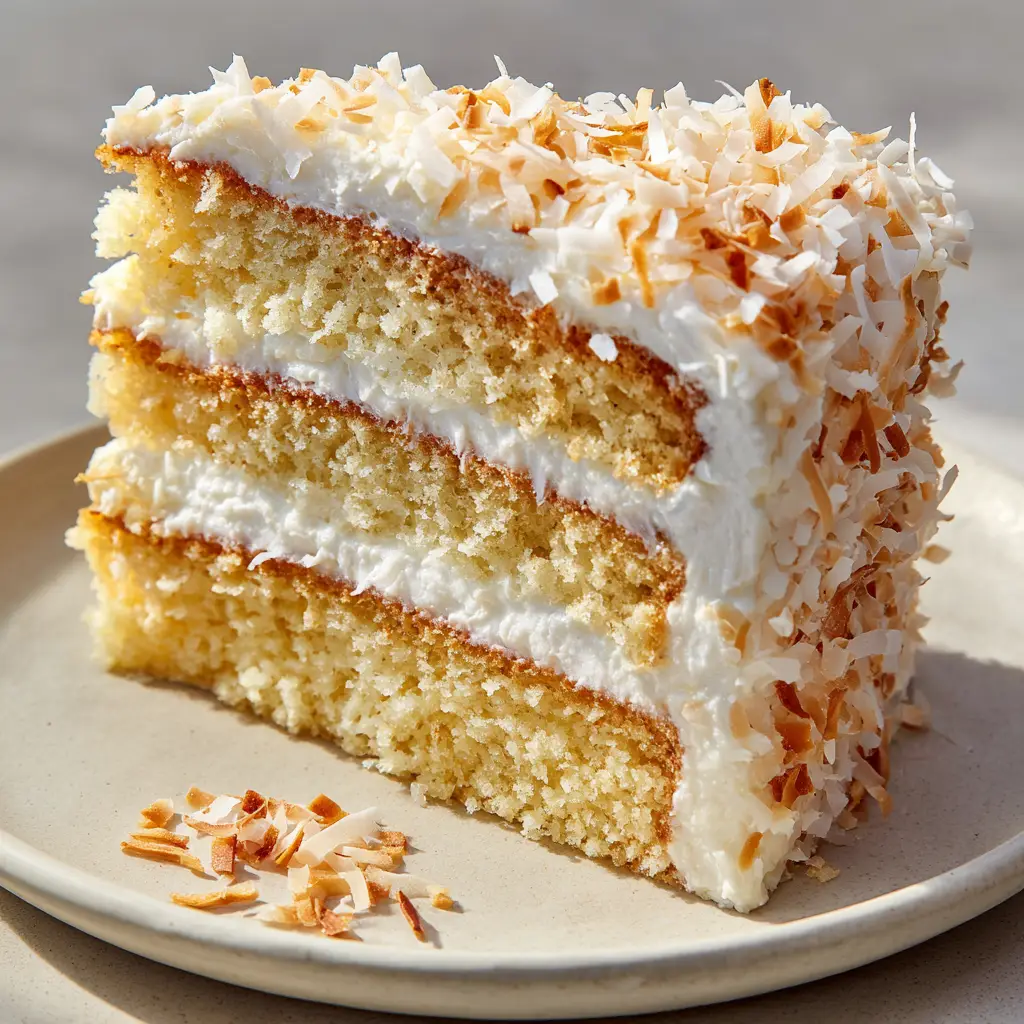
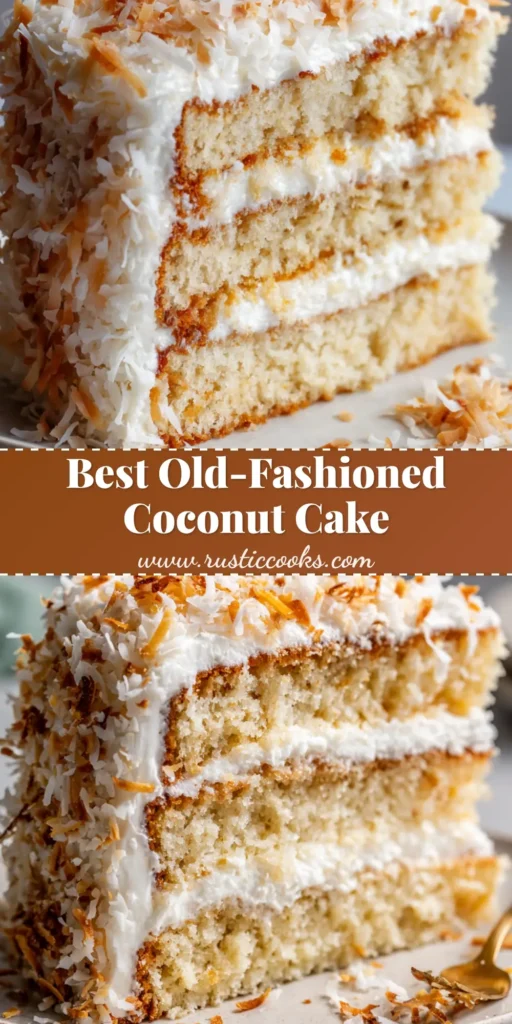
There is something undeniably magical about slicing into a towering, bakery-style dessert right in your own kitchen. This Old-Fashioned Coconut Cake delivers an unforgettable visual and culinary experience, featuring three moist, light-colored sponge cake layers that stack beautifully. It is a show-stopping centerpiece perfect for holidays, birthdays, or Sunday dinners.
Every bite provides a luxurious contrast in textures, alternating between the delicate, tender crumb and a thick, fluffy white coconut cream frosting. The outside of the cake is completely enveloped in this velvety bright white frosting, ensuring every slice is as rich as it is beautiful.
To finish, the cake is densely coated with shredded white coconut flakes around the sides. The crown of the cake features a gorgeous, rustic mix of bright white and golden-brown toasted coconut, offering a slightly nutty crunch that perfectly balances the sweetness.
Why You’ll Love This Recipe
- Towering Three-Layer Structure: The reliable, sturdy white sponge guarantees three tall, even layers that look incredibly professional on a ceramic dessert plate.
- Luxurious Coconut Cream Frosting: The thick, fluffy white frosting uses real coconut cream, providing an authentic, rich flavor without being overly sweet.
- Incredible Textural Contrast: The combination of soft sponge, velvety frosting, and the crunchy mix of golden-brown toasted and soft white coconut flakes is irresistible.
- Picture-Perfect Presentation: The brilliant white exterior against the toasted coconut strands gives this cake a classic, unedited, and highly photogenic appeal.
Ingredients & Substitutions
The White Sponge Cake Layers
Cake Flour: 2 ¾ cups (315g) cake flour. This finely milled flour has a lower protein content, ensuring the three cake layers remain incredibly tender and light-colored.
Baking Powder: 1 tbsp (15g) baking powder. This invisible, foundational ingredient provides the essential lift required to create a tall, airy sponge structure.
Salt: 1 tsp (5g) kosher salt. A necessary flavor enhancer that cuts through the sweetness and highlights the subtle vanilla and coconut notes.
Unsalted Butter: 1 cup (226g) unsalted butter, softened to room temperature. Creaming the butter traps air for a fluffy texture and provides a rich, buttery mouthfeel.
Granulated Sugar: 1 ¾ cups (350g) white granulated sugar. It sweetens the cake while maintaining the pristine, light-colored visual of the sponge layers.
Egg Whites: 5 large egg whites (150g), at room temperature. Using only the whites ensures the cake crumb stays bright white rather than taking on a yellow hue.
Canned Coconut Milk: 1 cup (240ml) full-fat canned coconut milk. This adds vital moisture and an authentic, rich coconut flavor to the sponge layers.
Extracts: 1 tsp (5ml) vanilla extract and 1 tsp (5ml) coconut extract. This combination builds a deep, nostalgic flavor profile that defines old-fashioned baking.
The Fluffy Coconut Cream Frosting & Garnish
Unsalted Butter: 1 ½ cups (340g) unsalted butter, softened. Whipping this creates the sturdy, thick base for the fluffy white frosting.
Powdered Sugar: 5 cups (600g) powdered sugar. This sweetens and thickens the frosting, creating a smooth, pipeable consistency.
Coconut Cream: ⅓ cup (80ml) coconut cream (the thick part from the top of a chilled can of coconut milk). This introduces a rich, creamy texture and intense flavor to the frosting.
Shredded Coconut Flakes: 3 cups (300g) sweetened shredded coconut. You will use this to densely coat the sides in bright white flakes, while reserving some to toast to a golden-brown for the top.
Equipment Needed
- Three 8-inch (20cm) round cake pans
- Parchment paper rounds
- Stand mixer or hand mixer
- Offset spatula (for spreading the thick frosting)
- Baking sheet (for toasting coconut)
Step-by-Step Instructions
1. Toast the Coconut Garnish
Preheat your oven to 325°F (165°C). Spread 1 cup (100g) of the sweetened shredded coconut in an even layer on a baking sheet. Bake for 5 to 7 minutes, stirring every 2 minutes.
Watch carefully and remove it from the oven the moment you see a beautiful golden-brown color and smell a rich, nutty aroma. Let it cool completely; these golden strands will provide the perfect rustic topping.
2. Prepare the Cake Batter
Increase the oven temperature to 350°F (175°C). Grease three 8-inch (20cm) round cake pans and line the bottoms with parchment paper. In a medium bowl, whisk together the cake flour, baking powder, and salt.
In the bowl of your stand mixer, beat the softened butter and granulated sugar on medium-high speed for 3-4 minutes. You are looking for a pale, fluffy mixture that has significantly increased in volume.
Add the egg whites one at a time, beating well after each addition. Pour in the vanilla and coconut extracts, mixing until just combined.
3. Alternate Wet and Dry Ingredients
Turn the mixer to low speed. Add a third of the dry flour mixture to the butter mixture, followed by half of the coconut milk.
Repeat this process, ending with the final third of the dry ingredients. Mix only until you no longer see dry streaks of flour to ensure the sponge remains exceptionally tender.
4. Bake the Cake Layers
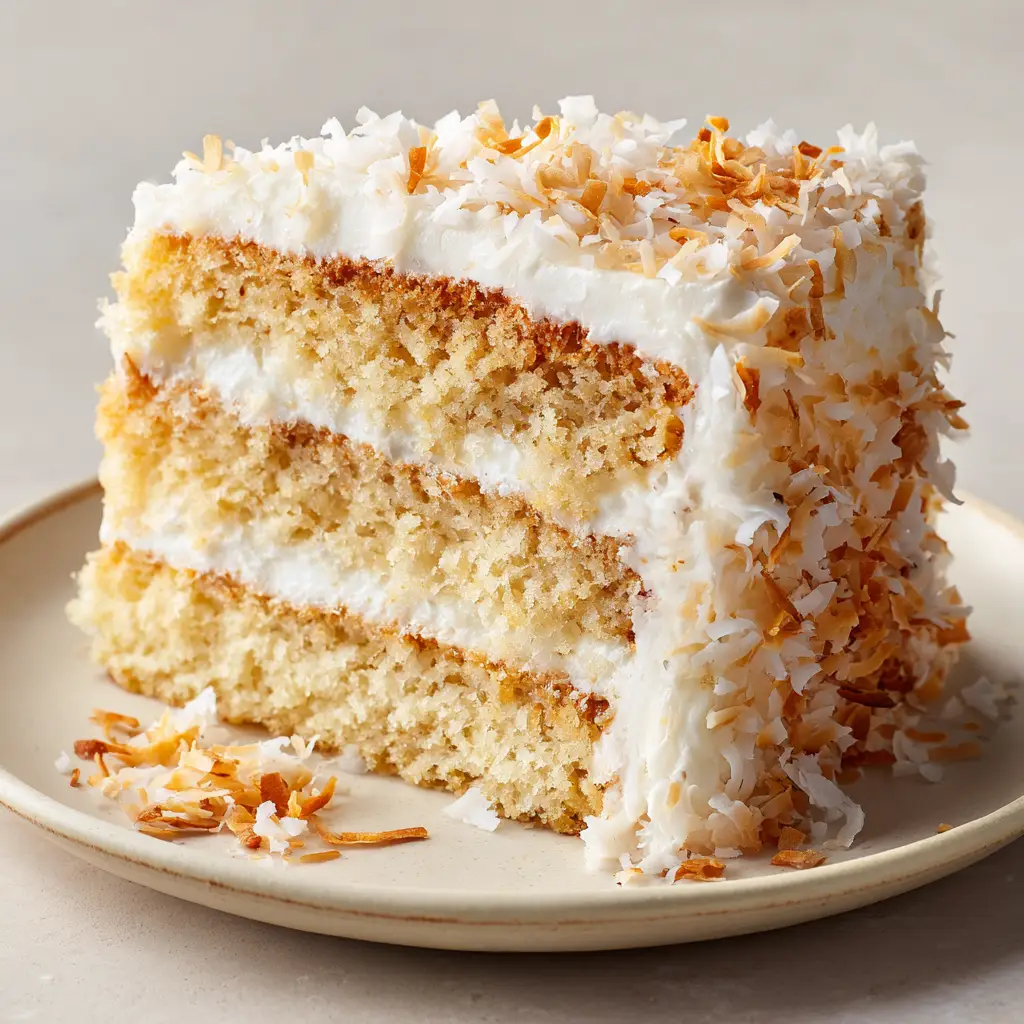
Divide the batter evenly among the three prepared cake pans, smoothing the tops with an offset spatula. Bake for 22-25 minutes.
You will know they are done when the edges pull away slightly from the pan and a toothpick inserted into the center comes out clean. The layers should remain light-colored; do not let them over-brown.
Allow the cakes to cool in their pans for 10 minutes before inverting them onto wire racks to cool completely.
5. Whip the Coconut Cream Frosting
In a clean mixer bowl, beat the softened butter for 2 minutes until creamy and smooth. Gradually add the powdered sugar, one cup at a time, beating on low speed.
Add the thick coconut cream, coconut extract, and a pinch of salt. Increase the speed to medium-high and whip for 3-4 minutes until the frosting is thick, bright white, and incredibly fluffy.
6. Assemble and Decorate
Place the first sponge layer on a simple white ceramic dessert plate or cake stand. Spread a thick, even layer of the fluffy coconut cream frosting over the top.
Repeat with the second and third layers. Use the remaining frosting to completely cover the outside and top of the cake, creating a thick, smooth seal.
Take handfuls of the remaining untasted white shredded coconut and press it densely into the sides of the cake. Finally, sprinkle the top of the cake with a mix of the remaining white coconut and the golden-brown toasted coconut.
Expert Tips for Success
- Room Temperature Ingredients: Ensure your butter, egg whites, and coconut milk are at room temperature. This creates a seamless emulsion, leading to a perfectly moist crumb.
- Measure Flour Correctly: Use a kitchen scale for the cake flour, or fluff the flour before spooning it into your measuring cup. Heavy, packed flour will ruin the light, airy texture.
- Chill the Frosting: If your kitchen is warm and the fluffy white frosting feels too soft to hold the layers, chill it in the fridge for 10 minutes before assembling.
- Don’t Skip the Parchment: Because this cake is incredibly moist and tender, parchment paper rounds are strictly necessary to prevent the bottom from sticking to the pans.
Storage & Reheating/Freezing
Store any leftover cake in an airtight container at room temperature for up to 2 days, or in the refrigerator for up to 5 days. Because the frosting contains coconut cream and butter, allow refrigerated slices to sit at room temperature for 30 minutes before eating to restore their soft, fluffy texture.
To freeze, wrap individual slices tightly in plastic wrap and place them in a freezer-safe bag for up to 3 months. Thaw slices overnight in the refrigerator before serving.
What to Serve With This
This towering, impressive dessert is the perfect grand finale for a comforting family dinner. Serve it after enjoying a hearty plate of crockpot lasagna or a tender slice of oven baked pork tenderloin.
If you are hosting a Sunday supper, this cake pairs beautifully with a whole roasted chicken. Planning a massive holiday dessert spread? Serve this Old-Fashioned Coconut Cake alongside our moist carrot cake recipe for a stunning visual contrast.
For a lighter complementary sweet treat, offer guests a few strawberry cheesecake truffles or lemon blueberry cheesecake cookies on the side!
Frequently Asked Questions
Absolutely. You can bake the sponge layers up to 2 days in advance. Wrap them tightly in plastic wrap and store them in the refrigerator before frosting and assembling.
Yes, you can use freshly grated coconut. However, it contains more moisture than packaged shredded coconut, so the texture on the outside of the cake will be slightly softer and wetter.
While it can sit at room temperature for up to 2 days in a cool kitchen, refrigerating the cake prolongs its freshness up to 5 days. Always bring slices to room temperature before serving to soften the butter-based frosting.
Using only egg whites instead of whole eggs is the key. Egg yolks will turn the batter yellow. Additionally, baking the layers until just done prevents the edges from over-browning.
If your butter was too warm or your kitchen is hot, the frosting won’t hold its shape. Simply place the mixing bowl in the refrigerator for 10-15 minutes, then rewhip it until it becomes sturdy.
Conclusion
This Old-Fashioned Coconut Cake is a timeless classic that delivers incredible flavor, stunning presentation, and a beautiful contrast of textures. The fluffy white coconut cream frosting and toasted coconut flakes make every bite unforgettable.
If you loved this recipe, please leave a comment below and let us know how your cake turned out! Don’t forget to subscribe to our newsletter for more bakery-quality recipes, and save this post to Pinterest to keep it handy for your next celebration.
Recipe
The Best Old-Fashioned Coconut Cake
Ingredients
Equipment
Method
- Preheat your oven to 325°F (165°C). Spread 1 cup (100g) of the sweetened shredded coconut in an even layer on a baking sheet. Bake for 5 to 7 minutes, stirring every 2 minutes. Watch carefully and remove it from the oven the moment you see a beautiful golden-brown color. Let it cool completely.
- Increase the oven temperature to 350°F (175°C). Grease three 8-inch (20cm) round cake pans and line the bottoms with parchment paper. In a medium bowl, whisk together the cake flour, baking powder, and salt. In the bowl of your stand mixer, beat the softened butter and granulated sugar on medium-high speed for 3-4 minutes until pale and fluffy. Add the egg whites one at a time, beating well after each addition. Pour in the vanilla and coconut extracts.
- Turn the mixer to low speed. Add a third of the dry flour mixture to the butter mixture, followed by half of the coconut milk. Repeat this process, ending with the final third of the dry ingredients. Mix only until you no longer see dry streaks of flour.
- Divide the batter evenly among the three prepared cake pans, smoothing the tops with an offset spatula. Bake for 22-25 minutes. You will know they are done when the edges pull away slightly from the pan and a toothpick inserted into the center comes out clean. Allow the cakes to cool in their pans for 10 minutes before inverting them onto wire racks to cool completely.
- In a clean mixer bowl, beat the softened butter for 2 minutes until creamy and smooth. Gradually add the powdered sugar, one cup at a time, beating on low speed. Add the thick coconut cream, coconut extract, and a pinch of salt. Increase the speed to medium-high and whip for 3-4 minutes until the frosting is thick, bright white, and incredibly fluffy.
- Place the first sponge layer on a serving plate. Spread a thick layer of frosting over the top. Repeat with the second and third layers. Use the remaining frosting to completely cover the outside and top of the cake. Press the remaining untasted white shredded coconut densely into the sides of the cake. Sprinkle the top with a mix of the remaining white coconut and the golden-brown toasted coconut.
Notes
Measure flour properly with a kitchen scale.
Do not overmix the cake batter.