Savory oatmeal is about to revolutionize your morning routine. If you have only ever enjoyed oats drowning in maple syrup and fruit, you are missing out on a spectacular culinary experience. This recipe transforms humble rolled oats into a thick, creamy, and deeply savory base that rivals the best restaurant-style risotto or congee.
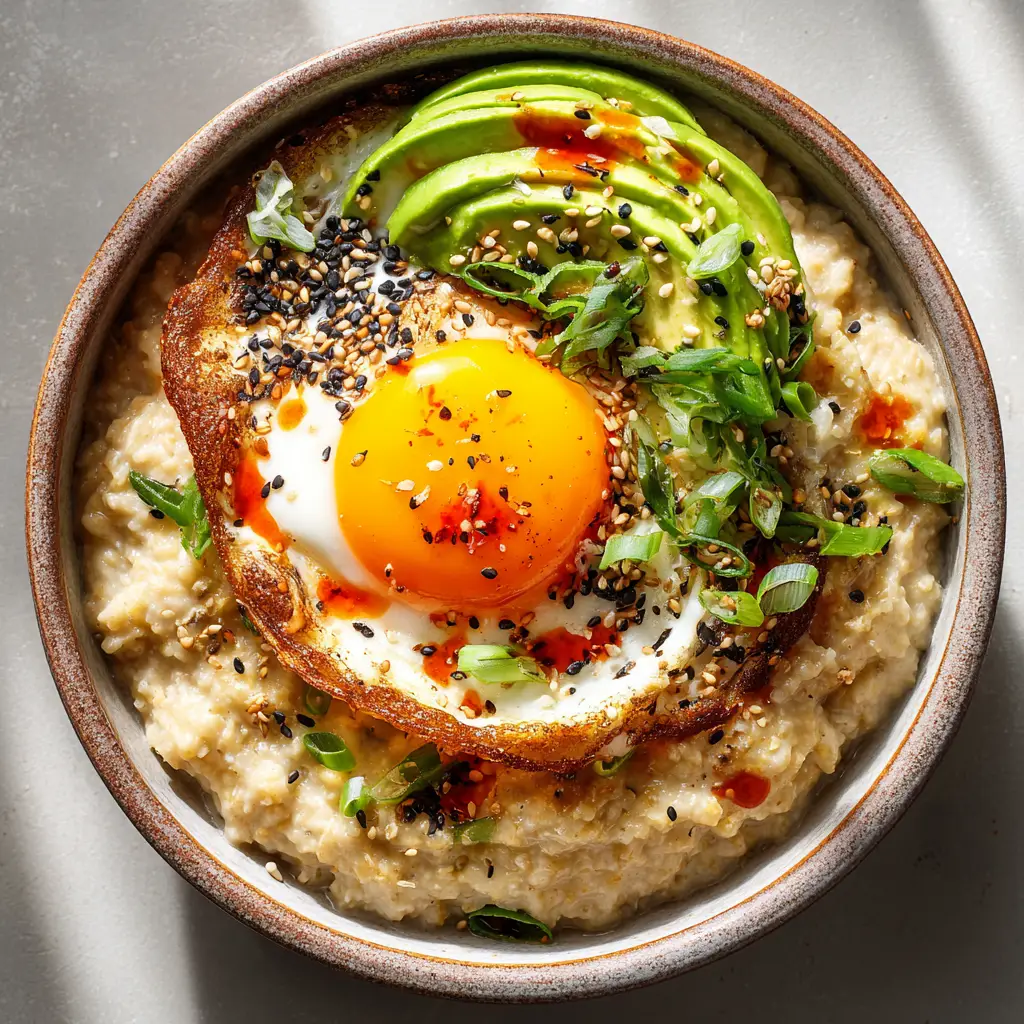
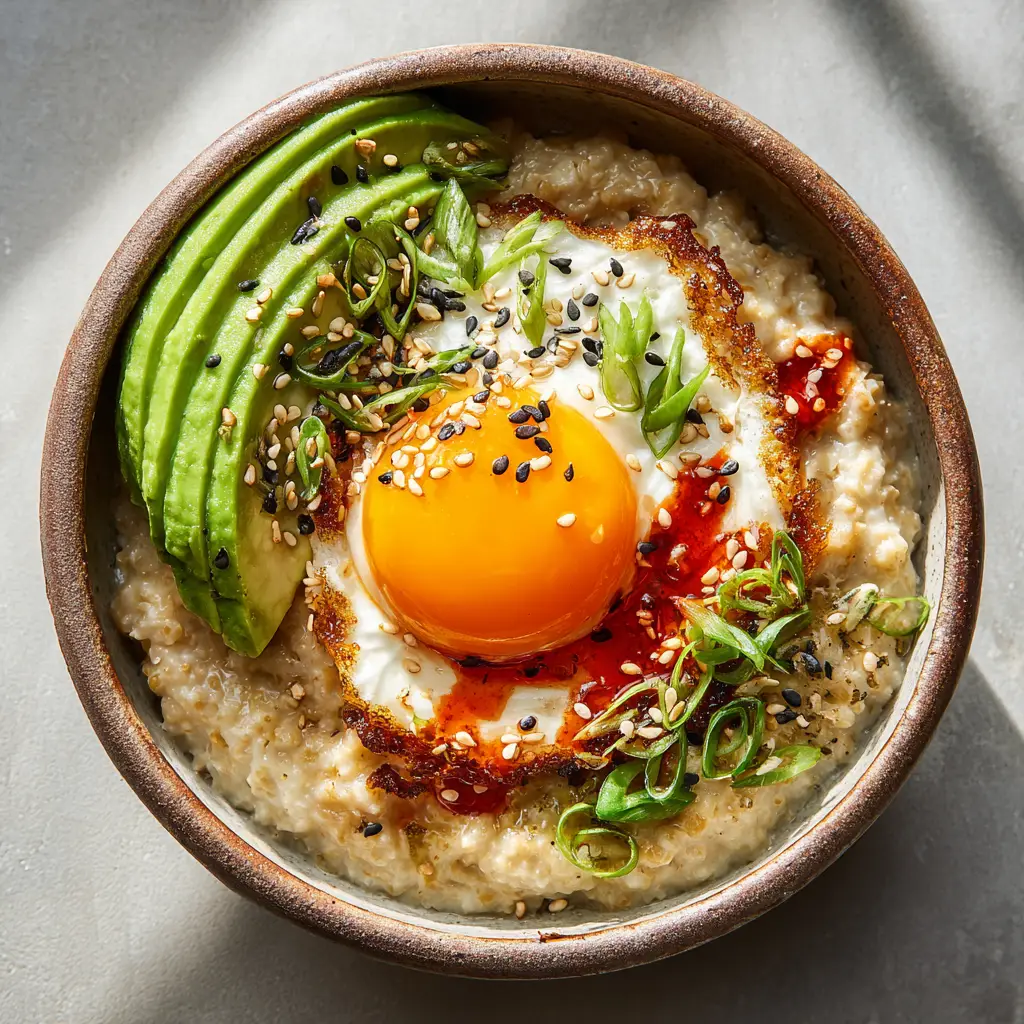
Imagine a rustic ceramic bowl filled to the brim with a dense, textured oat base, cooked low and slow in rich broth. Placed right on top is a perfectly fried sunny-side-up egg, boasting a glossy, bright orange runny yolk and incredibly crispy, slightly browned lacy edges. Every spoonful is a masterclass in contrasting textures and complementary flavors.
Beside that flawless egg sits a beautiful fan of freshly sliced green avocado, lending a cool, buttery richness. We finish the dish with a generous sprinkle of black sesame seeds, a dusting of coarse cracked black pepper, and finely chopped bright green scallions. Finally, a thin, vibrant red drizzle of chili oil pools slightly in the creamy oats, providing an irresistible, warming heat.
Why You’ll Love This Recipe
- Unbeatable Texture Contrast: The thick, creamy cooked oatmeal pairs perfectly with the crispy, shattered edges of the fried egg and the delicate crunch of black sesame seeds.
- Incredible Visual Appeal: We eat with our eyes first. The bright orange runny yolk, the vibrant green avocado, and the pooling red chili oil make this dish a stunning centerpiece.
- Savory Umami Bomb: Cooking the oats in broth instead of water elevates the flavor profile, creating a deeply satisfying, savory foundation.
- Quick and Nutritious: Ready in under 15 minutes, this recipe is packed with complex carbohydrates, healthy fats, and high-quality protein.
- Endlessly Customizable: Once you master this thick and creamy base, you can adjust the toppings to suit any craving or dietary preference.
Ingredients & Substitutions
Creating the perfect bowl of savory oatmeal requires a delicate balance of foundational ingredients and striking garnishes. Here is exactly what you need to achieve that flawless, rustic aesthetic.
The Oatmeal Base
Old Fashioned Rolled Oats: You will need 1/2 cup (45g) of rolled oats. These provide the ideal textured, dense base without disintegrating into a mushy paste like quick oats often do.
Chicken or Vegetable Broth: Use 1 cup (240ml) of high-quality broth. This invisible foundational ingredient is the secret to achieving a deeply savory, umami-rich flavor profile.
Kosher Salt: Just 1/4 tsp (1.5g) of kosher salt is needed. This essential seasoning wakes up the starches in the oats and balances the overall flavor.
The Protein & Healthy Fats
Large Egg: 1 whole large egg is the star of the show. You want an incredibly fresh egg to ensure a glossy, bright orange runny yolk that stays beautifully intact.
Olive Oil: Use 1 tbsp (15ml) of olive oil for frying. Getting the oil shimmering hot is scientifically necessary to create those slightly browned, lacy edges on the egg whites.
Fresh Avocado: You will need 1/2 small avocado (about 50g), sliced into a fan. Ensure it is perfectly ripe so it brings a cool, creamy element to the warm dish.
The Vibrant Garnishes
Scallions (Green Onions): Finely chop 1 tbsp (5g) of scallions. They add a bright green pop of color and a sharp, fresh allium bite that cuts through the richness.
Black Sesame Seeds: A generous sprinkle, about 1 tsp (3g), is crucial. They offer a delicate textural crunch and a striking visual contrast against the pale oats and bright egg.
Coarse Cracked Black Pepper: Use 1/4 tsp (1g) for an earthy, rustic heat. Freshly cracking the pepper yields essential oils that pre-ground pepper simply lacks.
Chili Oil: Drizzle 1 tsp (5ml) of high-quality chili oil. This vibrant red finishing oil pools beautifully in the dense oats, adding complex spice and visual drama.
Equipment Needed
You do not need a professional kitchen to achieve a visually stunning, incredibly delicious bowl of savory oatmeal. A few basic tools will ensure success.
- Small Heavy-Bottomed Saucepan: Essential for simmering the oats evenly without scorching the bottom.
- Non-Stick or Cast Iron Skillet: A hot skillet is non-negotiable for achieving the crispy, lacy edges on your sunny-side-up egg.
- Sharp Chef’s Knife: Needed to cleanly slice the avocado into a beautiful, unblemished fan.
- Rustic Ceramic Bowl: For plating. A wide, shallow bowl allows the beautiful garnishes to be displayed perfectly on top of the dense oats.
Step-by-Step Instructions
Follow these precise instructions to achieve the exact textures, visual cues, and sensory experiences that make this savory oatmeal so extraordinary.
1. Simmer the Creamy Oat Base
Place your small saucepan over medium-high heat and pour in 1 cup (240ml) of chicken or vegetable broth. Bring the liquid to a gentle, rolling boil.
Once boiling, stir in the 1/2 cup (45g) of rolled oats and the 1/4 tsp (1.5g) of kosher salt. Reduce the heat immediately to medium-low to maintain a gentle simmer.
Cook the oats, stirring occasionally with a wooden spoon, for 7-10 minutes. Visual Cue: Watch for the liquid to absorb and the starches to release. The base should look thick, creamy, and highly textured, not watery or soupy.
Remove the saucepan from the heat once the oats are dense and luscious. Cover the pot with a lid to keep them warm while you prepare the toppings.
2. Fry the Crispy Sunny-Side-Up Egg
Place a non-stick or well-seasoned cast iron skillet over medium-high heat. Add 1 tbsp (15ml) of olive oil and allow it to heat up until it gently shimmers and glides easily across the pan.
Carefully crack your large egg directly into the hot oil. Sensory Cue: You should immediately hear a satisfying crackle and sizzle as the egg white hits the hot fat.
Allow the egg to fry undisturbed for 2 to 3 minutes. Watch closely as the edges of the egg white begin to bubble, turning golden brown and forming a delicate, lacy texture.
Once the whites are completely set and opaque, but the yolk remains glossy, bright orange, and slightly jiggly, remove the skillet from the heat.
3. Prepare the Fresh Avocado Fan
Take your fresh green avocado and cut it in half lengthwise, working around the pit. Carefully twist the halves apart and remove the pit.
Peel the skin away from one of the halves. Place the avocado half flat-side down on your cutting board.
Using a sharp knife, make thin, even slices down the length of the avocado. Gently press down on the slices to fan them out into a beautiful, cascading shape.
4. Assemble the Rustic Bowl
Spoon your hot, thick, and creamy cooked oatmeal into a rustic ceramic bowl. Use the back of your spoon to gently spread it out, creating a textured, dense base.
Carefully slide the crispy fried egg onto the center of the oats. Ensure the runny yolk remains intact to serve as the dish’s visual centerpiece.
Using a spatula or a large knife, lift your fanned avocado slices and arrange them neatly next to the fried egg.
5. Garnish and Serve
Sprinkle the 1 tbsp (5g) of finely chopped bright green scallions generously over the bowl.
Add a liberal dusting of the 1/4 tsp (1g) coarse cracked black pepper and the 1 tsp (3g) black sesame seeds, letting them fall naturally over the egg and the oats.
Finally, take your 1 tsp (5ml) of chili oil and create a thin, vibrant red drizzle over the top. Watch as the oil pools slightly in the crevices of the dense oats.
Serve immediately while the oats are steaming hot and the egg yolk is perfectly runny.
The Science of the Perfect Fried Egg
Achieving a sunny-side-up egg with a perfectly runny yolk and deeply crispy, browned lacy edges comes down to a fundamental culinary concept: the Maillard reaction.
When you heat olive oil to the shimmering point, it reaches a temperature high enough to instantly dehydrate the edges of the egg white. This rapid dehydration allows the proteins and sugars to brown and crisp up before the heat has time to penetrate and overcook the delicate yolk.
If your heat is too low, the egg will slowly steam, resulting in a rubbery white and a lack of that essential textural crunch. Always trust the sizzle—if the egg doesn’t crackle when it hits the pan, your oil is not hot enough.
Mastering Oat Textures
Not all oatmeal is created equal. The visual blueprint of this recipe demands a dense, highly textured base, which is why rolled oats are non-negotiable.
When oats simmer in liquid, they release beta-glucan, a soluble fiber that acts as a natural thickener. By using a ratio of 1 part oats to 2 parts broth, we restrict the amount of free liquid available.
This careful liquid-to-grain ratio ensures the oats swell and absorb all the savory broth, resulting in a rich, risotto-like consistency rather than a loose, watery porridge.
Expert Tips for Success
- Do not stir too frequently: While occasional stirring prevents sticking, over-stirring your oats can break them down into a gummy paste. You want them thick and creamy, yet still textured.
- Use high-quality finishing oil: The red chili oil is not just for heat; it provides a vibrant color contrast. Look for an oil with a deep ruby hue for the best visual presentation.
- Room temperature eggs fry better: An egg brought to room temperature before frying will cook more evenly, preventing a cold, raw inner ring of egg white around the yolk.
- Prep your garnishes first: Savory oatmeal cools quickly. Have your fanned avocado, chopped scallions, sesame seeds, and cracked pepper ready to go before the egg finishes frying.
Storage & Reheating/Freezing
While this savory oatmeal is best enjoyed immediately for the ideal temperature and texture contrasts, the oat base can be made ahead of time.
Store leftover cooked oatmeal (without the toppings) in an airtight container in the refrigerator for up to 3 days. We do not recommend freezing, as the texture of the oats will become unpleasantly mushy upon thawing.
To reheat, place the oats in a saucepan over medium-low heat. Add a splash of broth or water to loosen the dense mixture, stirring constantly until warmed through. Fry a fresh egg and slice fresh avocado for the best results.
What to Serve With This Savory Oatmeal
If you are hosting a beautiful weekend brunch or simply want to elevate your morning spread, pairing this savory oatmeal with the right sides can transform your meal.
For a high-protein breakfast spread, serve this alongside a platter of air fryer hard boiled eggs or some crispy bacon. If you prefer to prep ahead for a busy week, you can alternate your mornings between this warm savory bowl and chilled high protein overnight oats.
Craving something sweet to contrast the savory? Try prepping some brown sugar overnight oats for dessert, or serve a slice of asparagus and gruyere quiche to keep the elegant, savory theme going.
If you are enjoying this savory oatmeal for lunch—a highly recommended choice—it pairs beautifully with a warm, comforting bowl of lentil vegetable soup or a fresh black lentil mediterranean salad.
Looking for a heartier pairing? You can’t go wrong dipping a fresh batch of keto biscuits into that glossy runny yolk. For a full dinner spread, transition from oats to a stunning salmon rice bowl or some incredibly tender garlic butter steak bites later in the evening.
And if you are planning a massive family feast, consider exploring easy weeknight dinners like crockpot chicken gnocchi soup or a hearty ground beef stroganoff to round out your weekly menu.
Frequently Asked Questions
You can cook the oatmeal base up to 3 days in advance and store it in an airtight container in the fridge. However, for the best visual and textural experience, you should fry the egg, slice the avocado, and add the garnishes fresh right before serving.
Yes, but it will significantly alter the texture and cooking time. Steel-cut oats take about 20-30 minutes to cook and yield a chewier, more granular texture, whereas rolled oats provide the thick, deeply creamy base seen in this recipe.
The secret is temperature. Your olive oil must be shimmering hot before the egg hits the pan. The high heat instantly dehydrates and browns the edges of the egg white through the Maillard reaction while keeping the yolk perfectly runny.
Absolutely. Savory oatmeal is packed with complex carbohydrates and soluble fiber from the oats, high-quality protein from the egg, and heart-healthy unsaturated fats from the fresh avocado and olive oil.
If your oats are too watery, simply continue to simmer them uncovered on medium-low heat. The oats will naturally release more starch and absorb the remaining broth, eventually thickening into a dense, creamy texture.
Closing Thoughts
There is something incredibly deeply satisfying about breaking a warm, glossy egg yolk over a dense, savory bed of oats. The way the vibrant red chili oil pools into the creamy base, accented by the crunch of black sesame seeds and fresh scallions, makes this dish an absolute triumph.
Whether you are making this for a quiet, rustic morning at home or serving it to impress brunch guests, this savory oatmeal delivers on every single level. The textures, the colors, and the bold, umami-rich flavors are guaranteed to make this a staple in your kitchen rotation.
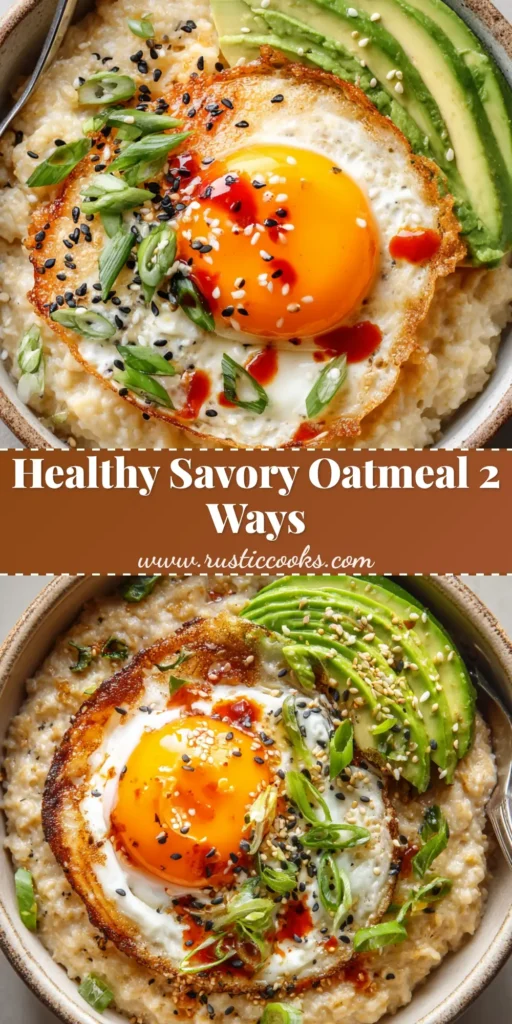
If you tried this recipe and achieved that perfectly crispy, lacy egg edge, let us know! Leave a comment below, rate the recipe, and don’t forget to subscribe to our newsletter for more incredible culinary deep-dives. Pin the image below to save this recipe for later!
Recipe Schema
The Ultimate Creamy Savory Oatmeal with Crispy Fried Egg
Ingredients
Equipment
Method
- Place a saucepan over medium-high heat and bring 1 cup of broth to a gentle rolling boil.
- Stir in the rolled oats and kosher salt. Reduce heat to medium-low and simmer for 7-10 minutes until thick, dense, and creamy.
- Heat olive oil in a skillet over medium-high until shimmering. Crack the egg into the oil and fry for 2-3 minutes until the edges are crispy and browned, leaving the yolk runny.
- Peel and slice the avocado half, pressing gently to fan out the slices.
- Spoon the hot oats into a rustic bowl. Top with the fried egg and fanned avocado.
- Sprinkle with finely chopped scallions, black sesame seeds, and cracked black pepper. Finish with a drizzle of chili oil.
Notes
Tip 2: Do not over-stir the oats while simmering, or they will become gummy instead of beautifully textured.