There is nothing quite like pulling a freshly baked thick sourdough focaccia bread resting in a dark metal rectangular baking pan straight from the oven. The incredible aroma of toasted flour, yeast, and fresh rosemary will immediately fill your kitchen. If you love a highly aerated crumb with large irregular bubbles, this rustic side dish will become your new obsession.
This sourdough focaccia features a deep golden-brown crust with slightly charred edges and deep, distinct dimpled indentations. Glistening with rich olive oil and generously sprinkled with coarse flaky sea salt, every single bite is a sensory masterpiece. Cut a square piece, pull it apart, and reveal the light cream-colored, pillowy interior that perfectly absorbs your favorite dips and sauces.
Why You’ll Love This Recipe
- Unbeatable Texture: A long fermentation process guarantees a light cream-colored, highly aerated crumb with large irregular bubbles.
- Incredible Crust: Baking in a dark metal pan creates a deep golden-brown crust with slightly charred, crispy edges.
- Rich Flavor Profile: The generous pools of olive oil combine with fresh green rosemary sprigs and coarse flaky sea salt for an authentic Mediterranean taste.
- Visually Stunning: The deep, distinct dimpled indentations catch the glistening oil, making this bread look straight out of an artisan bakery.
Ingredients & Substitutions
Active Sourdough Starter
You will need 1 cup (227g) of bubbly, active sourdough starter. This is the foundational invisible ingredient that provides the necessary lift to achieve the airy crumb and the signature tangy flavor.
Warm Water
Use 2 cups (473ml) of filtered warm water at around 85°F (29°C). Proper water temperature jumpstarts the fermentation process, encouraging the yeast to multiply.
Bread Flour
Measure out 4 cups (480g) of high-protein bread flour. The higher gluten content is scientifically required to trap the expanding fermentation gases, creating those large irregular bubbles. 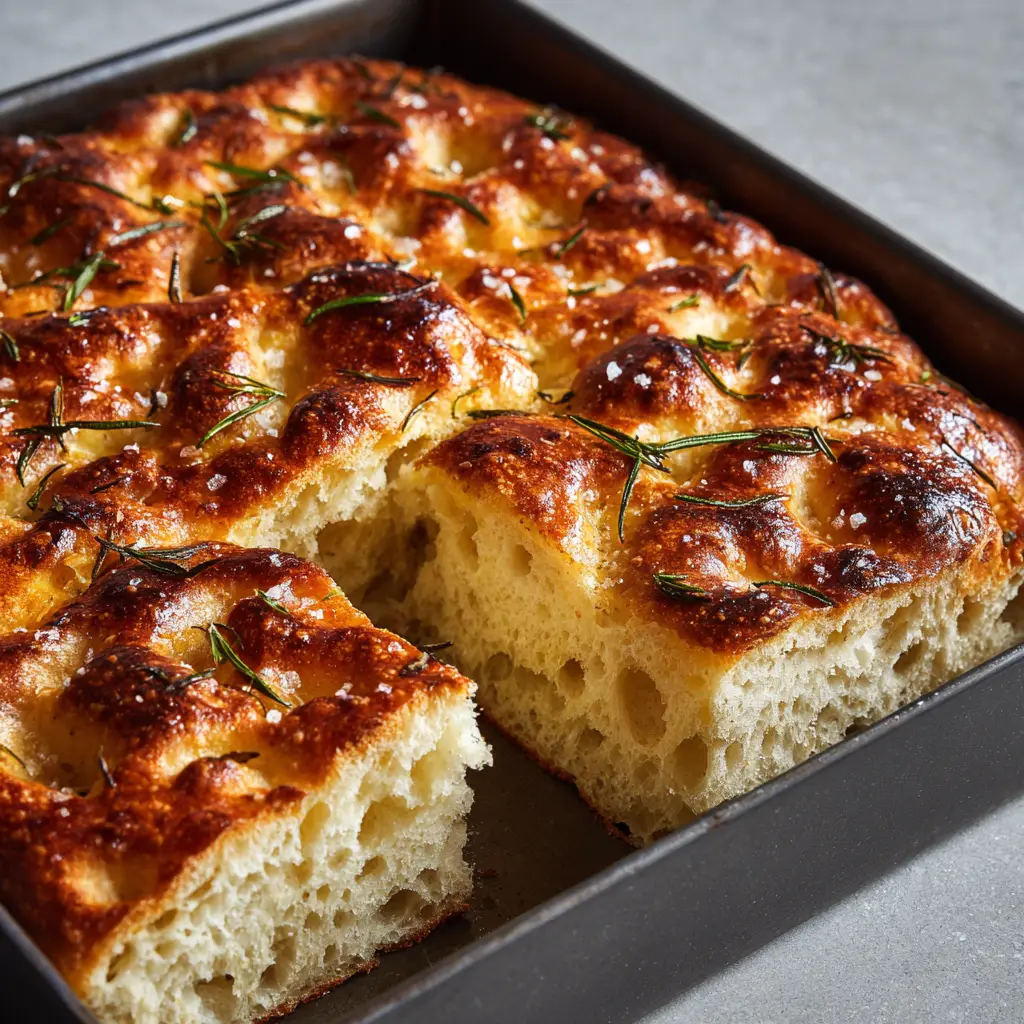
Fine Sea Salt (For the Dough)
You need 1 tbsp (18g) of fine sea salt integrated directly into the dough. Salt strengthens the gluten network and regulates yeast activity so the dough doesn’t over-proof.
Extra Virgin Olive Oil
You will use 1/2 cup (120ml) of extra virgin olive oil, divided throughout the recipe. Coating the pan ensures a fried, golden-brown crust, while drizzling over the top creates the classic glistening finish.
Fresh Rosemary
Gather 3-4 fresh green rosemary sprigs. Stripping and scattering these leaves over the dough releases aromatic essential oils during baking.
Coarse Flaky Sea Salt
Finish the dish with 1 tbsp (15g) of coarse flaky sea salt. This provides an essential textural crunch that perfectly contrasts the soft, thick dough.
Equipment Needed
- Dark Metal Rectangular Baking Pan: A 9×13-inch (23x33cm) dark metal pan conducts heat aggressively to ensure charred, crispy edges.
- Large Mixing Bowl: Necessary for bulk fermentation and performing your stretch-and-folds.
- Kitchen Scale: Crucial for accurate metric measurements, guaranteeing proper hydration levels.
Step-by-Step Instructions
1. Mix the Dough
In a large mixing bowl, combine 1 cup (227g) of active sourdough starter and 2 cups (473ml) of warm water. Stir gently until the starter is mostly dissolved and the liquid looks milky.
Add 4 cups (480g) of bread flour and 1 tbsp (18g) of fine sea salt. Use your hands or a dough whisk to mix until a shaggy, sticky dough forms, making sure no dry patches of flour remain.
2. Stretch and Fold for Aeration
Cover the bowl with a damp towel and let it rest for 30 minutes. Uncover the bowl, grab one side of the dough, stretch it upwards, and fold it over itself.
Rotate the bowl 90 degrees and repeat this process four times until you have completed a full circle. Perform this stretch-and-fold technique every 30 minutes for a total of two hours to build a strong gluten structure. 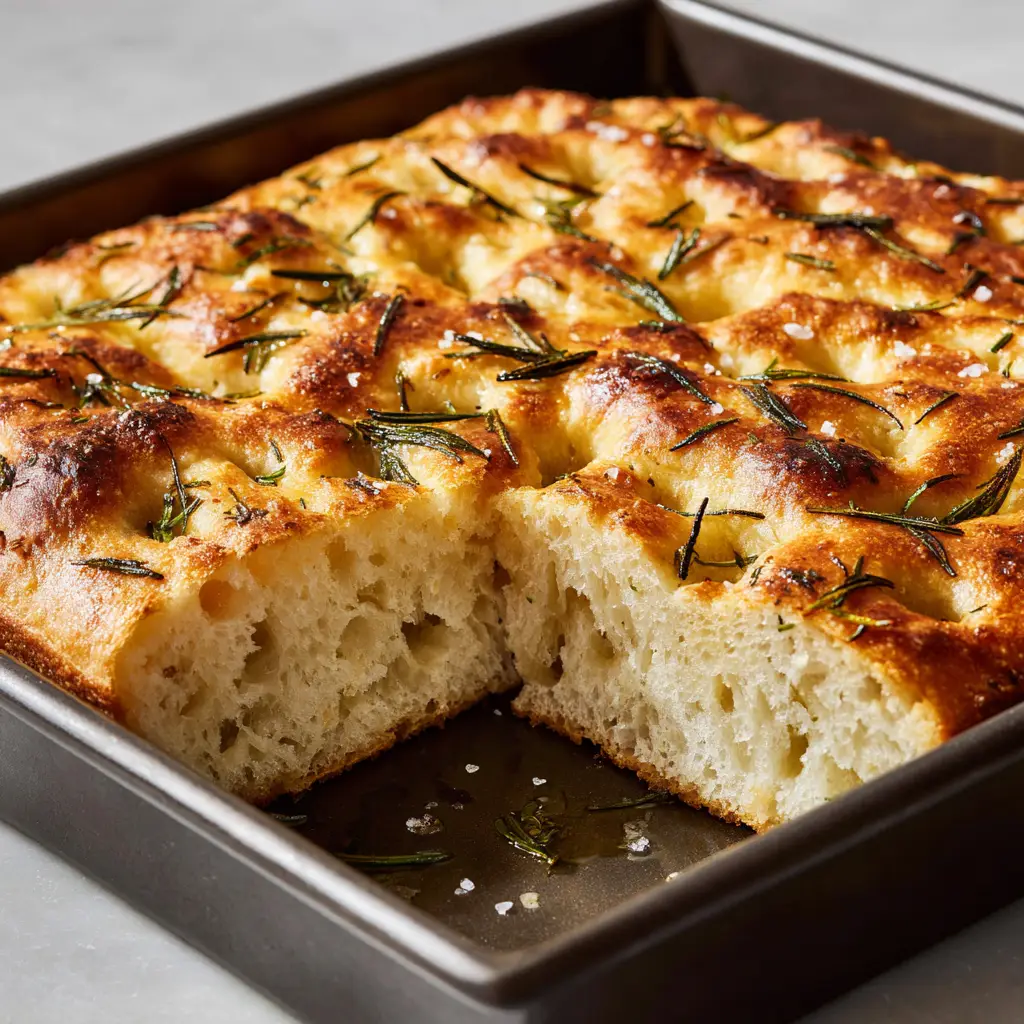
3. Bulk Fermentation
After your final fold, cover the bowl tightly and let the dough sit at room temperature for 4 to 6 hours. You are looking for the dough to double in size and appear domed with visible air bubbles on the surface.
If your kitchen is cold, this process may take longer. Trust your visual cues over the clock.
4. Pan Proofing
Pour 1/4 cup (60ml) of the extra virgin olive oil into your dark metal rectangular baking pan, spreading it to coat the bottom and sides evenly. Gently transfer the fermented dough into the pan, turning it once to coat the entire dough mass in oil.
Let it rest uncovered in a warm spot for 2 to 4 hours. The dough should relax and naturally stretch to fill the corners of the pan, becoming extremely jiggly and aerated.
5. Dimple and Garnish
Preheat your oven to 425°F (220°C). Pour the remaining 1/4 cup (60ml) of olive oil evenly over the surface of the fully proofed dough.
Oil your fingers, press them firmly straight down into the dough, and create deep, distinct dimpled indentations all over the surface. Scatter the fresh green rosemary sprigs and sprinkle generously with the coarse flaky sea salt.
6. Bake to Perfection
Transfer the pan to the middle rack of your preheated oven. Bake for 25 to 30 minutes.
Watch for visual cues: the bread is done when it features a deep golden-brown crust with slightly charred edges. Remove from the oven and carefully transfer the thick sourdough focaccia bread out of the pan onto a wire rack to prevent a soggy bottom.
Expert Tips for Success
- Use Wet Hands: Sourdough focaccia dough is incredibly high-hydration and sticky. Always wet your hands with water or oil before handling the dough to prevent a frustrating mess.
- Don’t Rush the Proof: To achieve that light cream-colored, highly aerated crumb, you must let the dough proof until it is visibly jiggly and bubbly. Under-proofing results in a dense, flat bread.
- The Dark Pan Matters: A dark metal baking pan absorbs and retains heat much better than glass or light aluminum. This is the secret to getting a fried, crispy bottom and deeply browned edges.
- Check Your Starter: Ensure your starter is at its peak activity. It should have doubled in size and pass the “float test” in a glass of water before mixing your dough.
Storage & Reheating/Freezing
Store leftover sourdough focaccia in an airtight container at room temperature for up to 3 days. To maintain the crispy crust, avoid putting it in the refrigerator, which will make the bread stale faster.
To freeze, cut the bread into individual square pieces, wrap tightly in plastic wrap, and place in a freezer-safe bag for up to 3 months. Reheat frozen or room-temperature slices in a 350°F (175°C) oven or air fryer for 5-8 minutes until the crust is warm and sizzling again.
What to Serve With This
This glistening, olive oil-soaked bread is incredibly versatile and pairs beautifully with a rich, hearty crockpot lasagna. The airy crumb acts as the perfect sponge to soak up rich marinara and melted cheese.
If you are hosting a comfort-food dinner, serve this focaccia alongside crockpot chicken gnocchi soup or a cozy bowl of mediterranean lentil soup. The crunchy, flaky sea salt topping cuts right through the creamy, savory broths.
For a protein-heavy spread, present these thick sourdough slices alongside savory garlic butter steak bites or a steaming bowl of authentic louisiana red beans and rice. The deeply flavored, slightly charred crust elevates any sauce-heavy main course.
Frequently Asked Questions
Absolutely. After completing your stretch-and-folds, you can place the covered bowl in the refrigerator for 12 to 48 hours for a slow, cold fermentation. This builds deeper flavor. Just allow the dough to come to room temperature and double in the pan before baking.
While you can use all-purpose flour, bread flour is highly recommended. The higher protein and gluten content in bread flour is scientifically necessary to trap fermentation gases, which creates the large, irregular bubbles in the crumb.
Yes, for the best results! A dark metal rectangular baking pan absorbs and conducts heat far more aggressively than glass or ceramic. This rapid heat transfer is required to achieve the deep golden-brown crust and slightly charred, crispy bottom.
Generously coating the bottom and sides of the pan with extra virgin olive oil before adding the dough creates a non-stick barrier. It literally ‘fries’ the dough in the oven, ensuring an easy release and a crispy crust.
A lack of large bubbles usually means the dough was under-proofed or your sourdough starter wasn’t active enough. Ensure your starter passes the float test and allow the dough to sit until it becomes extremely jiggly during the pan proofing stage.
Closing & Subscribe
If you successfully master this freshly baked thick sourdough focaccia bread, your kitchen will forever smell like an artisan bakery. The combination of the deep golden-brown crust, the large irregular bubbles, and the aromatic fresh rosemary makes this recipe truly unforgettable.
Please leave a comment below to let me know how your bake turned out! Don’t forget to subscribe to our newsletter for more incredible rustic recipes and save this post to your favorite boards on Pinterest. 
Recipe Card
Authentic Thick Sourdough Focaccia Bread
Ingredients
Equipment
Method
- In a large mixing bowl, combine 1 cup (227g) of active sourdough starter and 2 cups (473ml) of warm water. Stir gently until mostly dissolved. Add 4 cups (480g) of bread flour and 1 tbsp (18g) of fine sea salt. Mix until a shaggy, sticky dough forms.
- Cover with a damp towel and rest for 30 minutes. Uncover, stretch one side of the dough upwards, and fold it over itself. Rotate 90 degrees and repeat four times. Perform this every 30 minutes for a total of two hours.
- Cover the bowl tightly and let the dough sit at room temperature for 4 to 6 hours until it doubles in size and appears domed with visible air bubbles.
- Pour 1/4 cup (60ml) of olive oil into a 9x13-inch dark metal baking pan. Transfer the dough into the pan, turn once to coat, and let rest uncovered for 2 to 4 hours until it stretches to the corners and is very jiggly.
- Preheat oven to 425°F (220°C). Pour the remaining 1/4 cup (60ml) of olive oil over the dough. With oiled fingers, press firmly to create deep, distinct dimpled indentations. Scatter fresh rosemary sprigs and sprinkle with coarse flaky sea salt.
- Bake on the middle rack for 25 to 30 minutes until the crust is deep golden-brown with slightly charred edges. Cool on a wire rack to prevent a soggy bottom.
Notes
Do not rush the pan proofing; achieving large irregular bubbles requires time.
For optimal crispness, ensure your baking pan is dark metal, which conducts heat more effectively.