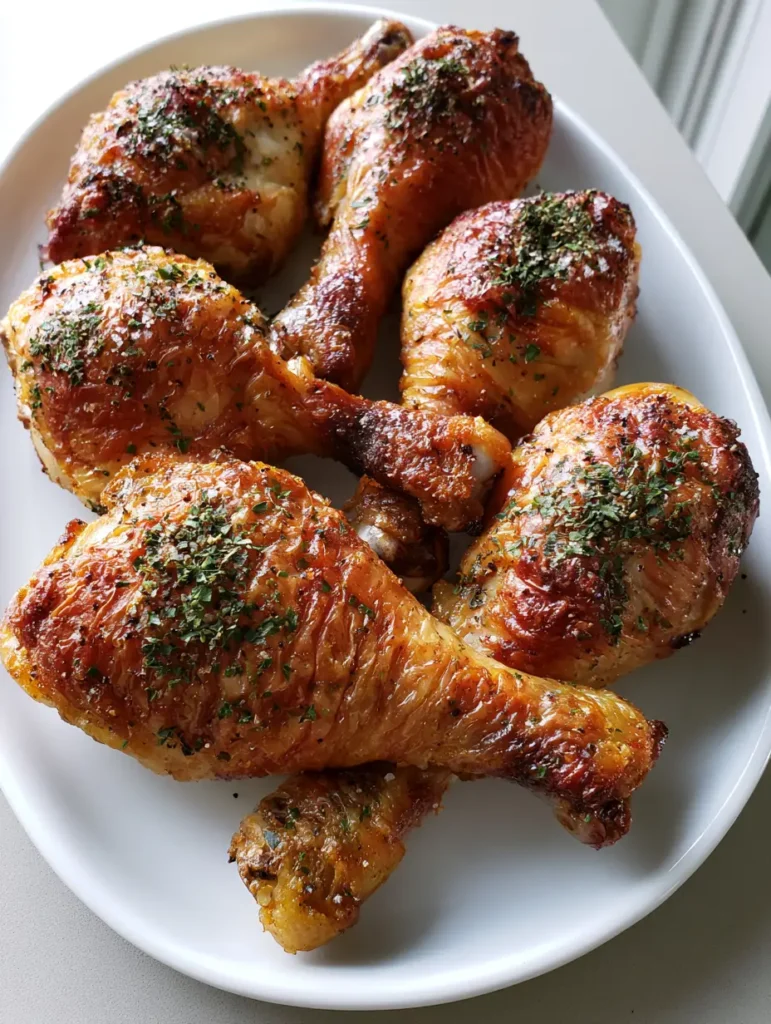
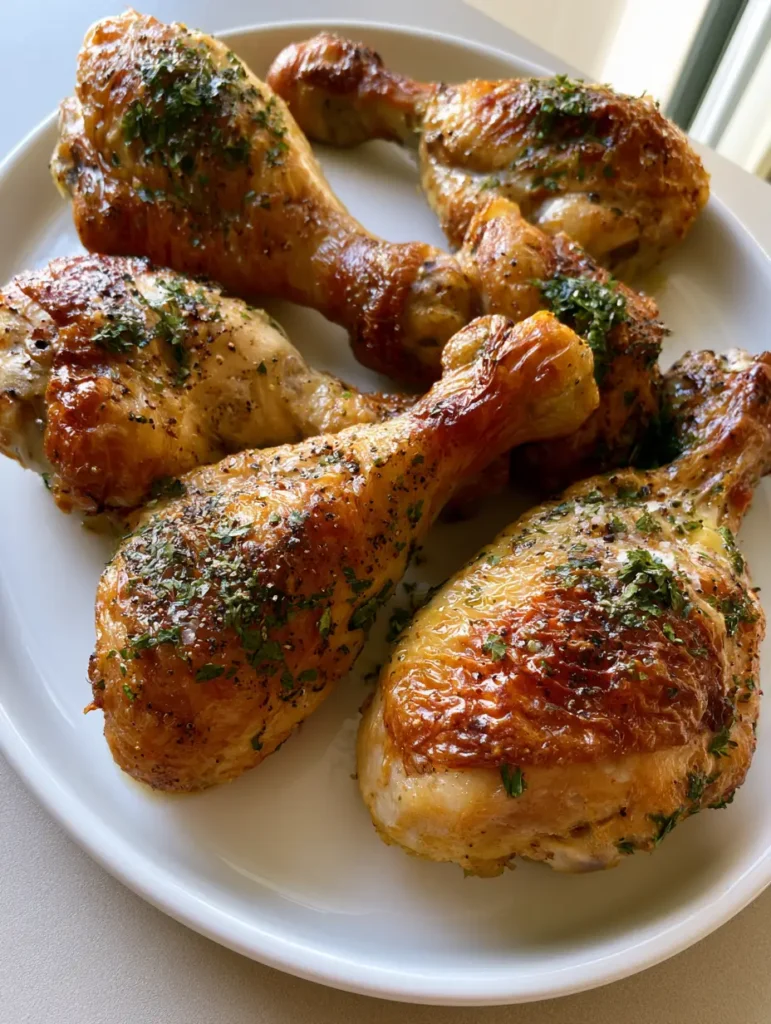
There is a specific, primal joy in biting into a chicken drumstick where the skin crackles like parchment paper before giving way to succulent, steaming meat. These Crispy Oven Baked Chicken Legs are the definitive answer to the home cook’s quest for deep-fried texture without the mess of a bubbling vat of oil. We are looking for that specific visual: five perfectly roasted drumsticks resting on a white ceramic platter, their skins puckered into a deep golden-brown landscape of flavor.
To achieve the result seen in professional culinary photography, we don’t just “bake” the chicken; we engineer the environment for the Maillard reaction to thrive. By focusing on moisture removal and heat distribution, we transform humble poultry into a gourmet centerpiece. The glistening oil and the visible specks of cracked black pepper against the green of dried parsley flakes aren’t just for show—they are the hallmarks of a perfectly executed roast.
Whether you are preparing a weeknight family meal or hosting a casual weekend gathering, mastering these Crispy Oven Baked Chicken Legs will elevate your kitchen repertoire. This technique ensures that every bite is seasoned to the bone, with a skin-to-meat ratio that delivers maximum satisfaction in every mouthful. Let’s dive into the science and soul of the perfect drumstick.
The Secrets to Achieving a Deep Golden-Brown Crunch
- Moisture is the Enemy of Crisp: We utilize a multi-step drying process to ensure the skin dehydrates rapidly in the heat of the oven, leading to that coveted puckered texture.
- High-Heat Engineering: By roasting at a precise temperature, we render the fat beneath the skin, effectively “frying” the chicken in its own natural juices while it sits on the rack.
- The Flavor Trio: A calculated balance of sea salt, cracked black pepper, and dried parsley flakes provides a classic flavor profile that complements the natural richness of the dark meat.
- Visual Indicators: We look for “glistening oil” and a “deep golden-brown hue” as sensory cues that the collagen has broken down and the skin has achieved peak structural integrity.
What You Need for the Perfect Oven-Roasted Drumstick
Chicken Drumsticks: You will need 5-6 large chicken drumsticks (approximately 1.5 lbs / 680g). Look for plump meat and intact skin, as the skin acts as the protective, crispy envelope for the juices inside.
Extra Virgin Olive Oil: Use 2 tbsp (30ml) of high-quality olive oil to coat the legs. This acts as a heat conductor, ensuring the seasonings stick and the skin sears evenly in the dry heat of the oven.
Coarse Sea Salt: Use 1 tsp (6g) of sea salt. Unlike table salt, sea salt provides a rhythmic crunch and draws out internal moisture to the surface where it can evaporate quickly.
Cracked Black Pepper: Use 1/2 tsp (1g) of freshly cracked black pepper. The larger “cracked” pieces provide a visible texture and a pungent heat that cuts through the richness of the chicken fat.
Dried Parsley Flakes: Use 1 tbsp (1g) of dried parsley. This is added specifically for its earthy aroma and the vibrant green contrast it provides against the golden-brown skin, as seen in our visual blueprint.
Baking Powder (The Secret Ingredient): Use 1 tsp (5g) of aluminum-free baking powder. This foundational invisible ingredient raises the pH level of the skin, breaking down the peptide bonds and accelerating the crisping process.
Essential Tools for Culinary Success
To replicate the handheld smartphone photo aesthetic of perfectly roasted chicken, you need a heavy-duty rimmed baking sheet. This prevents oil from dripping into your oven and causing smoke. More importantly, you must use a wire cooling rack set inside the baking sheet. This allows hot air to circulate 360 degrees around the chicken, preventing the bottom of the drumstick from becoming soggy.
A pair of stainless steel tongs is also required for flipping the chicken mid-way through. Finally, an instant-read meat thermometer is the only way to guarantee that your chicken is “plump and juicy” rather than overcooked and dry. We are aiming for an internal temperature of 175°F (80°C) for drumsticks, which allows the connective tissue to fully melt.
Step-by-Step Evolution to Crispy Perfection
Preparing the Skin Surface
Start by taking the chicken drumsticks out of the refrigerator 20 minutes before cooking to take the chill off. Use paper towels to pat each drumstick extremely dry. This is the most critical step; if the skin is wet, it will steam rather than crisp. You want the skin to feel tacky and matte before you apply the oil coating.
The Seasoning and Coating Process
In a large mixing bowl, whisk together the olive oil, sea salt, cracked black pepper, and the secret baking powder. Toss the drumsticks in this mixture until every crevice is coated in a glistening layer of oil. The baking powder will be invisible, but it is working on a molecular level to prep that skin for the heat. Save the dried parsley flakes for later to ensure they maintain their color.
The High-Heat Roast
Preheat your oven to 425°F (220°C). Arrange the drumsticks on the wire rack over the baking sheet, ensuring they do not touch. This space is vital for airflow. Slide them into the center rack of the oven. You will soon hear the sound of the fat rendering—a gentle sizzling that signals the “puckering” of the skin is beginning.
Visual and Sensory Cues
After 20 minutes, rotate the pan. At this stage, you should see the skin starting to turn a light tan. Roast for another 15-20 minutes. Watch for the transformation to a “deep golden-brown hue.” The skin should look tight and thin, with visible droplets of glistening oil on the surface. Use your thermometer to check for that 175°F (80°C) sweet spot.
The Final Flourish
Once removed from the oven, immediately sprinkle the generous amount of dried green parsley flakes over the hot chicken. The residual heat will wake up the oils in the parsley without burning it. Let the chicken rest on the rack for 5 minutes. This allows the juices to redistribute, ensuring the meat remains “plump and juicy” beneath that crackling exterior.
Expert Tips for the Ultimate Chicken Texture
- Never Crowd the Pan: If the drumsticks are touching, they will trap steam between them. Give them at least an inch of space to ensure the sides get as crispy as the tops.
- The Baking Powder Rule: Ensure your baking powder is fresh and aluminum-free. Aluminum-filled powder can sometimes leave a faint metallic aftertaste when used in roasting.
- Dry Brining: If you have time, salt your chicken and leave it uncovered in the fridge for 2 hours before roasting. This “dry brining” deepens the flavor and dries the skin even further.
- The Resting Period: Do not skip the 5-minute rest. If you cut into the chicken immediately, the steam will escape, and your crispy skin will soften from the inside out.
Safe Storage and Better-Than-New Reheating
If you have leftovers, store them in an airtight container in the refrigerator for up to 4 days. However, be aware that the refrigerator’s humidity will soften the skin. To bring back the crunch, avoid the microwave at all costs. Instead, place the drumsticks back on a wire rack in a 375°F (190°C) oven or an air fryer for 5-7 minutes until the skin begins to sizzle again.
Freezing is possible for up to 3 months, though the texture of the skin will never be quite as “shatteringly-crisp” as the day it was made. Defrost thoroughly in the fridge before using the oven reheating method mentioned above.
Creative Pairings for a Complete Meal
These Crispy Oven Baked Chicken Legs are incredibly versatile. For a light, summer-inspired lunch, pair them with a refreshing peach burrata salad that cuts through the saltiness of the chicken. If you are looking for a Mediterranean vibe, a dollop of authentic Greek tzatziki makes a cooling dip for the hot, seasoned meat.
For a heartier dinner, serve the drumsticks alongside a roasted vegetable orzo salad or a scoop of classic Dolly Parton macaroni salad. The combination of the warm, crackling chicken skin and a chilled, creamy side dish is a textural masterpiece that will keep your guests coming back for seconds.
Frequently Asked Questions
You can, but the bottom of the chicken will not be as crispy because it will sit in its own juices. For the ‘shatteringly-crisp’ result, a wire rack is highly recommended.
Yes, flipping the drumsticks halfway through the cooking time ensures that the skin crisps evenly on all sides, even when using a wire rack.
The key is removing moisture by patting the skin dry, using a wire rack for airflow, and adding a small amount of baking powder to the seasoning rub to increase the skin’s pH level.
A high temperature of 425°F (220°C) is ideal. It renders the fat quickly and browns the skin before the meat has a chance to overcook and dry out.
Rubbery skin is usually caused by excess moisture or too low an oven temperature. Ensure the skin is bone-dry before oiling and that your oven is fully preheated to at least 400°F.
The Master Recipe: Crispy Oven Baked Chicken Legs
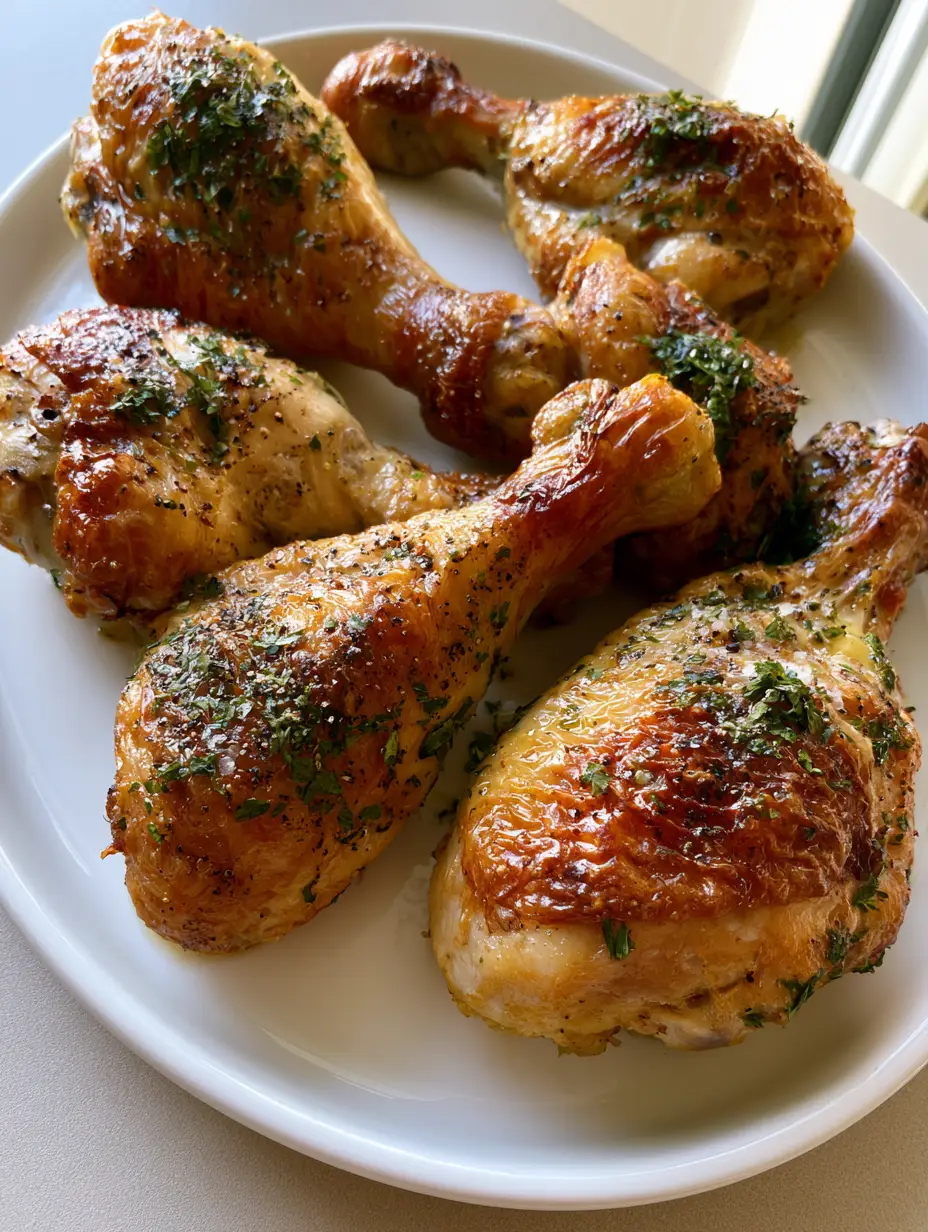
Crispy Oven Baked Chicken Legs with Shatteringly-Crisp Skin
Ingredients
Equipment
Method
- Pat the chicken drumsticks extremely dry with paper towels. Any surface moisture will prevent the skin from crisping.
- Preheat your oven to 425°F (220°C). Place a wire rack inside a large rimmed baking sheet.
- In a large bowl, toss the drumsticks with olive oil, sea salt, cracked black pepper, and baking powder until evenly coated.
- Place drumsticks on the wire rack, leaving space between each. Bake for 35-40 minutes.
- Flip the drumsticks halfway through. Roast until the skin is deep golden-brown and puckered, and the internal temperature is 175°F (80°C).
- Remove from the oven and immediately sprinkle with dried parsley flakes. Let rest for 5 minutes before serving.
Notes
Ensure the baking powder is aluminum-free to avoid a metallic taste.

Join the Community of Home Cooks
These Crispy Oven Baked Chicken Legs represent the perfect marriage of simple ingredients and technical execution. By following this guide, you’ve mastered the art of the oven-roast, creating a dish that is as beautiful as it is delicious. We would love to see your results! Did your skin get that perfect puckered texture? Did the parsley add that perfect pop of color?
Leave a comment below and let us know your thoughts. If you enjoyed this recipe, please share it with your fellow foodies and follow us on Pinterest for more culinary inspiration and forensic recipe guides. Happy roasting!