There is a specific, intoxicating magic that happens when a screaming-hot wok meets wide rice noodles and a splash of dark, sugary soy sauce. Thai Drunken Noodles, known traditionally as Pad Kee Mao, are the ultimate street food comfort, defined by their bold heat, savory depth, and that unmistakable “breath of the wok.”
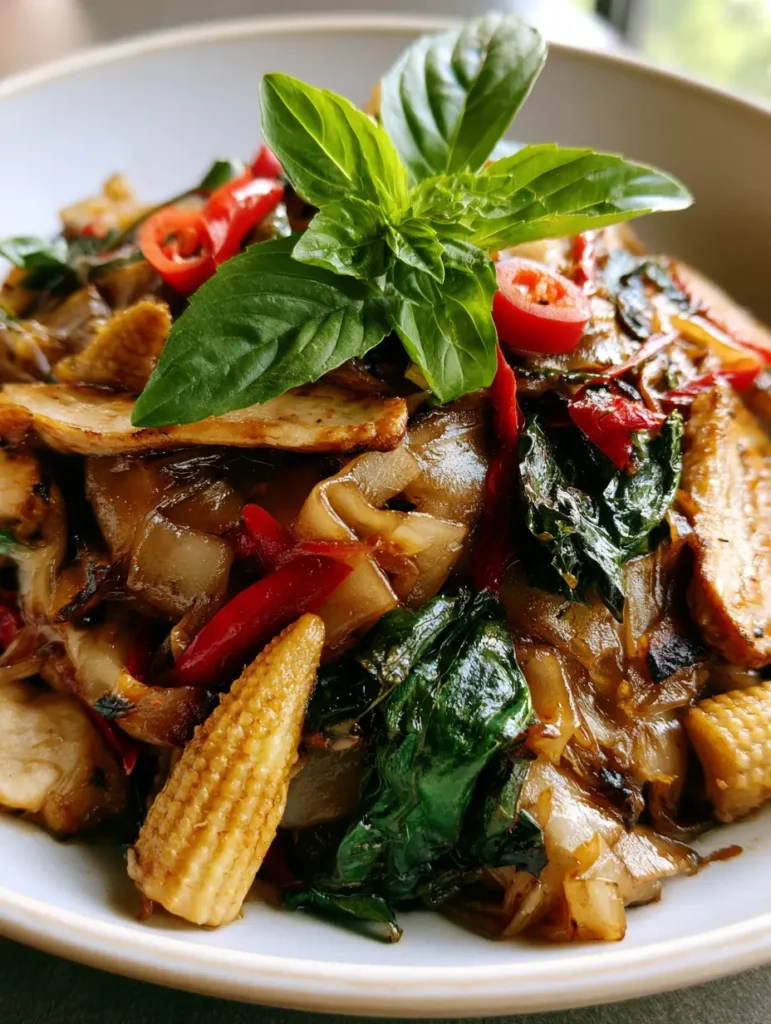
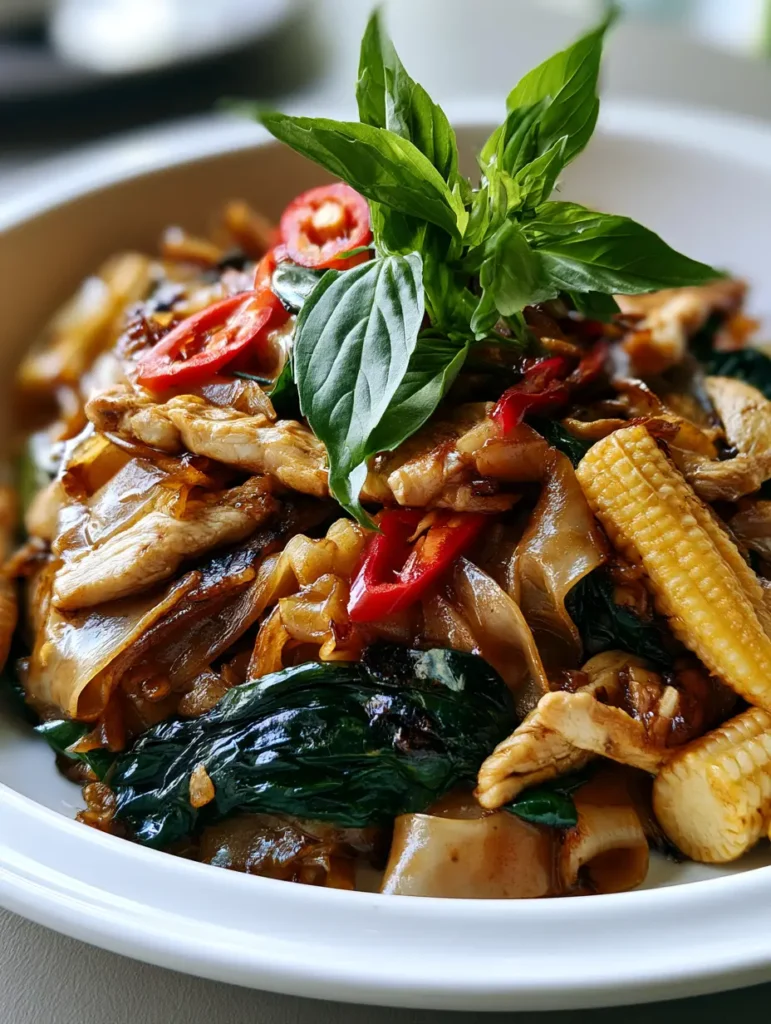
When you look at a plate of authentic Thai Drunken Noodles, you should see translucency in the wide noodles, punctuated by deep, caramelized charred edges. This recipe captures that exact visual profile: glossy, dark-coated ribbons of rice nested with golden-seared chicken breast and vibrant pops of red chili.
Whether you are craving the spicy kick of Thai bird’s eye chilies or the herbaceous aroma of fresh Thai basil, this version delivers a restaurant-quality experience right to your kitchen. Get ready to master the high-heat technique that transforms simple ingredients into a masterpiece of texture and flavor.
Why These Pad Kee Mao Noodles Are a Home Cook’s Dream
- The Signature Char: We utilize a specific high-heat searing method to ensure your noodles get those coveted crispy, dark edges without becoming mushy.
- Balanced Umami Depth: A triple-threat soy sauce blend provides the rich, mahogany color and complex salty-sweet profile seen in professional Thai kitchens.
- Textural Contrast: From the tender, seared chicken breast slices to the snap of halved baby corn, every bite offers a different sensory experience.
- Fragrant Herbaceous Finish: By using both wilted and fresh Thai basil, we layer the anise-like flavor for maximum aromatic impact.
The Essential Pantry for Authentic Thai Drunken Noodles
To achieve the dark, glossy sauce and structural integrity of the noodles, specific ingredients are non-negotiable. Here is what you need and why each component matters for the final dish.
Wide Flat Rice Noodles: 16 oz (450g) of dried or fresh wide rice noodles. These provide the chewy, translucent base that absorbs the savory sauce while maintaining enough structure to withstand a high-heat sear.
Chicken Breast: 1 lb (450g) of boneless, skinless chicken breast, sliced into thin bite-sized pieces. Searing the chicken separately ensures a golden-brown crust and juicy interior, echoing the technique used in grilled chicken bites.
Thai Basil: 2 cups (60g) of fresh Thai basil leaves. Thai basil has a sturdy leaf and a spicy, licorice flavor that holds up better to heat than Italian basil, much like the herb profile in strawberry basil chicken.
Baby Corn: 1 cup (150g) of canned or fresh baby corn, sliced lengthwise. These provide a distinct visual “crunch” and a mild sweetness that balances the heat of the chilies.
Dark Soy Sauce: 2 tbsp (30ml). This is the secret to the deep mahogany color; it is thicker and sweeter than regular soy sauce and caramelizes beautifully under heat.
Oyster Sauce: 3 tbsp (45ml). This provides the “gloss” seen in the visual prompt and adds a rich, salty umami base that coats every noodle strand.
Fish Sauce: 1 tbsp (15ml). Essential for that authentic Thai funk and saltiness; it rounds out the savory profile of the sauce.
Thai Bird’s Eye Chilies: 3-5 chilies, minced or sliced. This is where the “Drunken” heat comes from; adjust the quantity based on your personal spice tolerance.
Garlic: 4 cloves, minced. Fresh garlic toasted in oil creates the aromatic foundation for the entire stir-fry.
Neutral Oil: 3 tbsp (45ml) of canola or grapeseed oil. A high smoke point oil is required to achieve the charred noodle edges without the oil breaking down or smoking excessively.
Tools Required for Wok-Style Success
To replicate the intense heat of a professional kitchen, you need tools that can handle high temperatures. A heavy-bottomed carbon steel wok is ideal for achieving “wok hei,” but a large cast-iron skillet is a fantastic alternative for heat retention.
You will also need a sturdy metal spatula or wok turner. This allows you to scrape the bottom of the pan and flip the noodles aggressively, which is how you get those beautiful charred bits without breaking the delicate rice ribbons.
Mastering the Art of High-Heat Wok Searing
Step 1: Preparing the Aromatics and Sauce
In a small bowl, whisk together the dark soy sauce, oyster sauce, fish sauce, and a teaspoon of sugar. Having your sauce ready is critical because stir-frying happens in seconds, and you cannot afford to measure ingredients while the pan is screaming hot.
Mince your garlic and Thai chilies together. If you prefer a milder dish, remove the seeds from the chilies, but keep the vibrant red slivers for that classic Pad Kee Mao look.
Step 2: Hydrating the Noodles
If using dried noodles, soak them in hot (not boiling) water for about 20-30 minutes until they are flexible but still have a firm “bite” in the center. Drain them thoroughly; excess water is the enemy of a good sear and will cause the noodles to steam rather than fry.
Step 3: Searing the Chicken Breast
Heat 1 tablespoon (15ml) of oil in your wok over high heat until it just starts to shimmer. Add the sliced chicken breast in a single layer and let it sit undisturbed for 60 seconds to develop a deep golden-brown crust. Toss and cook for another minute until opaque, then remove the chicken from the pan and set aside.
Step 4: Creating the Flavor Foundation
Add the remaining oil to the wok. Toss in the garlic and chili mixture, stirring constantly for 30 seconds until the air smells fragrant and spicy. Add the halved baby corn and stir-fry for 1 minute; the edges should just begin to soften while remaining crisp.
Step 5: The High-Heat Noodle Char
Add the drained noodles to the wok. Immediately pour the sauce over the noodles and use your spatula to fold and toss. Spread the noodles out against the sides and bottom of the hot wok and let them sit for 30-45 seconds without moving them.
You should hear a distinct sizzling sound. This is the sugar in the dark soy sauce caramelizing against the rice starch, creating those charred noodle edges described in our visual blueprint. Flip and repeat until the noodles are evenly coated and show dark, crispy patches.
Step 6: The Basil Infusion
Return the seared chicken to the wok and add 1.5 cups of the Thai basil leaves. Toss for only 30 seconds—just long enough for the basil to wilt and release its oils into the sauce. Remove from heat immediately to prevent the basil from turning black.
Expert Tips for Success
- Don’t Overcrowd the Pan: If your wok isn’t large enough, cook this recipe in two batches. Overcrowding drops the temperature, leading to soggy noodles instead of charred ones.
- Dry Your Noodles: After draining your rice noodles, pat them with a paper towel. Moisture creates steam, and steam prevents caramelization.
- The “Sizzle” Test: If you don’t hear a loud sizzle when the noodles hit the pan, your heat isn’t high enough. Crank the flame to the max.
- Basil Timing: Only add the basil at the very end. The residual heat is plenty to wilt the leaves while keeping them vibrant green.
Storage, Reheating & Freezing
Thai Drunken Noodles are best served immediately while the noodles are chewy and the edges are crisp. However, leftovers can be stored in an airtight container in the refrigerator for up to 3 days.
To reheat, avoid the microwave if possible, as it can make rice noodles rubbery. Instead, add a teaspoon of oil to a skillet over medium-high heat and toss the noodles for 2-3 minutes until heated through. Freezing is not recommended, as rice noodles tend to break apart and lose their texture once thawed.
What to Serve With This Spicy Thai Classic
While Pad Kee Mao is a hearty one-pan meal, it pairs beautifully with lighter, refreshing sides. A crisp cucumber salad helps cool the palate between spicy bites of chili.
If you are hosting a Thai-inspired dinner party, consider serving these noodles alongside a citrus-forward protein like ginger lime pork or a fresh authentic salad for a fusion spread that hits every flavor note.
Frequently Asked Questions
While you can use Italian basil in a pinch, the flavor profile will change significantly. Thai basil has a sturdy leaf and a distinct anise/licorice flavor that is central to the authentic taste of Pad Kee Mao.
Do not over-boil them. If using dried noodles, soak them in hot water until they are just pliable. They will finish cooking in the wok. Over-hydrated noodles will turn into mush during the stir-fry process.
Traditionally no, because of the soy sauce and oyster sauce. To make it gluten-free, use tamari instead of soy sauce and ensure your oyster sauce is a certified gluten-free variety.
The mahogany color comes from Dark Soy Sauce. It is much thicker and darker than regular soy sauce and contains molasses, which caramelizes under high heat to give the noodles their signature look.
Contrary to the name, there is no alcohol in the dish. It’s called ‘Drunken Noodles’ because the high heat and intense spiciness are said to be a perfect cure for a hangover, or so spicy that you’d need to drink a lot to handle it.
The Ultimate Thai Drunken Noodles Recipe
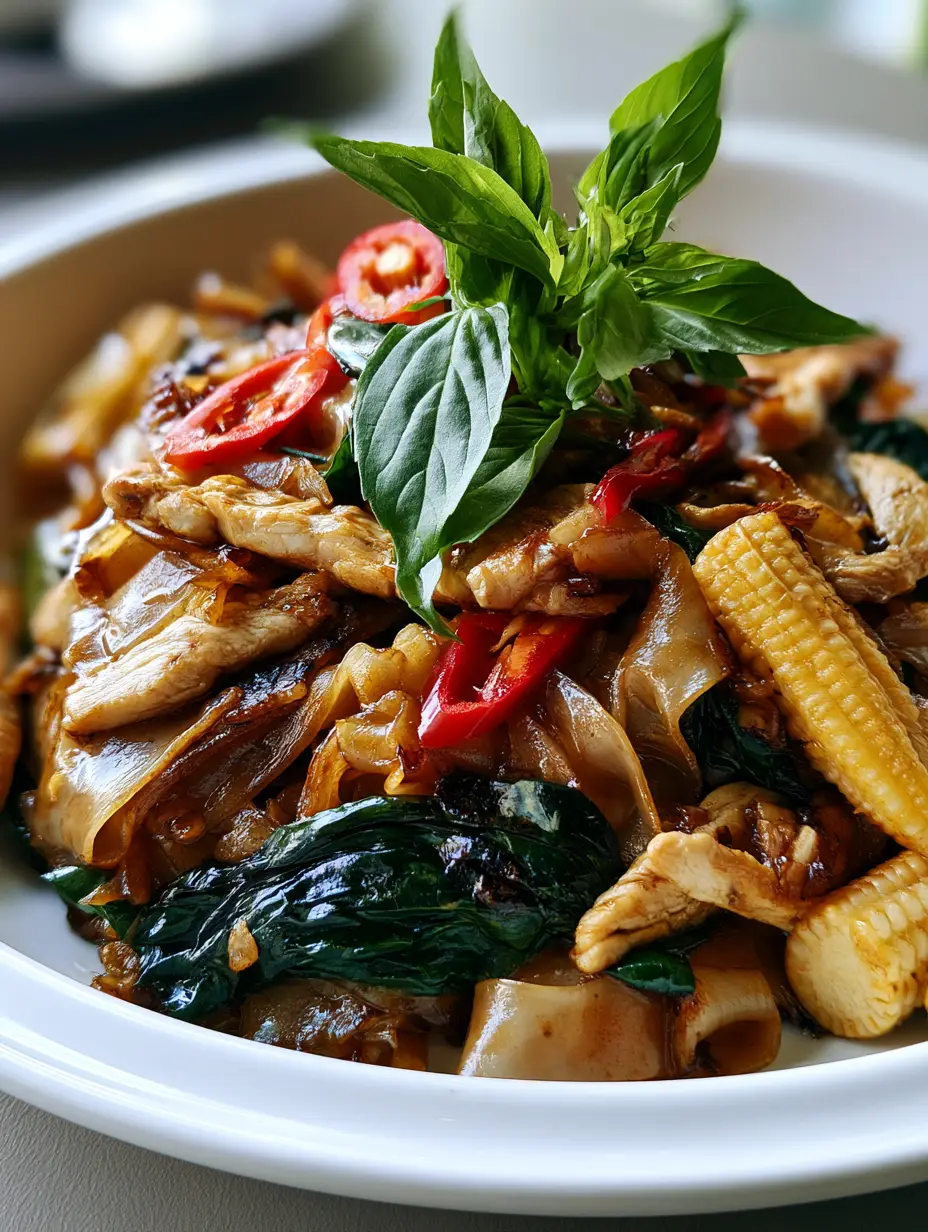
Thai Drunken Noodles with Seared Chicken and Charred Rice Noodles
Ingredients
Equipment
Method
- Soak dried rice noodles in hot water for 20 minutes until pliable but firm. Drain and pat dry.
- Whisk dark soy sauce, oyster sauce, and fish sauce in a small bowl.
- Heat 1 tbsp oil in wok over high heat. Sear chicken slices until golden brown and cooked through. Remove and set aside.
- Add remaining oil, garlic, and chilies. Stir fry for 30 seconds until fragrant.
- Add noodles and sauce. Spread across the pan and let sit for 45 seconds to achieve charred edges. Toss and repeat.
- Fold in chicken, baby corn, and basil leaves. Toss for 30 seconds until basil is wilted. Garnish with fresh sprigs.
Notes
Ensure the wok is smoking hot before adding noodles for the best char.
Bring the Streets of Bangkok to Your Kitchen
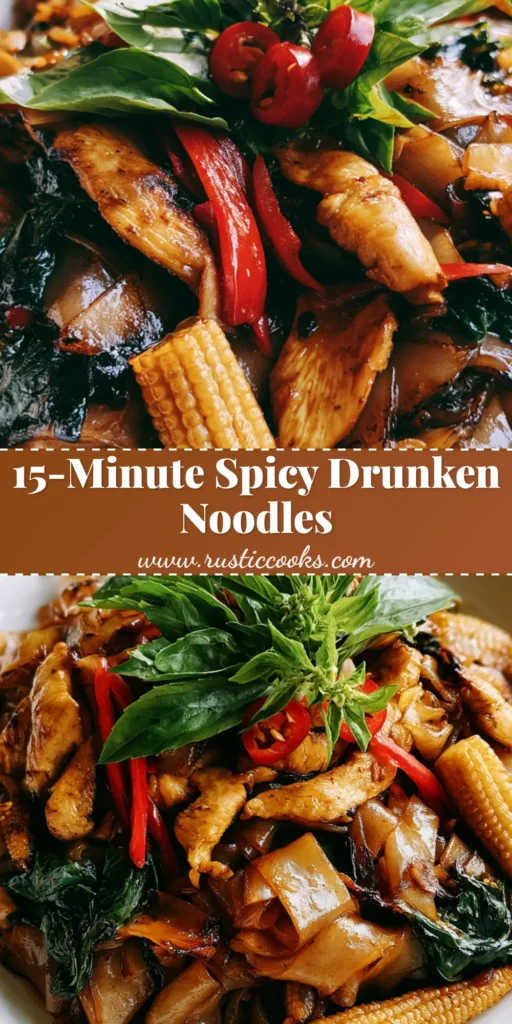
With its smoky charred noodles and bold, spicy sauce, this Thai Drunken Noodles recipe is a testament to the power of high-heat cooking. It is a dish that engages all the senses—the sight of the glossy dark sauce, the smell of toasted garlic, and the incredible texture of seared chicken and chewy rice ribbons.
If you enjoyed making this recipe, we would love to hear from you! Leave a comment below and let us know how your noodle char turned out. Don’t forget to sign up for our newsletter for more restaurant-style recipes and share this post with your fellow foodies on Pinterest.