The Authentic Greek Salad, known in its homeland as Horiatiki, is a masterclass in culinary simplicity and seasonal vibrancy. Forget the limp lettuce and bottled dressings found in suburban diners; this is a rustic, soul-satisfying dish that celebrates the sun-drenched produce of the Mediterranean. It is a bowl of pure summer, captured in a handheld smartphone photo, showcasing raw, unedited beauty.
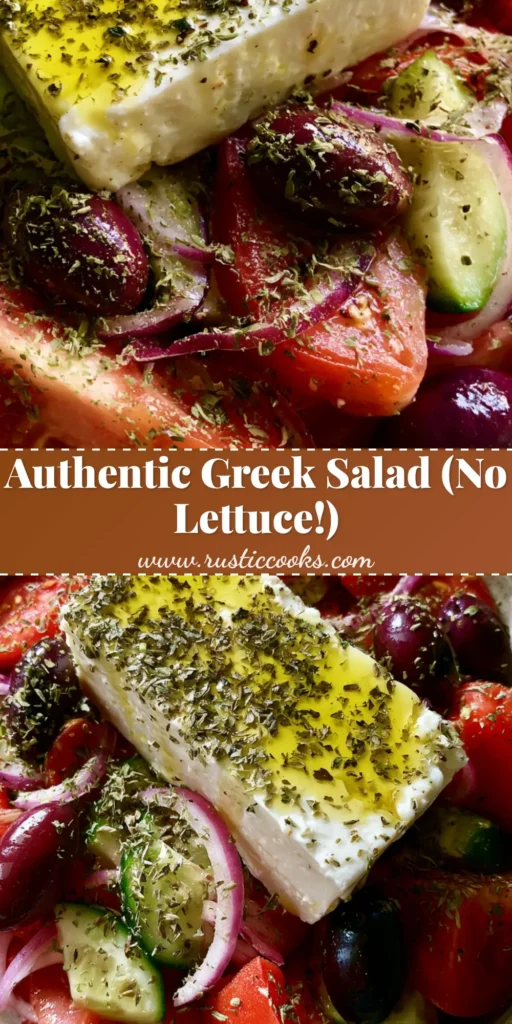
To recreate this masterpiece, we move beyond mere assembly and into the realm of culinary forensics. We are looking for that specific visual profile: the glistening sheen of high-quality oil, the architectural presence of a feta block, and the deep, earthy green of dried oregano. Every element must be intentional, from the way the tomato juices mingle with the vinegar to the structural integrity of the unpeeled cucumbers.
Whether you are serving this as a standalone lunch or as a vibrant side to a homemade Greek chicken flatbread, the goal is balance. You want the sharp bite of red onion to be tempered by the creamy richness of sheep’s milk cheese. This recipe provides the technical roadmap to achieving that perfect Horiatiki every single time.
The Visual and Flavor Profile of a True Village Salad
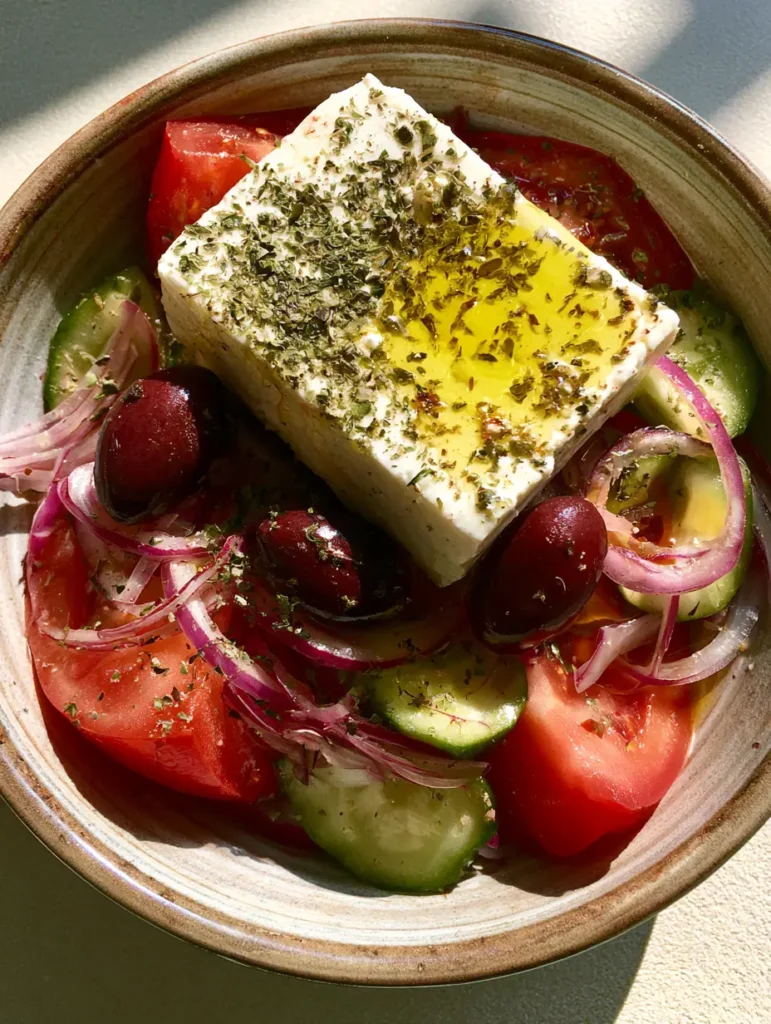
- Structural Integrity: Large, juicy red tomato wedges serve as the foundation, providing both sweetness and a natural juice “sauce.”
- Textural Contrast: Thick-sliced unpeeled cucumbers offer a refreshing crunch and a vibrant green visual border that defines the dish.
- Aromatic Depth: Thin, translucent rings of red onion provide a sharp, spicy note that cuts through the richness of the oil and cheese.
- Briny Accents: Plump, dark purple whole Kalamata olives add a salty, fermented complexity that ground the lighter vegetable notes.
- The Feta Crown: A large, thick rectangular block of white feta cheese sits prominently on top, never crumbled, allowing the diner to break off pieces as they eat.
Essential Components for an Authentic Greek Salad
Vine-Ripened Tomatoes: You will need 4 large (600g) tomatoes. At the peak of summer, these provide the essential “jus” that pools at the bottom of the bowl, perfect for dipping crusty bread.
English or Persian Cucumbers: Use 1 large (300g) cucumber. Keeping the skin on is non-negotiable for an Authentic Greek Salad, as it provides the necessary bitterness and structural snap.
Red Onion: Half of a medium (110g) red onion is sufficient. Slicing them into paper-thin, translucent rings ensures they soften slightly in the dressing without overpowering the other ingredients.
Kalamata Olives: Approximately 1/2 cup (75g) of whole olives. Ensure they are the dark purple, almond-shaped variety preserved in brine or red wine vinegar for the most authentic flavor profile.
Greek Feta Cheese: Use one 7oz (200g) rectangular block. Look for PDO (Protected Designation of Origin) feta made from sheep’s milk, which has the creamy yet crumbly texture required for this presentation.
Extra Virgin Olive Oil: You need 1/4 cup (60ml) of the highest quality golden-yellow oil. This isn’t just a fat; it’s a primary seasoning that provides a peppery finish and a glistening visual coating.
Dried Oregano: 1 tbsp (3g) of dried Greek oregano. Rubbing the flakes between your palms before dusting the salad releases the essential oils, creating that signature Mediterranean aroma.
Red Wine Vinegar: 1 tbsp (15ml) of vinegar. While the blueprint focuses on the oil, this “invisible” ingredient provides the acidity necessary to brighten the heavy fats of the cheese and oil.
Sea Salt: 1/2 tsp (3g) of fine sea salt. Salt is chemically essential here; it draws out the moisture from the tomatoes and cucumbers to create the salad’s natural dressing.
Tools Required for Professional Results
To achieve the “unedited, handheld smartphone photo” look, your cuts must be precise but rustic. A sharp Chef’s knife is the most important tool in your arsenal. You want to avoid bruising the tomatoes; a clean cut preserves the interior gel and seeds which hold the most flavor.
A large, rustic ceramic bowl is the traditional vessel of choice. The heavy walls of the ceramic help keep the vegetables cool while providing a neutral, earthy background that makes the reds and greens of the salad pop. You will also want a small glass jar or bowl to whisk the dressing if you prefer an emulsified start, though traditionalists often drizzle directly over the vegetables.
The Step-by-Step Anatomy of Assembly
Preparing the Vegetable Base
Start by washing your produce in cold water and drying it thoroughly. Moisture on the outside of the vegetables can dilute the olive oil, preventing that “glistening” effect described in our visual blueprint. Cut the tomatoes into large, irregular wedges—think six to eight pieces per tomato depending on size.
For the cucumber, leave the peel on. Slice it into thick rounds, about 1/2 inch (1.25cm) thick. If the cucumber is particularly large, you can cut these rounds into half-moons. The goal is to have pieces that are substantial enough to be speared with a fork alongside a piece of feta.
Mastering the Onion and Olive Layer
Peel the red onion and slice it into the thinnest rings possible. To reduce the “sulfuric bite” while maintaining the crunch, you can briefly soak these rings in ice water for five minutes, though a true Horiatiki embraces the raw heat of the onion. Pat them dry before adding them to the bowl.
Scatter the whole Kalamata olives over the tomatoes and cucumbers. Do not pit or slice them; the pit helps the olive retain its firm texture and prevents the brine from discoloring the surrounding vegetables too quickly. The dark purple hue should contrast beautifully against the red and green base.
The Final Dressing and The Feta Crown
In a small bowl, whisk together the extra virgin olive oil and red wine vinegar. Drizzle this generously over the vegetables. Sprinkle the sea salt over the tomatoes specifically, as this initiates the osmotic process that creates the salad’s flavorful “mother sauce.”
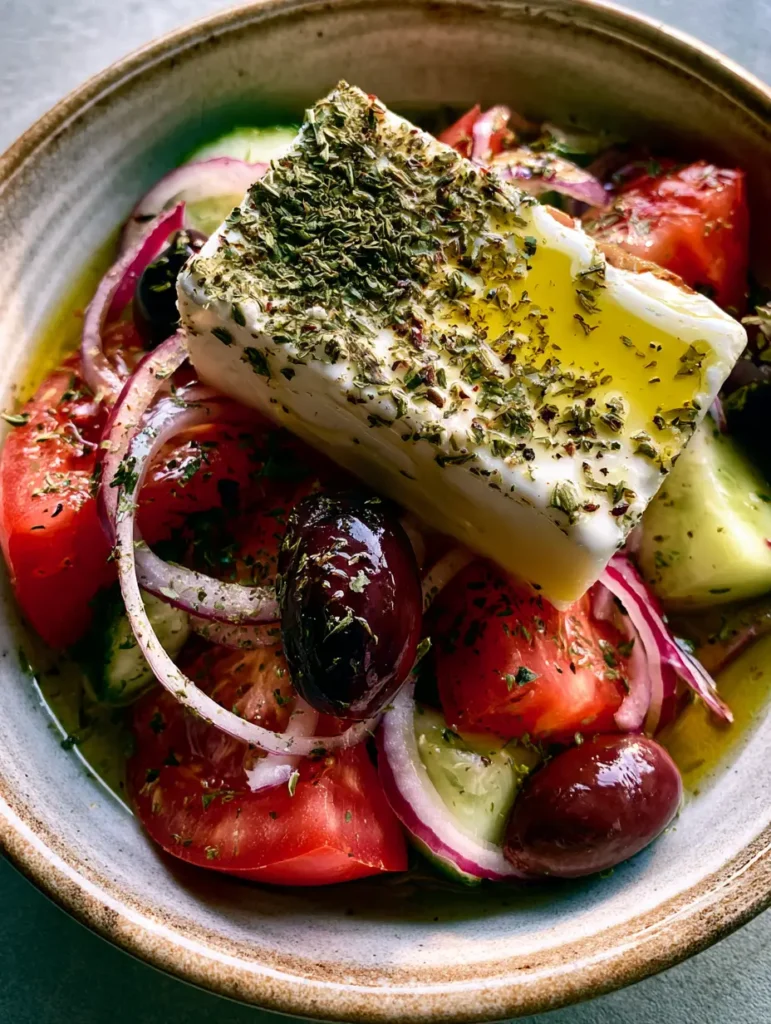
Now, place the large, thick rectangular block of feta directly in the center on top of the vegetables. Do not crumble it. This is the hallmark of an Authentic Greek Salad. The block should be white and moist, appearing almost like a pedestal for the final seasoning.
The Aromatic Finish
The final step is the dusting of dried oregano. Take the dried flakes in your palm and use your other thumb to crush them directly over the feta and the oiled vegetables. You should see fine green specks clinging to the glistening oil and the white surface of the cheese. This provides the final sensory cue of a traditional Greek village tavern.
Expert Tips for Culinary Excellence
- Temperature Matters: Never serve a Greek salad ice-cold. Let the vegetables sit at room temperature for 15 minutes after assembly to allow the flavors to meld and the oil to return to its liquid, peppery state.
- The “Papara” Factor: Always serve this salad with a side of crusty bread. The term “papara” refers to the act of dipping bread into the leftover olive oil and tomato juice at the bottom of the bowl—it’s arguably the best part.
- Avoid Lettuce: Adding lettuce is the quickest way to strip a Horiatiki of its authenticity. Lettuce wilts under the heavy oil and acidic vinegar, ruining the structural integrity of the dish.
- Oil Quality: Since there are so few ingredients, the quality of your olive oil is paramount. Use a cold-pressed, single-origin Greek oil if possible for the most authentic flavor profile.
Storage and Make-Ahead Advice
The Authentic Greek Salad is best enjoyed within an hour of assembly. Because the salt draws out vegetable moisture, the salad will become “soupy” if left in the fridge overnight. However, if you must prep ahead, chop the vegetables but store the salt, vinegar, and oil separately until the moment of serving.
Leftovers do not freeze well due to the high water content of the tomatoes and cucumbers. If you have leftovers, they can be pulsed in a blender with a little extra oil to create a “gazpacho-style” cold soup or used as a base for a creamy chicken pasta salad the following day.
What to Serve with Authentic Greek Salad
This salad is incredibly versatile. For a light lunch, it stands alone perfectly. If you are looking for a more substantial Mediterranean feast, it pairs beautifully with grilled proteins. Try serving it alongside Mediterranean marinated chicken or some charred lamb chops.
For a vegetarian spread, consider serving the salad with a savory caprese galette or a bowl of Italian grinder tortellini salad for a fusion of Mediterranean flavors. The acidity of the Horiatiki cuts through the richness of pasta and pastry brilliantly.
Frequently Asked Questions
Actually, dried oregano is preferred for Horiatiki. Its concentrated oils provide the classic ‘village’ aroma when crushed between your hands.
No, an authentic Horiatiki (Greek Village Salad) never contains lettuce. It is composed of tomatoes, cucumbers, onions, olives, and feta cheese.
Traditionally, the feta is served as a large, whole block or thick slices placed on top of the salad, allowing the diner to break it apart as they eat.
Kalamata olives are the standard. They should be whole and dark purple, providing a briny, meaty texture that sliced green olives cannot replicate.
Leaving the skin on provides a necessary textural crunch and a slight bitter note that balances the sweetness of the vine-ripened tomatoes.
The Authentic Greek Horiatiki Recipe
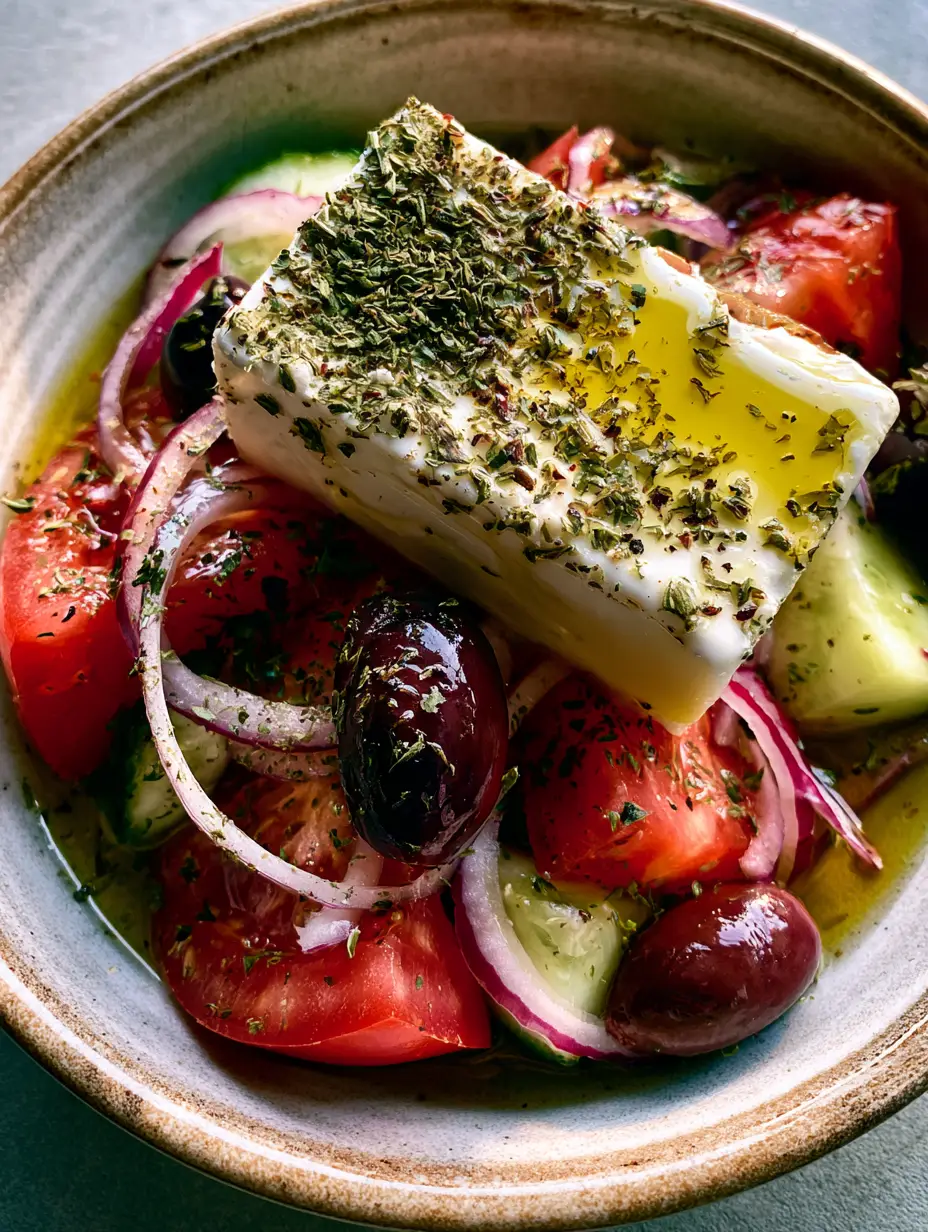
Authentic Greek Salad: The Ultimate Traditional Horiatiki Recipe
Ingredients
Equipment
Method
- Cut the tomatoes into large, juicy wedges. Place them in the bottom of a rustic ceramic bowl.
- Slice the unpeeled cucumber into thick rounds (about 1/2 inch) and add to the bowl with the tomatoes.
- Layer the translucent red onion rings and the whole Kalamata olives over the base vegetables.
- Sprinkle with sea salt and drizzle with the red wine vinegar and extra virgin olive oil until the vegetables are glistening.
- Place the whole block of feta on top. Dust the entire dish with dried oregano flakes, rubbing them between your palms to release the scent.
Notes
Always provide crusty bread to soak up the juices (the 'papara').
Bringing the flavors of the Greek islands into your kitchen is about more than just a recipe; it’s about respecting the ingredients. This Authentic Greek Salad relies on the chemistry of fresh produce and high-quality fats to create a dish that is greater than the sum of its parts. Once you’ve experienced the ritual of breaking into that block of feta and mopping up the golden oil with bread, you’ll never go back to “garden salads” again.
If you enjoyed this deep dive into Mediterranean flavors, be sure to follow us on Pinterest for more rustic culinary inspiration. Leave a comment below and let us know—do you prefer your Horiatiki with or without a splash of vinegar?