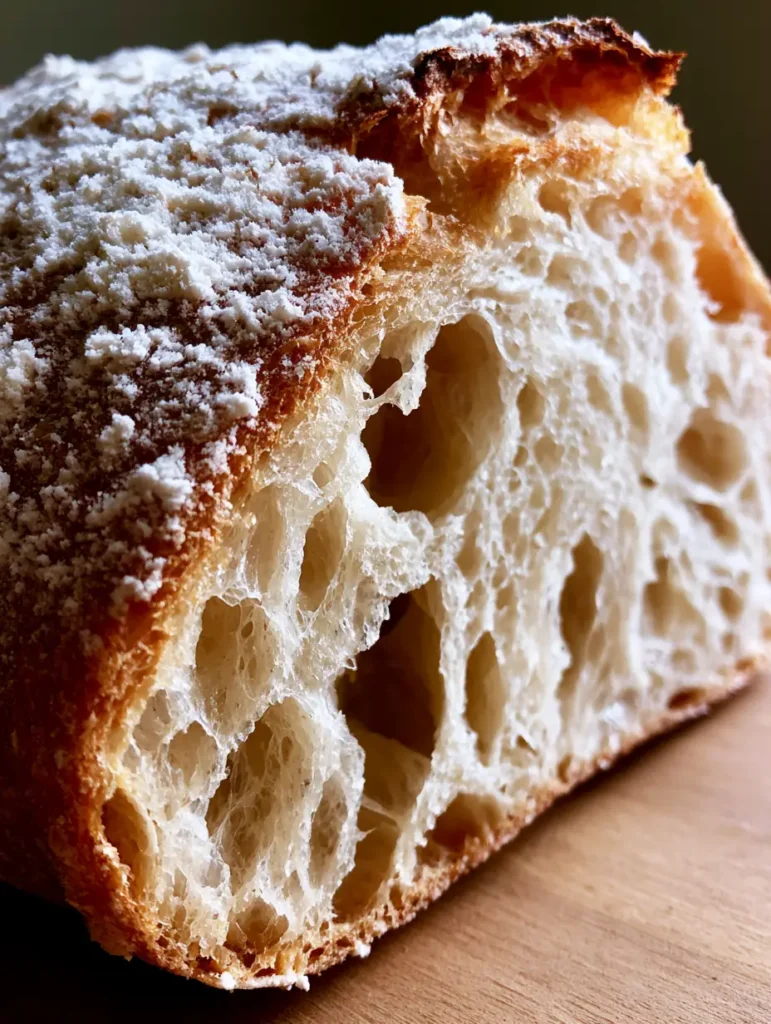
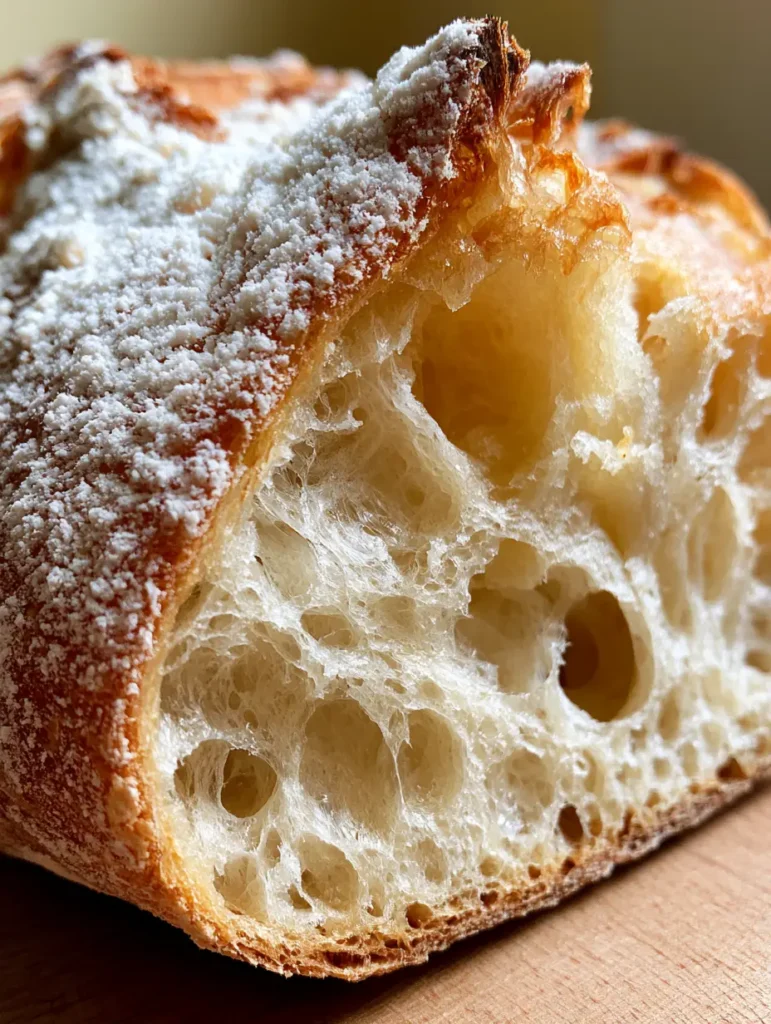
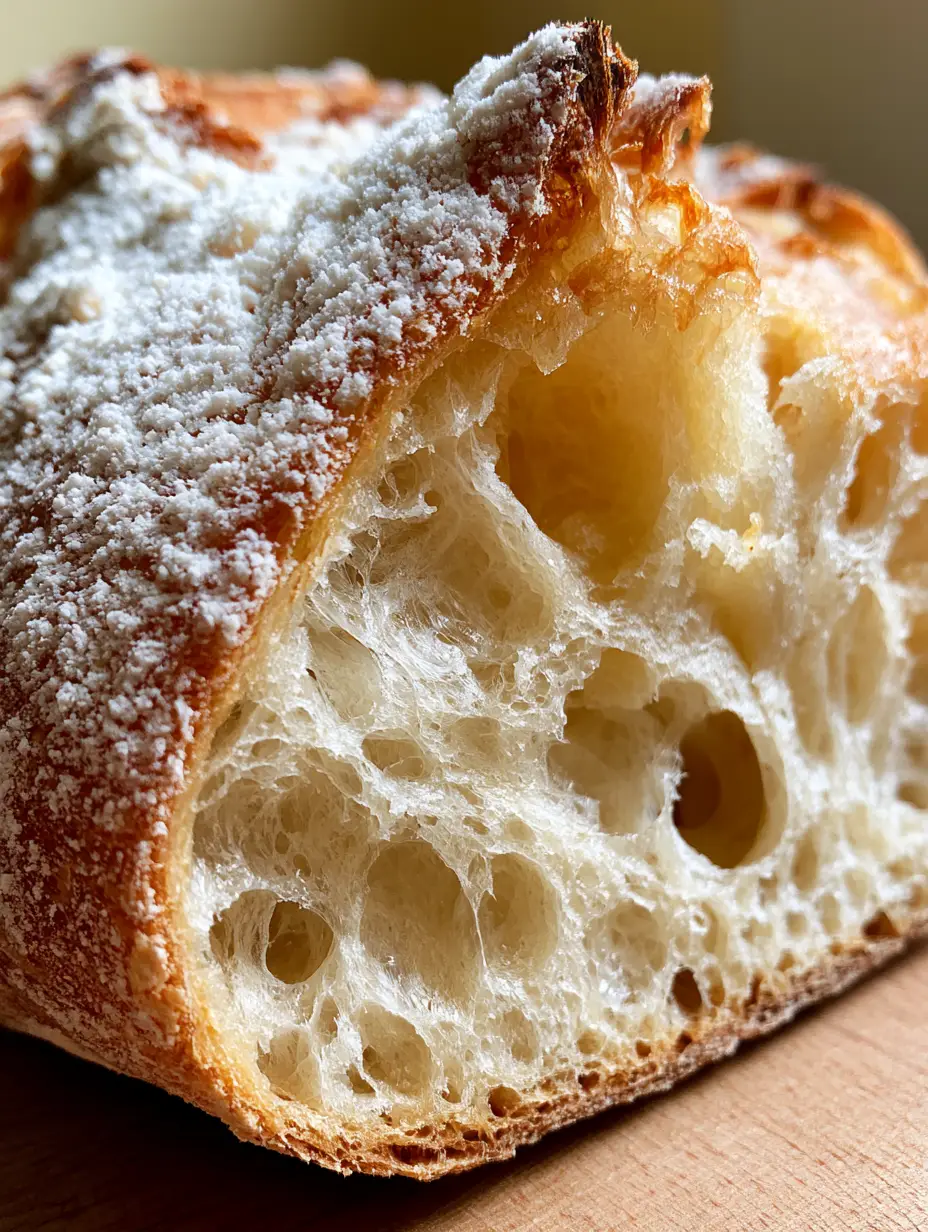
There is nothing quite like the scent of fresh Homemade Ciabatta Bread wafting through the kitchen. This rustic Italian classic is defined by its stark contrasts: a deep golden-brown crusty exterior and a soft, bubbly interior that defies gravity.
Achieving that iconic, highly porous and airy internal crumb with large irregular holes requires a bit of patience and the right technique. In this guide, we will master the high-hydration dough necessary to replicate the artisan loaves seen in professional bakeries.
This recipe focuses on the forensic details of bread making, ensuring your loaf has that signature heavily dusted white flour finish and a textured, crunchy surface. Whether you are a novice or a seasoned baker, these steps will help you achieve a masterpiece resting on your wooden cutting board by dinner time.
What Makes This The Ultimate Artisan Loaf?
- Highly Porous Interior: We use a high-hydration method to ensure those coveted large, irregular holes in the crumb.
- Crunchy, Golden Crust: A specific baking temperature and steam environment create a deep golden brown, textured exterior.
- Authentic Flour-Dusted Finish: A heavy dusting of fine white flour gives it that rustic, unedited, handheld photo appeal.
- Simple, Pure Ingredients: Only four foundational ingredients are needed to create complex, fermented flavors.
Essential Components for Artisan Bread Success
To achieve the visual and structural results of professional Homemade Ciabatta Bread, the quality and ratio of your ingredients are paramount. Each element serves a specific chemical purpose in the fermentation process.
Bread Flour: 4 cups (500g). Bread flour has a higher protein content than all-purpose flour, which is crucial for developing the strong gluten network needed to trap large air bubbles. This ensures the loaf doesn’t collapse under its own weight.
Warm Water: 1 ¾ cups (400ml). This recipe uses 80% hydration, meaning the dough will be very wet and sticky. This high water content is what creates the “soft, bubbly interior” described in our visual blueprint.
Instant Yeast: 1 ½ tsp (5g). Yeast is the engine of the recipe, consuming sugars to release carbon dioxide. This gas is what creates the “highly porous” crumb and the distinctive “large irregular holes.”
Sea Salt: 2 tsp (12g). Salt does more than season; it regulates yeast activity and strengthens the gluten. Without it, the dough would rise too quickly and lose its structural integrity.
Fine White Flour (for dusting): ¼ cup (30g). This is used exclusively for the exterior aesthetic. It prevents the sticky dough from clinging to surfaces while providing that beautiful “flour-dusted exterior” after baking.
The Tools of the Trade
You don’t need a commercial bakery to make incredible Homemade Ciabatta Bread, but a few specific tools will help you handle the high-hydration dough. Using a bench scraper and a heavy baking stone or steel will drastically improve your results.
A large glass mixing bowl is ideal for monitoring the fermentation and bubble formation. Additionally, a spray bottle filled with water is a “secret weapon” for creating the steam necessary for that “deep golden brown” and “crunchy surface.”
Mastering the High-Hydration Technique
Creating the “Biga” or Pre-Ferment
While some quick recipes skip this, a true artisan ciabatta starts with a long ferment. Mix a small portion of your flour, water, and yeast, and let it sit for 12-15 hours to develop the complex, slightly acidic flavor characteristic of Italian bread.
The “Stretch and Fold” Method
Because this dough is too wet to knead traditionally, we use the “stretch and fold” technique. Every 30 minutes, reach under the dough, pull it upward, and fold it over itself. This builds strength while preserving the “soft, bubbly interior” without degassing the air pockets.
Shaping the “Slipper”
Ciabatta means “slipper” in Italian, referring to its elongated, somewhat flat shape. Gently transfer the dough to a heavily floured surface. Do not use a rolling pin; use your fingertips to gently guide it into a rectangular shape, ensuring the “airy porous crumb” remains intact.
Achieving the Perfect Bake and Steam
Preheat your oven to 450°F (230°C). Slide the loaves onto a preheated baking stone. For the first 10 minutes, spray the oven walls with water to create steam, which keeps the crust flexible so the bread can expand fully before the “golden-brown crusty” shell sets.
Expert Tips for Bakery-Quality Results
- Don’t Be Afraid of the Stick: High-hydration dough is notoriously sticky. Wet your hands with water rather than using more flour to prevent the dough from sticking to your skin.
- Use a Digital Scale: For the most “highly porous” results, precision matters. Measuring flour by weight (grams) is much more accurate than using measuring cups.
- Watch the Cues: Your bread is done when the crust is a “deep golden brown” and the bottom sounds hollow when tapped.
- Wait to Slice: It is tempting to cut into a hot loaf, but the “soft, bubbly interior” needs time to set. Wait at least 45 minutes before slicing to reveal the “large irregular holes.”
Creative Pairings and Serving Suggestions
This Homemade Ciabatta Bread is the perfect vessel for soaking up sauces or acting as a base for gourmet sandwiches. For a light lunch, serve a thick slice alongside a fresh authentic Greek salad to balance the bread’s crunch with crisp vegetables.
If you’re looking for a decadent appetizer, dip warm pieces of this crusty bread into a bowl of melted cowboy butter recipe. The garlic and herbs seep beautifully into the “highly porous” holes of the crumb.
For a hearty dinner, use this ciabatta to mop up the juices from a Mediterranean chicken marinade or use it as the bun for high-end pulled pork sliders. The sturdy crust holds up perfectly against juicy meats and sauces.
Frequently Asked Questions
While possible, all-purpose flour lacks the protein needed to support the high water content. Your loaf may be denser and less airy than one made with bread flour.
The secret to a highly porous crumb is high hydration (at least 80% water to flour) and gentle handling. Do not degas the dough during the shaping process; preserve those precious air bubbles!
Ciabatta is best eaten the day it is made. Store leftovers in a paper bag at room temperature for up to 2 days. For longer storage, freeze sliced portions in an airtight bag.
Steam delays the crust from setting, allowing the bread to expand fully (oven spring) and creating the signature thin, crunchy, and textured golden-brown surface.
Ciabatta is naturally a flatter loaf (meaning ‘slipper’), but if it’s excessively flat, your dough may lack gluten strength. Ensure you are using high-protein bread flour and performing enough ‘stretch and folds’ to build structure.
The Ultimate Homemade Ciabatta Bread Recipe
Homemade Ciabatta Bread: The Ultimate Guide to the Perfect Airy Crumb
Ingredients
Equipment
Method
- In a large bowl, whisk together the bread flour, yeast, and salt. Gradually add the warm water and stir until a shaggy, very sticky dough forms.
- Cover the bowl with a damp cloth and let it rest for 30 minutes. Perform a series of 'stretch and folds' by pulling the edges of the dough toward the center. Repeat this every 30 minutes for a total of 2 hours.
- Turn the dough onto a surface heavily dusted with fine white flour. Divide into two rectangles. Gently pat them into shape, being careful not to deflate the bubbles. Dust the tops with more flour.
- Slide the loaves onto a preheated baking stone in a 450°F (230°C) oven. Spray the oven with water to create steam. Bake for 20-25 minutes until the exterior is a deep golden brown and the crust is crunchy.
Notes
Do not skip the steam step; it is vital for the 'crunchy surface' and 'textured' appearance.
Savor the Artisan Experience
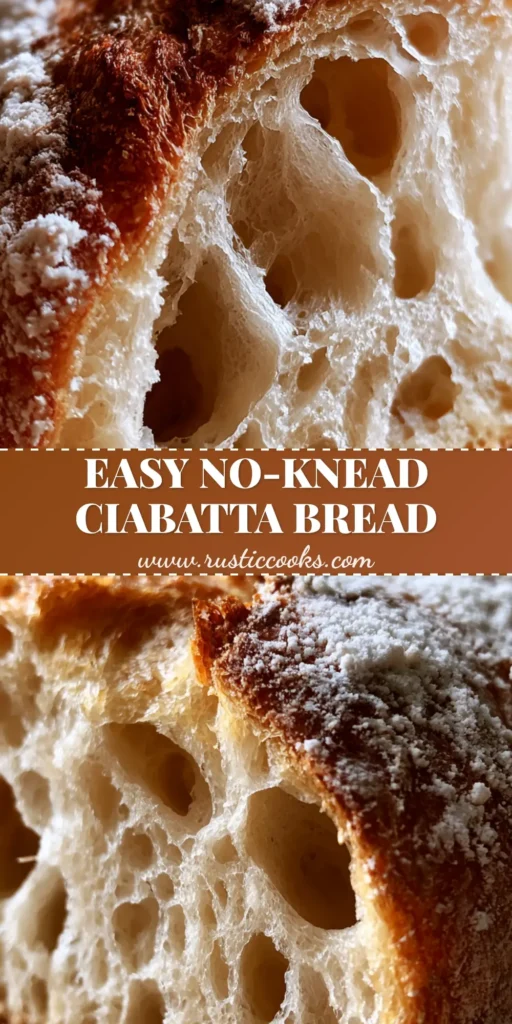
Now that you have mastered the art of the Homemade Ciabatta Bread, your kitchen will never be the same. The combination of the “crunchy surface” and the “soft, bubbly interior” makes this loaf a showstopper for any occasion.
We would love to see your results! Leave a comment below telling us how your crumb turned out, and don’t forget to share your photos and pin this recipe to Pinterest so others can enjoy the magic of artisan baking.