Authentic Cacio e Pepe is a masterclass in culinary alchemy. With just three primary ingredients, this Roman classic transforms humble pantry staples into a luxurious, glossy, and deeply comforting meal that rivals the finest trattorias in Italy.
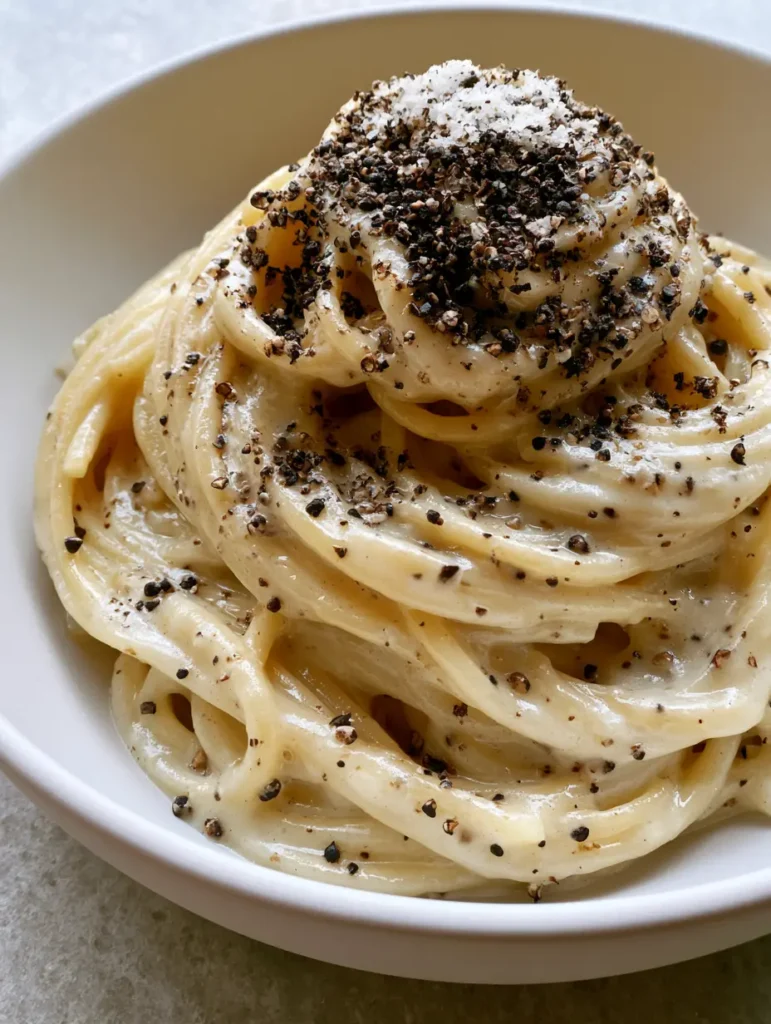
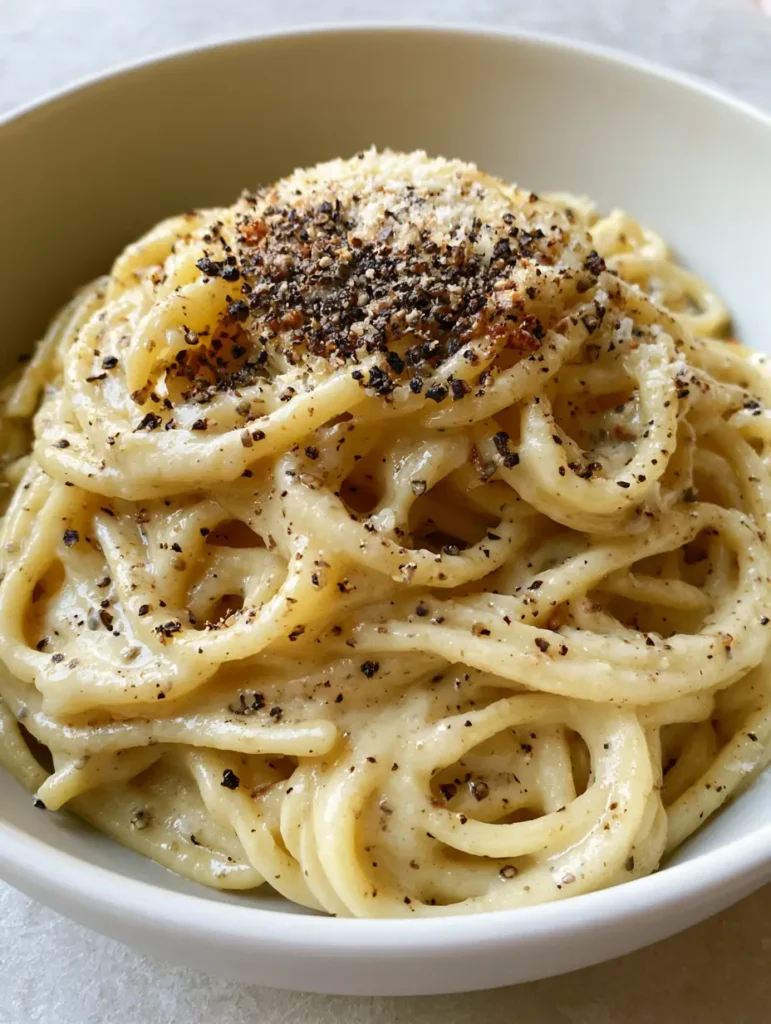
The visual appeal of a perfect mound of spaghetti, thoroughly coated in a thick, pale cream-colored emulsion, is unmistakable. In this guide, we will walk you through the precise techniques required to achieve that signature sheen and those bold, dark granules of pepper seen in professional food photography.
Whether you are looking for a quick weeknight dinner or a sophisticated dish to impress guests, mastering the art of the emulsified Pecorino Romano sauce is a skill every home cook should possess.
Why You’ll Fall in Love with this Glossy Roman Classic
- Textural Perfection: The sauce is a thick, pale cream-colored emulsion that clings to every strand of al dente spaghetti, providing a silky mouthfeel.
- Flavor Complexity: Despite its simplicity, the combination of sharp, salty Pecorino Romano and the floral heat of freshly cracked black pepper creates a complex flavor profile.
- Visual Elegance: As described in our blueprint, the dish features varying sizes of dark pepper granules against a matte white ceramic bowl, creating a striking contrast.
- Speed and Efficiency: This recipe moves quickly, taking less than 20 minutes from the pantry to the table.
The Essential Pantry Staples for Roman Perfection
To achieve the authentic result shown in our visual guide, you must use high-quality ingredients. There is nowhere for subpar components to hide in such a minimalist dish.
Dried Spaghetti: Use 1 lb (454g) of high-quality, bronze-cut spaghetti. The rough surface of bronze-cut pasta is essential because it releases more starch, which acts as the glue for your glossy sauce.
Pecorino Romano Cheese: You will need 2 cups (200g) of finely grated Pecorino Romano, plus extra for the garnish. This sheep’s milk cheese provides the sharp, salty backbone and the “pale cream” color of the emulsion.
Whole Black Peppercorns: Use 1 tbsp (6g) of whole peppercorns that you crack yourself. Coarsely cracked pepper provides a much more dynamic flavor and visual texture than pre-ground pepper.
Kosher Salt: Use 1 tbsp (15g) for the pasta water. Be cautious, as the Pecorino cheese is naturally very salty; you want the water seasoned but not oceanic.
Starchy Pasta Water: This is the “invisible” foundational ingredient. About 1.5 cups (350ml) of the cloudy, hot water from the boiling pot is what creates the chemical bond between the cheese and the pasta.
Professional Tools for a Flawless Emulsion
Achieving a handheld smartphone-photo-worthy result requires the right tools to manage heat and friction.
A large heavy-bottomed skillet or sauté pan is necessary for tossing the pasta. The wide surface area allows for better evaporation and control during the emulsification process.
A fine mesh grater (like a Microplane) is non-negotiable. The cheese must be a “light dusting” or “snow-like” consistency to melt instantly without clumping into rubbery balls.
You will also need a mortar and pestle or a heavy skillet to coarsely crack the pepper. This ensures you get those varying sizes of dark granules that provide both aesthetic beauty and bursts of heat.
Mastering the Technique: How to Make Authentic Cacio e Pepe
Step 1: The Starchy Foundation
Bring a large pot of water to a boil, but use less water than you usually would—about 3 quarts (2.8L). A lower water-to-pasta ratio results in a higher concentration of starch, which is vital for a thick, glossy sauce.
Add the salt and the spaghetti. Cook the pasta for about 2 minutes less than the package instructions for “al dente.” The noodles will finish cooking in the skillet with the sauce.
Step 2: Toasting the Aromatics
While the pasta boils, place your coarsely cracked black pepper into a large, dry skillet over medium heat. Toast the pepper for 1-2 minutes until you can smell the oils being released.
Carefully ladle about 1/2 cup (120ml) of the boiling pasta water into the skillet with the pepper. It will sizzle and bubble; this creates a flavorful peppery base for the sauce.
Step 3: Creating the Cheese Paste
In a medium mixing bowl, combine the 2 cups (200g) of finely grated Pecorino Romano with a small amount of warm pasta water. Whisk it vigorously until it forms a thick, smooth paste.
This “tempering” of the cheese is the secret to preventing clumps. By turning the cheese into a paste before it hits the pan, you ensure it integrates smoothly into the emulsion.
Step 4: The Final Emulsification
Use tongs to transfer the undercooked spaghetti directly from the water into the skillet with the pepper water. Do not drain the pasta; you need that extra water clinging to the strands.
Remove the skillet from the heat entirely. This is the most critical step. If the pan is too hot, the cheese will seize and turn into a stringy mess.
Add the cheese paste to the pasta. Toss vigorously and continuously, adding more pasta water a tablespoon at a time, until a thick, glossy, pale cream-colored emulsion forms and coats every strand.
Pro Tips for a Velvety, No-Clump Sauce
- Heat Management: Never add the cheese while the skillet is over direct flame. The residual heat of the pasta and the water is enough to melt the Pecorino.
- The “Crema” Consistency: If the sauce looks dry or sticky, add more pasta water. If it looks too thin, keep tossing; the starch will thicken as it cools slightly.
- Fresh Grating: Never use pre-shredded cheese from a green can or a bag. These contain anti-caking agents like cellulose that prevent the cheese from melting into a smooth sauce.
- Pepper Grading: Aim for a mix of fine dust and coarse chunks of pepper to replicate the look of our visual blueprint.
The Art of Storing and Reviving Leftover Pasta
Authentic Cacio e Pepe is best enjoyed immediately while the emulsion is at its peak silkiness. However, if you have leftovers, they can be stored in an airtight container in the refrigerator for up to 2 days.
To reheat, do not use the microwave, as it will cause the cheese oils to separate. Instead, place the pasta back in a skillet with a splash of water or milk over very low heat. Toss constantly until the sauce becomes creamy again.
Note that this dish does not freeze well, as the delicate cheese emulsion will break during the freezing and thawing process.
Perfect Pairings and What to Serve Alongside
Since this dish is rich and peppery, it pairs beautifully with bright, acidic side dishes. A simple arugula salad with lemon vinaigrette is a classic choice.
If you want to create a full Italian spread, consider starting with crispy air fryer green beans or a side of creamy white beans for added protein.
For those who enjoy a variety of textures, serving this alongside freshly baked flatbread can help soak up every last drop of the glossy cheese sauce. If you are looking for a heavier meal, you might even consider a side of oven-baked chicken drumsticks to balance the sharp Pecorino.
Common Pitfalls and Frequently Asked Questions
While you can, it won’t be ‘Authentic Cacio e Pepe.’ Pecorino is made from sheep’s milk and is saltier and tangier. Parmesan (cow’s milk) has a different melting point and flavor profile, resulting in a sweeter, less traditional dish.
Yes! Toasting the pepper in a dry pan awakens the volatile oils, making the spice more fragrant and complex rather than just one-dimensionally hot.
Long, thin strands like Spaghetti, Tonnarelli, or Bucatini are traditional. The length provides more surface area for the emulsion to cling to, which is essential for that glossy finish.
This usually happens because the heat was too high. Pecorino Romano is a delicate cheese; if it hits boiling water or a hot pan over a flame, the proteins will tighten and separate from the fats, creating rubbery clumps. Always emulsify off the heat.
Using less water concentrates the starch released by the pasta. This starchy ‘liquid gold’ is the key emulsifier that binds the cheese and water together into a creamy sauce.
The Official Authentic Cacio e Pepe Recipe
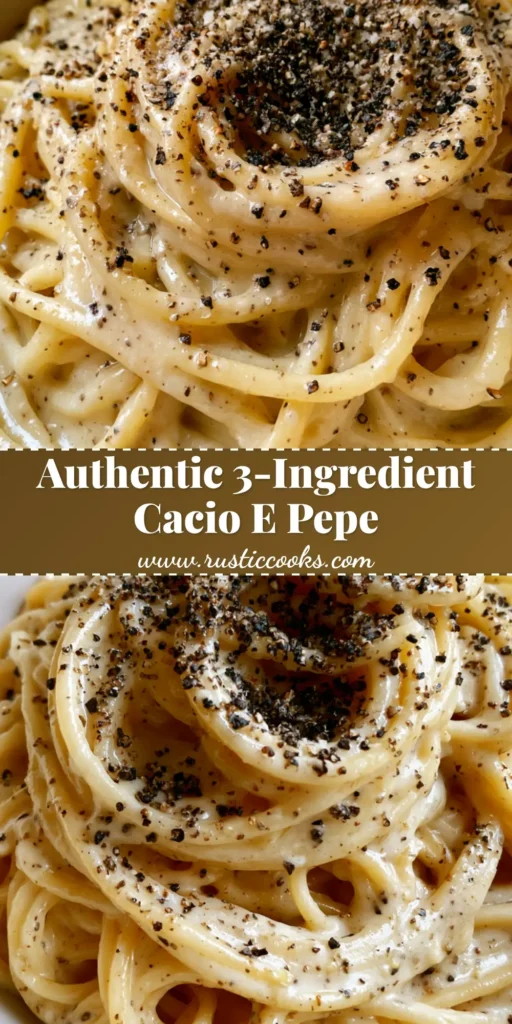
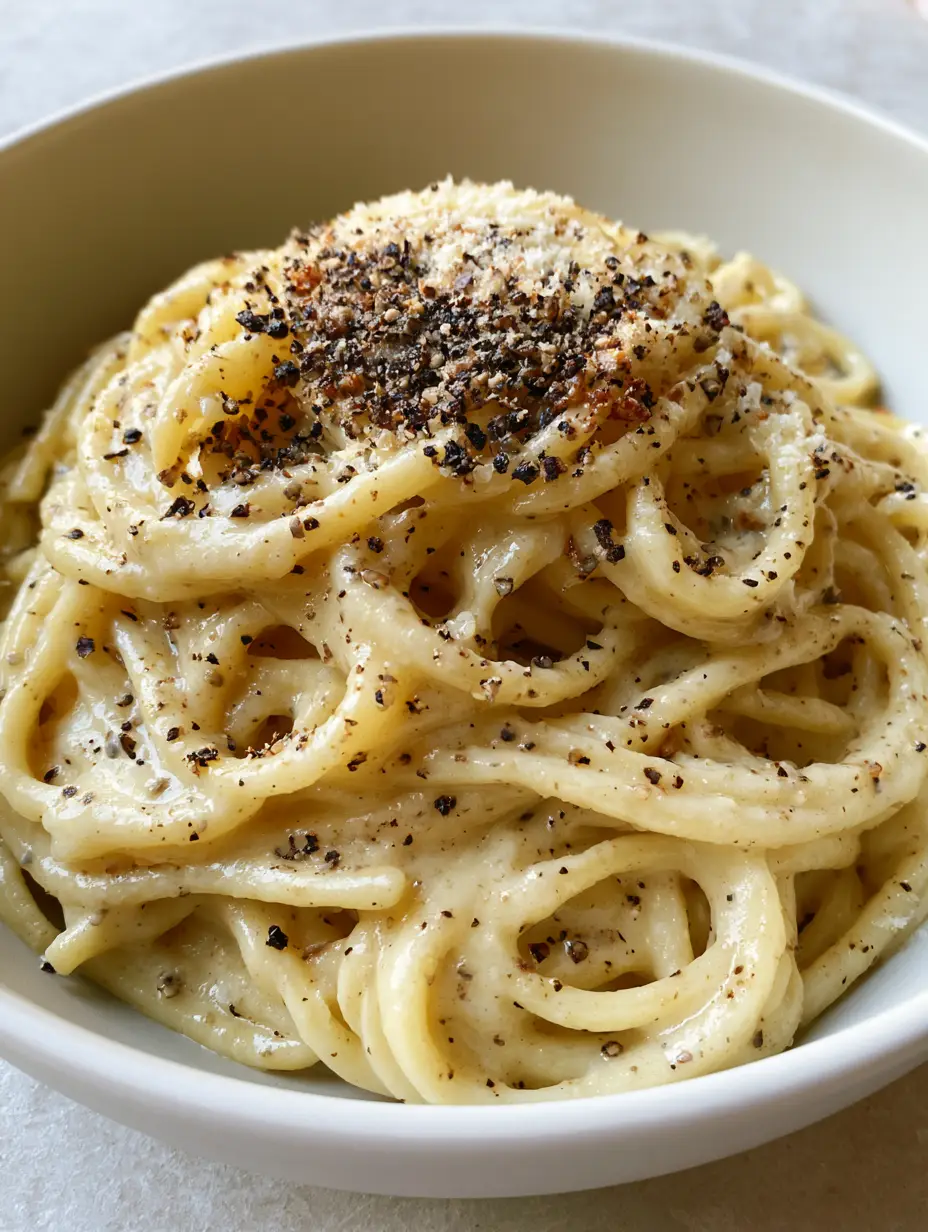
Authentic Cacio e Pepe: The Ultimate Guide to Rome’s Creamiest Pasta
Ingredients
Equipment
Method
- Bring 3 quarts (2.8L) of salted water to a boil. Add spaghetti and cook for 2 minutes less than the al dente instructions.
- In a large skillet over medium heat, toast coarsely cracked black pepper for 1-2 minutes until aromatic. Add 1/2 cup (120ml) of pasta water to the skillet and simmer.
- Whisk finely grated Pecorino Romano with a small amount of warm pasta water in a bowl to create a smooth paste.
- Transfer pasta to the skillet. Remove from heat. Stir in the cheese paste and toss vigorously, adding more water as needed until a thick, glossy, pale cream sauce forms.
Notes
Use high-quality bronze-cut pasta for the best starch release.
A Final Word on Mastering Italian Simplicity
Mastering Authentic Cacio e Pepe is a rite of passage for any home cook. It teaches the importance of temperature control, the value of high-quality ingredients, and the magic of pasta water.
Once you see that glossy sheen on your spaghetti and taste the sharp bite of the Pecorino, you will understand why this dish has remained a Roman staple for centuries. Don’t forget to snap a photo of your creation—ideally in a matte white bowl on a stone surface—and share it with us!
For more rustic Italian inspiration, follow us on Pinterest and join our community of passionate home cooks.