There is nothing quite like the sizzle of a hot pan when you drop in fresh ingredients to create a Chicken and Vegetable Stir Fry. This dish is a staple in my kitchen because it balances high-quality protein with a vibrant array of crisp-tender vegetables.
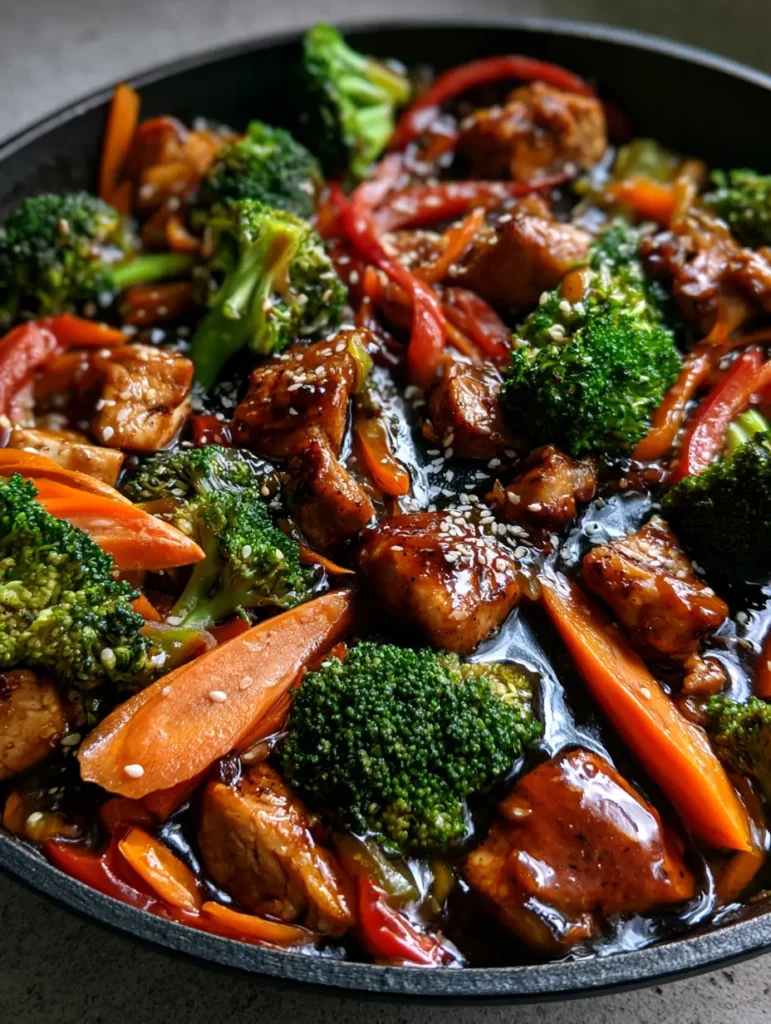
When you look at the final result, you will see bite-sized pieces of seared chicken breast glazed in a thick, translucent dark amber sauce. The colors are striking, featuring vibrant green broccoli florets and strips of red bell pepper that catch the light perfectly.
The secret to this recipe lies in the contrast of textures, from the softened edges of the sliced orange carrots to the delicate crunch of white sesame seeds. It is a visual and culinary masterpiece that comes together in less time than it takes to order takeout.
Why This Savory Chicken and Vegetable Stir Fry Works
- Perfectly Seared Protein: By using high heat, we achieve a golden-brown crust on the chicken while keeping the inside juicy and tender.
- Dynamic Sauce Texture: The dark amber glaze is translucent and glossy, coating every ingredient without becoming gloopy or heavy.
- Vibrant Nutrient Density: Using steamed broccoli and flash-sautéed peppers ensures we maintain those “vibrant green” and “bright red” hues described in our visual blueprint.
- Restaurant-Quality Finish: A light dusting of white sesame seeds adds a professional aesthetic and a nutty aromatic finish to the skillet.
Everything You Need for a Savory, Glossy Stir Fry Sauce
Creating the perfect Chicken and Vegetable Stir Fry requires a balance of pantry staples and fresh produce. Each ingredient plays a specific role in achieving the dark, glossy finish and the varied textures seen in the skillet.
Chicken Breast: 1.5 lbs (680g) of boneless, skinless breast, cut into bite-sized pieces. Chicken breast is the ideal canvas for our tenderizing techniques and sears beautifully in a hot skillet.
Broccoli Florets: 2 cups (150g) of fresh florets. These provide a “vibrant green” color and act as little sponges to soak up the dark amber sauce.
Orange Carrots: 2 large (120g) carrots, peeled and sliced thin. Slicing them thinly ensures they achieve those “softened edges” while retaining a slight structural bite.
Red Bell Pepper: 1 large (150g) pepper, cut into thin strips. These add a necessary sweetness and a pop of color that contrasts against the dark skillet.
Aromatic Base: 1 tbsp (15g) fresh ginger and 3 cloves of minced garlic. These aromatics provide the deep, pungent flavor profile found in a classic ginger-lime pork profile.
Soy Sauce: 1/2 cup (120ml) of low-sodium soy sauce. This provides the salt and the foundation for our “dark brown sauce” color.
Brown Sugar: 3 tbsp (36g) of packed light brown sugar. This is the “invisible” ingredient that creates the translucent sheen and the deep amber hue when caramelized.
Cornstarch: 1 tbsp (8g) mixed with water. This is essential for thickening the sauce into a glaze that clings to the seared chicken breast pieces.
White Sesame Seeds: 1 tsp (3g) for garnish. This final touch provides the “light dusting” that completes the visual appeal of the dish.
High-Heat Oil: 2 tbsp (30ml) of grapeseed or avocado oil. You need an oil with a high smoke point to achieve the deep sear on the chicken without burning.
Essential Tools for Mastering the Skillet Sear
To replicate the “handheld smartphone photo” aesthetic of a professional kitchen, you need the right tools. A heavy-bottomed black skillet or a cast-iron pan is preferred for heat retention.
Using a skillet instead of a traditional wok allows for more surface area contact. This is crucial for getting those seared chicken bites to develop a crust rather than just steaming in their own juices.
You will also need a sharp chef’s knife for those precision carrot slices and a sturdy spatula that can handle high-heat stirring. A small whisk is also helpful for ensuring your cornstarch slurry is perfectly smooth before it hits the hot pan.
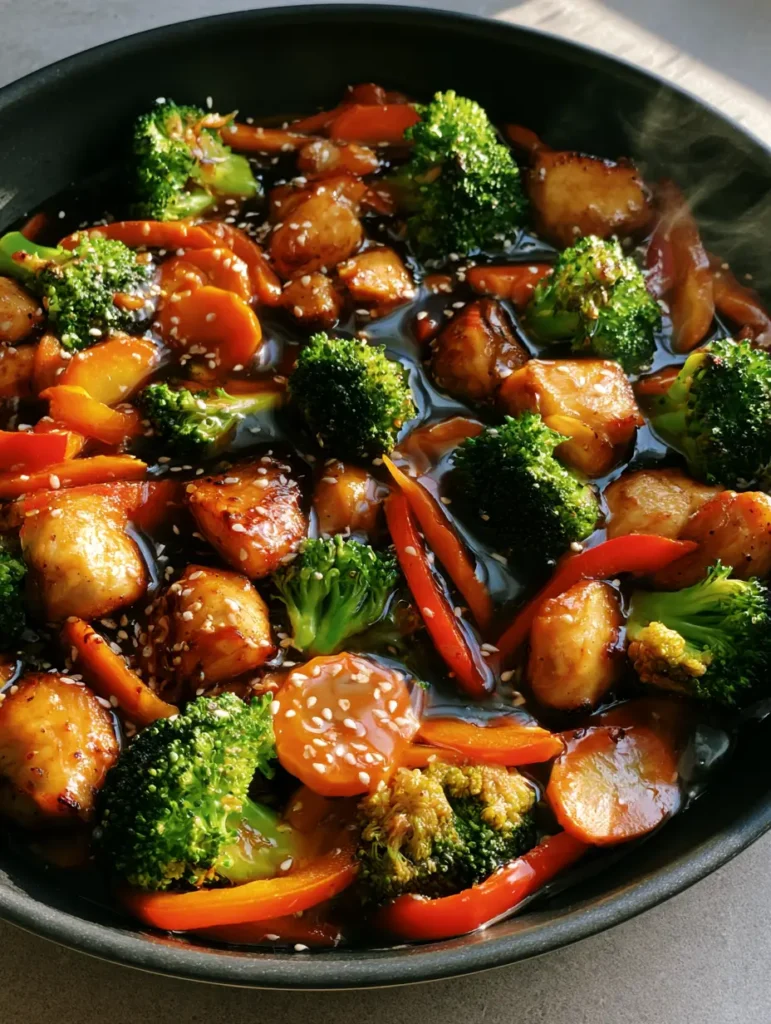
How to Achieve the Perfect Sear and Steamed Texture
Preparing the Vegetables for Maximum Color
Start by prepping your vegetables so they are ready to hit the pan in sequence. Slice the orange carrots into thin rounds; you want them thin enough that the edges begin to curl and soften quickly.
Cut the red bell pepper into uniform strips and break the broccoli into bite-sized florets. To keep the broccoli “vibrant green,” I recommend a quick 2-minute steam in the microwave with a splash of water before they ever touch the skillet.
Searing the Chicken for a Golden Finish
Pat your chicken breast pieces dry with a paper towel. This is a culinary “must” because moisture on the surface of the meat prevents the Maillard reaction from occurring.
Heat your skillet over medium-high heat until the oil shimmers and almost smokes. Add the chicken in a single layer, allowing it to sit undisturbed for 2-3 minutes until a deep golden-brown crust forms on the bottom.
Toss the chicken and continue cooking until it is nearly opaque. Remove the chicken from the skillet and set it aside; this prevents the meat from overcooking while we finish the vegetables.
Developing the Glossy Dark Amber Sauce
In the same skillet, add a touch more oil if needed and toss in the carrots and red bell peppers. Sauté for 3-4 minutes until the carrots show those softened edges and the peppers are slightly blistered.
Whisk together the soy sauce, brown sugar, ginger, garlic, and cornstarch slurry. Pour this mixture into the center of the skillet, stirring constantly as it begins to bubble and transform.
You will watch the sauce turn from a cloudy brown to a thick, translucent dark amber glaze in about 60 seconds. This visual change is the cue that the cornstarch has hydrated and the sugars have dissolved into a glossy coating.
The Final Assembly and Garnish
Return the seared chicken and the par-steamed broccoli to the skillet. Toss everything vigorously to ensure every crevice of the broccoli and every strip of pepper is coated in the sheen of the sauce.
Remove the skillet from the heat immediately to preserve the “vibrant green” of the broccoli. Transfer the dish to a serving bowl or serve directly from the black skillet for that rustic, home-cooked feel.
The final step is the “light dusting” of white sesame seeds. Sprinkle them from a height of about six inches to ensure an even distribution across the glossy surface of the Chicken and Vegetable Stir Fry.
Pro Tips for Restaurant-Quality Stir Fry at Home
- The Dry-Meat Rule: Never skip drying your chicken. If the chicken is wet, it will boil in the pan rather than sear, losing that “bite-sized seared” look.
- Sequential Cooking: Always cook your vegetables in order of density. Carrots take the longest, while peppers and broccoli need very little time to reach perfection.
- Slurry Success: Always whisk your cornstarch with cold liquid before adding it to the hot pan to avoid lumps in your translucent sauce.
- Crowd Control: Do not overcrowd the skillet. If you are doubling the recipe, sear the chicken in two batches to maintain high heat levels.
Storing and Reheating Your Leftovers
This Chicken and Vegetable Stir Fry stores exceptionally well, making it a favorite for meal prep. Place leftovers in an airtight container and refrigerate for up to 4 days.
When reheating, I recommend using a skillet over medium heat with a tablespoon of water. This helps loosen the thick amber sauce and prevents the chicken from becoming rubbery in the microwave.
While you can freeze this dish, the texture of the red bell peppers may soften significantly upon thawing. For the best experience, enjoy it fresh or within the first few days of cooking.
Perfect Pairings for a Complete Meal
While this stir fry is a complete meal on its own, it pairs beautifully with various sides. Serving it over a bed of jasmine rice or brown rice helps to soak up every drop of that glossy dark brown sauce.
If you are looking for a lighter option, a side of refreshing cucumber salad provides a crisp, cool contrast to the warm, savory notes of the chicken.
For those who love a bit of heat, a drizzle of chili crunch or a side of spicy kimchi can elevate the flavors further. You might even serve this alongside some grilled skewers if you are hosting a larger gathering.
Common Chicken and Vegetable Stir Fry Questions Answered
Yes, but be aware that frozen vegetables release more moisture. Thaw and pat them dry first, or cook them at a very high heat to ensure they don’t steam and lose the ‘vibrant’ colors and textures found in fresh produce.
Slicing the carrots very thinly (about 1/8 inch) and adding them to the pan first allows them to soften through the edges while maintaining a bright orange color and a slight snap in the center.
The key to a glossy, translucent sauce is using a cornstarch slurry. When the cornstarch hits the hot liquid in the skillet, it thickens into a clear glaze rather than a cloudy sauce, provided you use enough sugar or honey for sheen.
Use an oil with a high smoke point like avocado, grapeseed, or canola oil. Avoid extra virgin olive oil or butter, as they will burn at the temperatures required to achieve a proper sear on the chicken.
Chicken becomes rubbery when it is overcooked. To avoid this, sear the bite-sized pieces quickly over high heat to develop a crust, then remove them from the pan while you cook the vegetables, adding them back only at the very end.
The Ultimate Chicken and Vegetable Stir Fry Recipe
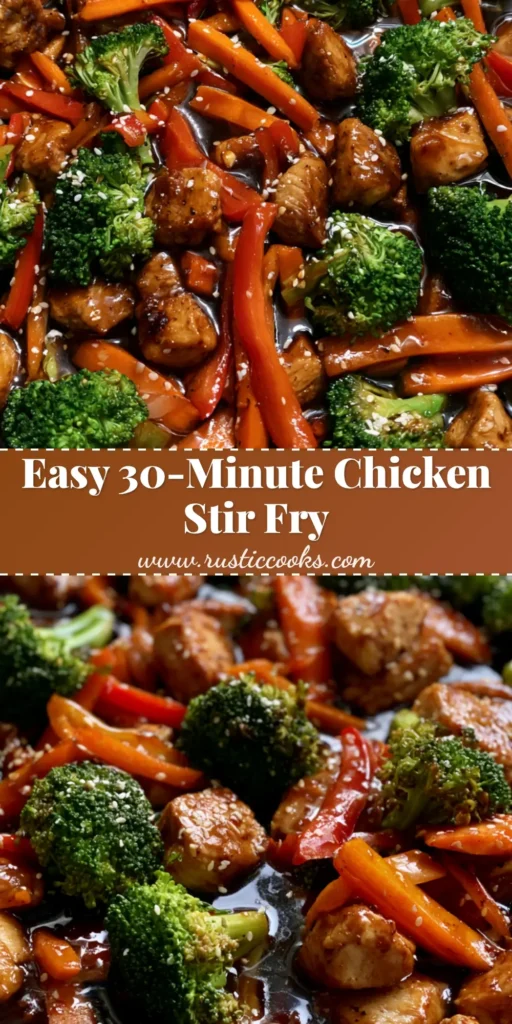
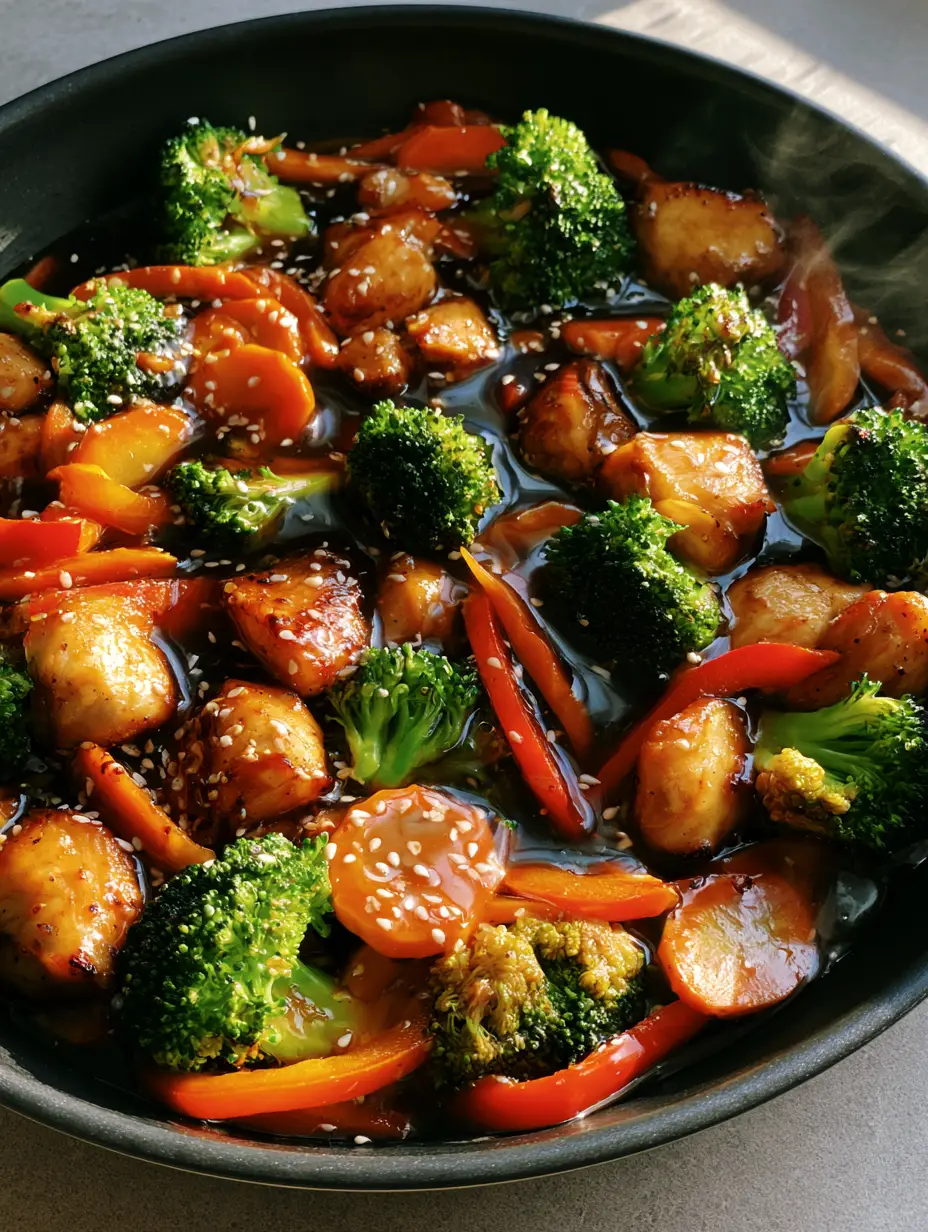
Chicken and Vegetable Stir Fry: The Ultimate 20-Minute Skillet Dinner
Ingredients
Equipment
Method
- Slice orange carrots thinly to ensure softened edges and cut red bell peppers into strips. Par-steam broccoli florets for 2 minutes to keep them vibrant green.
- Heat oil in a black skillet over high heat. Pat chicken breast dry and sear until a deep golden-brown crust forms on the bite-sized pieces. Remove and set aside.
- Sauté carrots and peppers in the skillet. Whisk soy sauce, brown sugar, and cornstarch together, then pour into the skillet until it turns into a translucent dark amber glaze.
- Add chicken and broccoli back to the pan, tossing to coat in the glossy dark brown sauce. Garnish with a light dusting of white sesame seeds.
Notes
Par-steaming broccoli preserves the vibrant green color and prevents it from getting mushy.
Conclusion: Bring the Heat to Your Kitchen
Mastering the Chicken and Vegetable Stir Fry is a rite of passage for any home cook looking to expand their weeknight repertoire. The combination of succulent seared chicken and the “vibrant green” of fresh vegetables creates a meal that is as healthy as it is delicious.
I hope you find as much joy in the process of creating that glossy, dark amber sauce as I do. It truly is the “bridge” that brings all these fresh ingredients together into one cohesive, restaurant-quality dish.
If you enjoyed this recipe, please leave a comment below and tell me how your sear turned out! Don’t forget to follow us on Pinterest for more culinary inspiration and recipe secrets.