There is a specific kind of culinary nostalgia associated with the “bottomless” salad bowl. For many, the Copycat Olive Garden Salad isn’t just a side dish; it is the main event, defined by its incredible crunch, tangy zing, and that iconic powdery dusting of cheese. Recreating this masterpiece at home requires more than just throwing lettuce in a bowl; it demands a forensic approach to textures and a scientific understanding of emulsification.
In this guide, we are going to break down every layer of this vibrant Italian house salad. From the translucent slivers of red onion to the waxy, light green pepperoncini that provide that signature vinegary pop, no detail is left to chance. We have designed this recipe to mirror the exact visual and sensory experience you expect, ensuring your homemade version looks like a professional food photograph.
Whether you are hosting a large family dinner or simply craving that specific restaurant flavor, this Copycat Olive Garden Salad delivers. By the time you finish this article, you will know the exact ratio of iceberg to romaine and the secret to a vinaigrette that clings to every leaf without making it soggy. Let’s dive into the architecture of the perfect salad.
Why This Copycat Olive Garden Salad Recipe Works
- Structural Integrity: By using a specific blend of crisp iceberg and sturdy romaine, the salad maintains its volume and “loft” even after the dressing is applied.
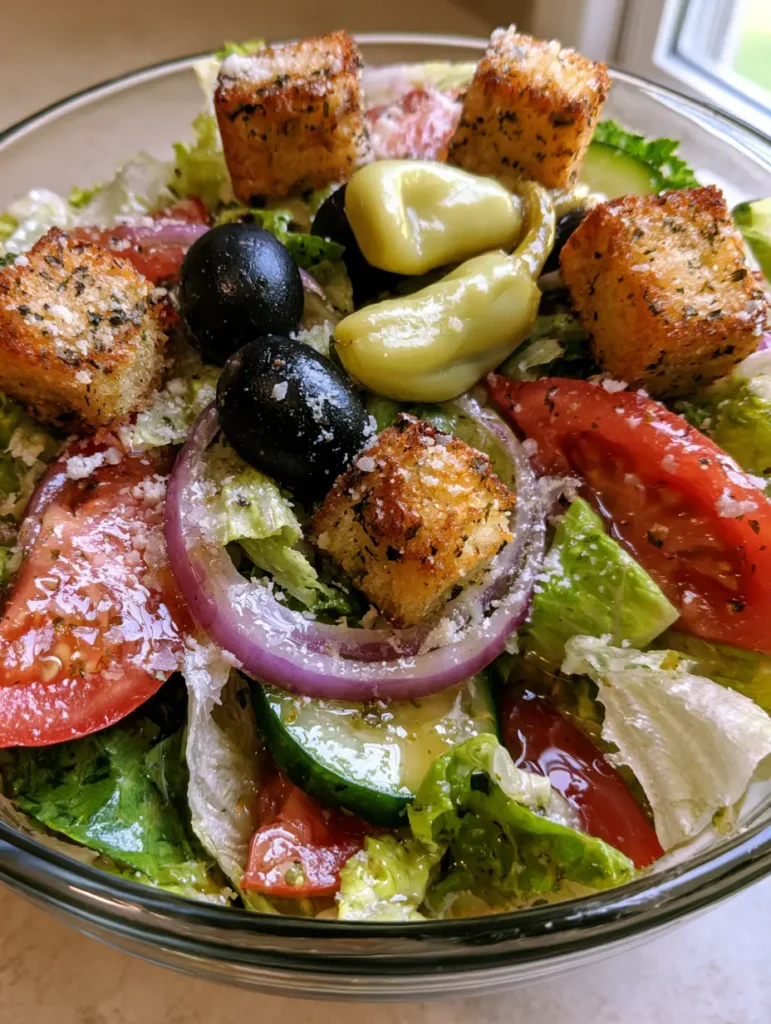
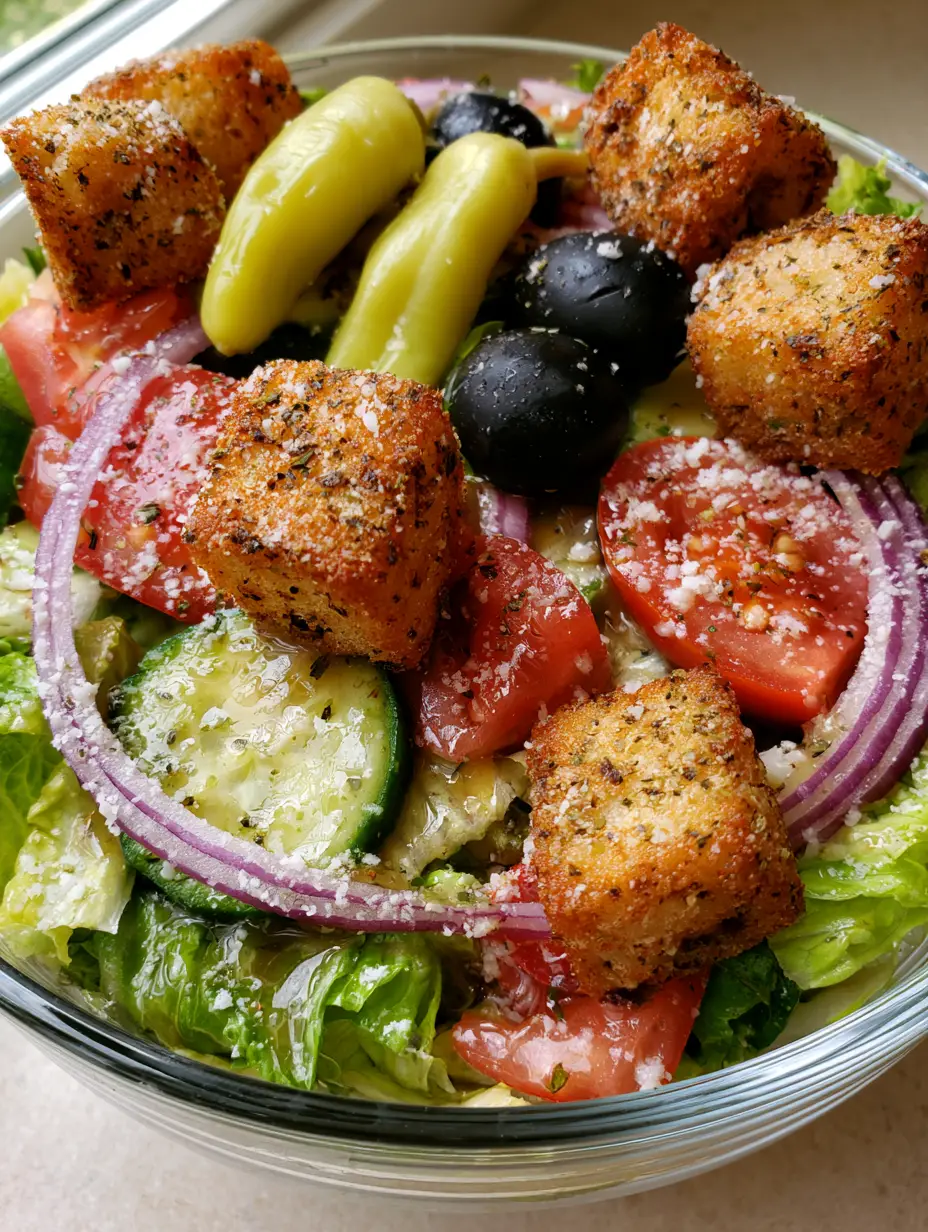
- Visual Contrast: The combination of bright red Roma tomato wedges against matte black olives and waxy green pepperoncini creates a professional, high-contrast aesthetic.
- Perfect Emulsification: Our glossy Italian vinaigrette uses foundational stabilizers to ensure the oil and vinegar never separate, providing a translucent sheen that highlights the freshness of the vegetables.
- Sensory Balance: Every bite offers a harmony of salt from the olives, acid from the peppers, sweetness from the tomatoes, and a sharp bite from the red onions.
The Anatomy of an Iconic Italian House Salad
To achieve the exact look of the Copycat Olive Garden Salad, we must be precise with our selection of produce. The base begins with 4 cups (approx. 300g) of torn iceberg lettuce, which provides that watery, refreshing crunch that is synonymous with garden salads. We supplement this with 4 cups (approx. 300g) of romaine lettuce leaves, torn into bite-sized pieces to add a deeper green hue and a more robust leaf structure.
The aromatics are equally important. You will need 1/2 of a large red onion (approx. 100g), sliced into paper-thin, translucent rings. To achieve that restaurant-style look, these rings should be separated carefully so they drape elegantly over the greens. For the fruit components, we use 4 firm Roma tomatoes (approx. 340g), cut into thick, vibrant wedges, and 1 medium cucumber (approx. 200g), sliced into uniform 1/4-inch (6mm) rounds.
The “toppers” are what truly define the Copycat Olive Garden Salad. We include 1/2 cup (approx. 75g) of whole matte black olives and 6 to 8 whole waxy light green pickled pepperoncini. For the crunch, 1 cup (approx. 60g) of large cubic golden-brown croutons, heavily seasoned with dried herb flakes, is essential. Finally, the dish is finished with a generous dusting of 1/4 cup (approx. 25g) fine, powdery white grated parmesan cheese and 1/2 cup (120ml) of our glossy Italian vinaigrette.
Don’t forget the invisible foundations. To make the croutons from scratch, you’ll need 2 tbsp (30ml) of extra virgin olive oil and a pinch of fine sea salt. The vinaigrette requires 1/3 cup (80ml) white wine vinegar, 1 tsp (5g) honey to balance the acid, and a blend of dried oregano and garlic powder to hit those specific flavor notes.
Essential Tools for the Perfect Toss
To recreate this dish with forensic accuracy, you will need a large, clear glass salad bowl. This allows the layers of cucumbers and tomatoes to be visible from the side, just like the Midjourney visual prompt suggests. A sharp mandoline slicer is highly recommended for achieving those translucent, thin red onion rings without bruising the vegetable fibers.
You will also need a salad spinner to ensure the lettuce is bone-dry before assembly. Water is the enemy of a glossy vinaigrette; if the leaves are wet, the dressing will slide off and pool at the bottom. A small glass jar or an immersion blender is also necessary to properly emulsify the dressing, ensuring the oil and vinegar stay bonded for that perfect translucent coating.
Mastering the Signature Dressing and Prep
Step 1: Preparing the Foundation Greens
Start by washing both the iceberg and romaine lettuce in cold, filtered water. Tear the leaves by hand rather than chopping them with a knife; this prevents the edges from browning and creates a more rustic, voluminous texture. Place the torn leaves into a salad spinner and spin until they are completely dry to the touch.
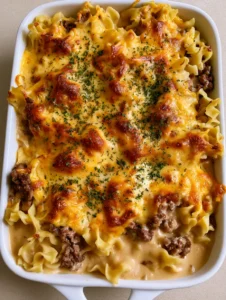
Transfer the dried greens into your large glass bowl. Toss them gently to ensure an even distribution of the light green iceberg and the darker green romaine. This creates a vibrant, multi-toned base that makes the other colors pop. If you are serving this alongside a cheesy ground beef melt, the freshness of the greens will provide a much-needed palate cleanser.
Step 2: Precision Slicing the Aromatics and Vegetables
Using your mandoline or a very sharp chef’s knife, slice the red onion into thin, translucent rings. If the onion is too sharp, you can soak the slices in ice water for 5 minutes to mellow the flavor, but ensure they are patted dry before adding to the salad. Place these rings on top of the lettuce, allowing them to interweave with the leaves.
Cut your Roma tomatoes into thick wedges, ensuring each wedge has a piece of the bright red skin. Slice the cucumber into rounds, keeping the skin on for a contrast of green. Arrange the tomatoes and cucumbers in visible layers around the edges of the glass bowl. This ensures that every guest can see the freshness of the ingredients before the first toss.
Step 3: Creating the Glossy Vinaigrette
In a small jar, combine 1/3 cup (80ml) white wine vinegar, 2/3 cup (160ml) extra virgin olive oil, 1 tsp (5g) honey, 1/2 tsp dried oregano, and 1/2 tsp garlic powder. Shake vigorously for at least 30 seconds until the mixture is opaque and thickened. This emulsification process is what gives the dressing its glossy, translucent appearance that clings to the leaves.
Taste the dressing and add a pinch of salt if necessary. The dressing should be tangy and bold to stand up to the bitter greens and salty olives. If you are looking for a complete meal, this salad pairs beautifully with parmesan crusted baked salmon, as the acidity of the vinaigrette cuts through the richness of the fish perfectly.
Step 4: Final Assembly and Textural Toppings
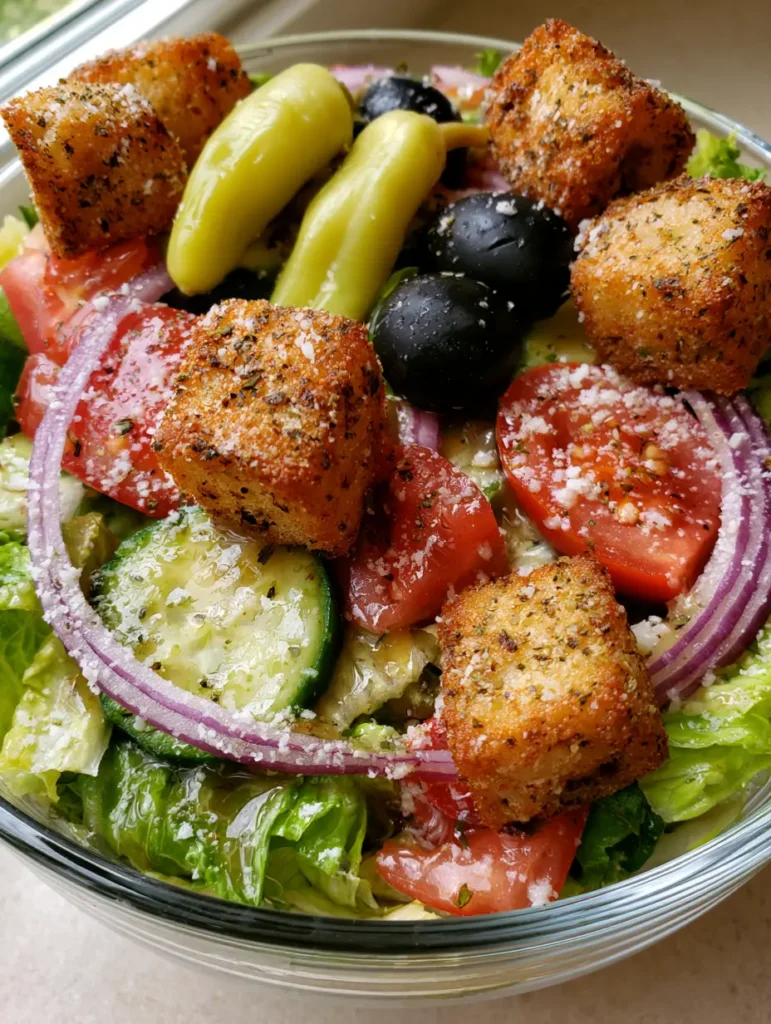
Place the whole matte black olives and the whole waxy light green pepperoncini on top of the salad. Do not slice them; the whole peppers are a visual hallmark of the Copycat Olive Garden Salad. Add the large, cubic golden-brown croutons, ensuring the herb flakes are visible on their surface.
Just before serving, drizzle the glossy vinaigrette over the salad. Use large salad tongs to toss the mixture gently, ensuring every leaf is coated but not drowned. Finally, take your fine, powdery grated parmesan cheese and dust it over the top like a light snowfall. The cheese should cling to the damp, dressed leaves for a professional finish.
Pro Secrets for the Ultimate Restaurant Crunch
- The Ice Water Bath: Soak your sliced onions and even your torn lettuce in ice water for 10 minutes before spinning dry. This shocks the cell walls, resulting in a superior, audible crunch.
- Emulsify or Fail: Never just pour oil and vinegar over the salad. By pre-mixing the dressing until it is a stable emulsion, you ensure a “glossy” look rather than a greasy one.
- Crouton Toasting: If using store-bought croutons, give them a quick 2-minute toast in a dry pan. This refreshes the oils in the dried herbs and restores the “cubic golden-brown” visual appeal.
- Tomato Temperature: Never refrigerate your tomatoes before making the salad. Room temperature tomatoes have significantly more flavor and a better, juicier texture.
Freshness Guide: Keeping Your Salad Crisp
The Copycat Olive Garden Salad is best enjoyed immediately after tossing. However, you can prep the components ahead of time. Store the washed and dried greens in a zip-top bag with a dry paper towel to absorb excess moisture; they will stay crisp for up to 3 days.
Keep the dressing in a sealed jar in the pantry (if using within a day) or the fridge. If refrigerated, the olive oil may solidify, so let it come to room temperature and shake well before using. Do not add the croutons or the parmesan cheese until the very last second, as they will absorb moisture and lose their distinct textures.
What to Serve with Your Copycat Olive Garden Salad
This salad is incredibly versatile. It serves as a light, refreshing contrast to heavier pasta dishes like a buffalo ranch chicken pasta bake. The tanginess of the vinaigrette helps balance the creamy, spicy notes of the buffalo sauce.
For a lighter lunch, consider serving a bowl of this salad alongside some fresh sourdough discard naan. The chewy texture of the bread is a great companion to the crisp lettuce. If you are planning a full Italian feast, follow up the salad with a decadent chocolate pistachio tart for dessert.
Frequently Asked Questions
Yes, but keep the components separate. Store the dried greens in a bag with paper towels, keep the dressing in a jar, and add the croutons and cheese only at the moment of serving to prevent sogginess.
Yes, this specific recipe is vegetarian. However, many restaurant versions contain a small amount of egg or dairy in the dressing, so always check labels if purchasing pre-made dressing.
The secret lies in the emulsification. By blending white wine vinegar, oil, and stabilizers like honey or egg yolk (optional), you create a glossy vinaigrette that clings to the lettuce without pooling at the bottom.
The pepperoncini are pickled in a vinegar-based brine, which gives them their translucent, waxy skin and signature light green color. Using whole peppers preserves the juice inside for a pop of flavor.
Iceberg lettuce provides the high-moisture crunch and classic ‘watery’ freshness, while Romaine adds structural integrity and a deeper green color, creating a better visual and textural balance.
The Final Countdown to a Perfect Plate
Copycat Olive Garden Salad: The Ultimate Restaurant-Style Italian House Salad
Ingredients
Equipment
Method
- Wash the torn iceberg and romaine in cold water, then use a salad spinner until they are completely dry.
- Use a mandoline to slice the red onion into translucent rings; separate them by hand.
- Wedge the Roma tomatoes and slice the cucumbers into rounds.
- In a clear glass bowl, combine the lettuce. Add the onion rings, tomato wedges, and cucumber slices in visible layers.
- Place whole matte black olives and waxy pepperoncini on top, followed by the large herb croutons.
- Drizzle with glossy Italian vinaigrette and toss gently. Finish with a heavy dusting of powdery parmesan cheese.
Notes
Ensure lettuce is bone-dry so the dressing clings effectively.
Bringing the Restaurant Experience Home
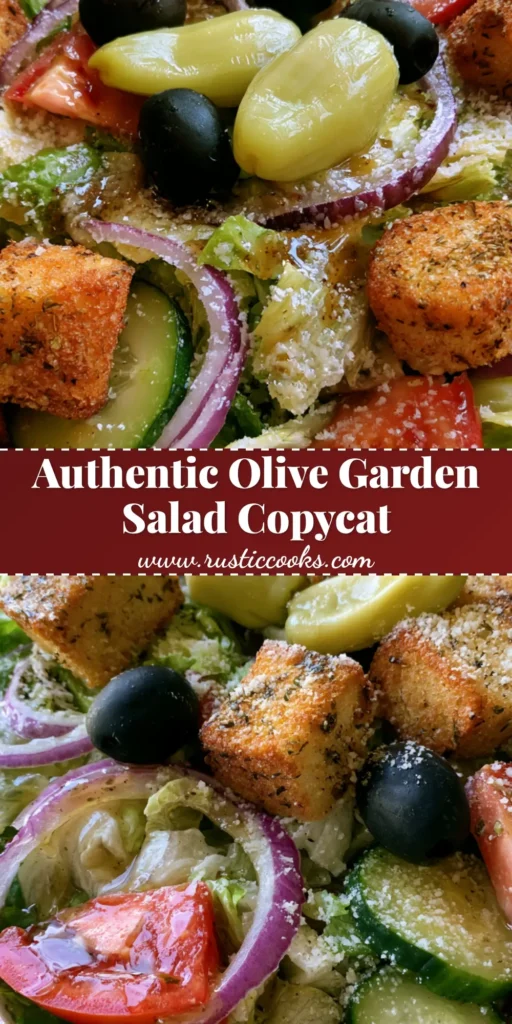
Mastering the Copycat Olive Garden Salad is a rite of passage for any home cook who loves Italian-American cuisine. By focusing on the visual cues—the translucent onions, the waxy peppers, and the glossy dressing—you can transform simple ingredients into a restaurant-quality experience. The key is in the details, from the temperature of the tomatoes to the dryness of the lettuce.
We hope this recipe brings a touch of nostalgia and a lot of flavor to your dinner table. If you enjoyed this forensic breakdown of a classic, please leave a comment below and let us know how your salad turned out! Don’t forget to share your creations on Pinterest and subscribe to our newsletter for more deep-dives into your favorite recipes.