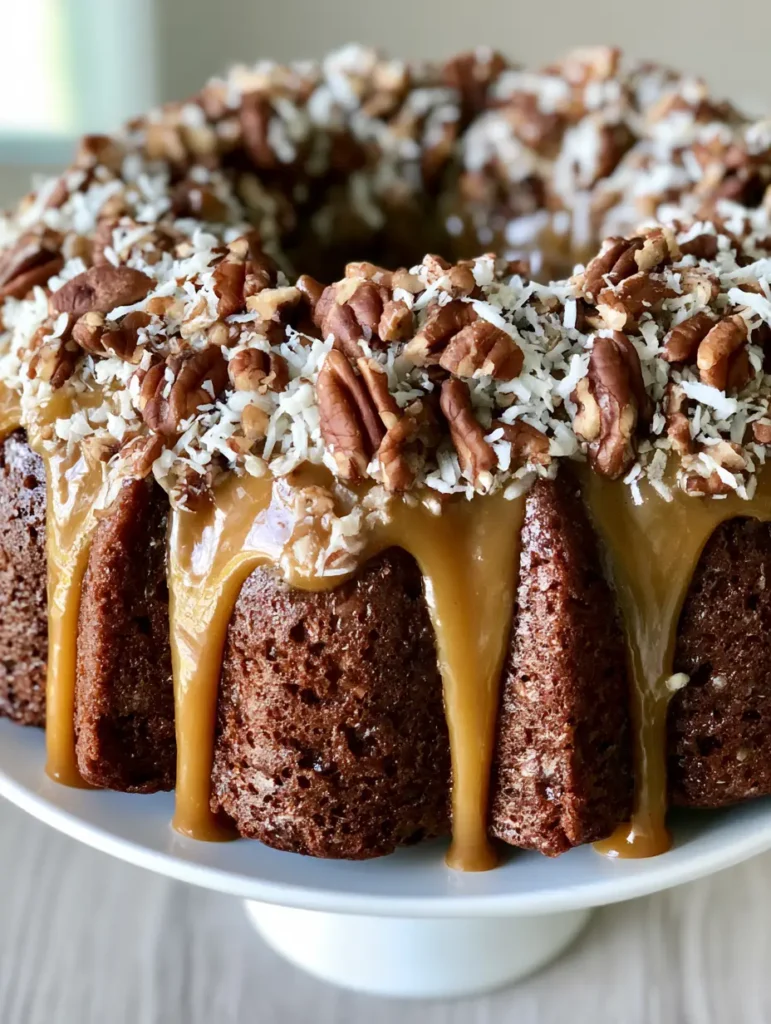
There is something undeniably nostalgic about the flavor profile of a classic German chocolate cake, but when you transform those flavors into a dense, velvety German Chocolate Pound Cake, the experience reaches a whole new level of decadence. This isn’t your standard airy layer cake; this is a structurally magnificent masterpiece baked in a fluted bundt pan, designed to hold onto every drop of a viscous, golden-caramel glaze. Every slice reveals a moist cake crumb that is deep cocoa-brown in color, providing a sophisticated bitterness that perfectly offsets the sweet, nutty topping.
When you pull this cake from the oven, the soft, natural morning light hitting the ridges of the fluted pan highlights a texture that is both rustic and refined. This recipe was engineered to capture the exact visual appeal of a professional bakery window, featuring large, irregular chunks of toasted brown pecans and a dense layer of white shredded coconut flakes. Whether you are serving this at a garden party or as a centerpiece for a Sunday brunch, the sight of those heavy drips slowly running down the ridges of the cake will have your guests reaching for their phones before their forks.
The secret to this particular German Chocolate Pound Cake lies in the culinary “bridge” between the richness of the cocoa and the buttery depth of the pound cake base. By using Dutch-processed cocoa and a specific ratio of fats, we achieve that deep, opaque exterior and a crumb that stays moist for days. If you’ve previously enjoyed our Southern Peach Cobbler Cheesecake, you know we take our dessert textures seriously, and this bundt cake is no exception.
Why This Decadent German Chocolate Pound Cake Works
- Unrivaled Crumb Texture: The use of buttermilk and high-fat butter ensures a moist cake crumb that is dense enough to be a true pound cake but soft enough to melt in your mouth.
- Viscous Caramel Engineering: Unlike thin glazes, this golden-caramel topping is cooked to a specific viscosity, ensuring it clings to the cake ridges rather than puddling at the bottom.
- The Toasting Factor: We don’t just add pecans and coconut; we toast them to bring out essential oils, providing a “toasted brown” visual and a deeply aromatic sensory experience.
- Visual Grandeur: The contrast between the deep cocoa-brown cake and the opaque golden glaze makes this a stunning centerpiece for any white ceramic pedestal.
- Flavor Balance: The addition of a “foundational” pinch of salt in the glaze heightens the caramel notes, preventing the sweetness from becoming overwhelming.
The Anatomy of a Perfect Bundt: Essential Ingredients
Unsalted Butter (1.5 cups / 340g): This provides the structural fat for the cake. Ensure it is softened to room temperature so it can properly aerate during the creaming process for a fine, even crumb.
Granulated Sugar (2.5 cups / 500g): Sugar does more than sweeten; it helps tenderize the protein in the flour, ensuring your German Chocolate Pound Cake isn’t tough or bread-like.
Large Eggs (5 units): These act as the primary binder and leavening agent. Room temperature eggs emulsify better into the batter, creating a more stable structure for the heavy glaze.
Dutch-Processed Cocoa Powder (3/4 cup / 75g): This is vital for achieving that specific deep cocoa-brown exterior. It is treated with alkali to reduce acidity, resulting in a smoother, darker chocolate flavor.
All-Purpose Flour (3 cups / 375g): The backbone of the cake. Measuring by weight is highly recommended to prevent a dry, crumbly texture that can result from over-packing a measuring cup.
Full-Fat Buttermilk (1 cup / 240ml): The acid in buttermilk reacts with the leavening agents to create a soft, moist cake crumb. It also adds a subtle tang that cuts through the richness of the caramel.
Shredded Coconut (1.5 cups / 135g): Use sweetened or unsweetened flakes, but ensure they are toasted until the edges are golden. This provides the “dense texture of white shredded coconut flakes” seen in the visual blueprint.
Chopped Pecans (1.5 cups / 170g): Choose large, irregular chunks of toasted brown pecans for a rustic look. Toasting them for 8 minutes at 350°F (175°C) is a non-negotiable step for flavor development.
Evaporated Milk (1 cup / 240ml): Used for the glaze, this provides a concentrated creamy base that allows the caramel to become thick and viscous without the water content of regular milk.
The Culinary Toolkit: Equipment for Success
To achieve the professional results seen in our photography, you will need a 10-12 cup (2.4L – 2.8L) fluted bundt pan. A high-quality non-stick pan is essential, but proper greasing is still the most critical step in pound cake forensics. A handheld smartphone photo won’t look nearly as good if half the cake is left inside the pan! You will also need a stand mixer or electric hand mixer to achieve the necessary aeration during the creaming stage. Finally, a heavy-bottomed saucepan is required for the glaze to prevent the sugars from scorching as they transform into a golden-caramel hue.
Step-By-Step Guide to Baking the Perfect German Chocolate Pound Cake
1. Prepping the Foundation and the Pan
Preheat your oven to 325°F (165°C). The lower temperature is crucial for a large pound cake to bake evenly without the exterior burning before the center is set. Liberally grease your fluted bundt pan with a baking spray that contains flour, or use a “cake goop” mixture of equal parts oil, shortening, and flour. Ensure you get into every ridge to guarantee that iconic fluted shape.
2. The Creaming Method for Maximum Lift
In your mixer bowl, beat the 1.5 cups (340g) of butter and 2.5 cups (500g) of sugar on medium-high speed. You are looking for a sensory cue here: the mixture should turn from a yellow, gritty paste to a pale, fluffy, and almost white cloud. This process should take at least 5 minutes. Incorporate the 5 eggs one at a time, allowing each to fully disappear before adding the next.
3. Incorporating the Deep Cocoa Elements
Sift together your 3 cups (375g) of flour, 3/4 cup (75g) of cocoa powder, 1 tsp (5g) of baking powder, and 1/2 tsp (3g) of salt. With the mixer on low, alternate adding the dry ingredients and the 1 cup (240ml) of buttermilk. Start and end with the flour. This prevents the batter from curdling and ensures a uniform, moist cake crumb that looks professional when sliced.
4. The Long Bake and Visual Cues
Pour the batter into the prepared pan and smooth the top. Bake for 65-75 minutes. The visual cue you are looking for is a deep cocoa-brown exterior that has slightly pulled away from the edges of the pan. A wooden skewer inserted into the thickest part should come out clean or with just a few moist crumbs. Let the cake cool in the pan for exactly 10 minutes before inverting it onto a white ceramic pedestal or cooling rack.
5. Crafting the Viscous Caramel Glaze
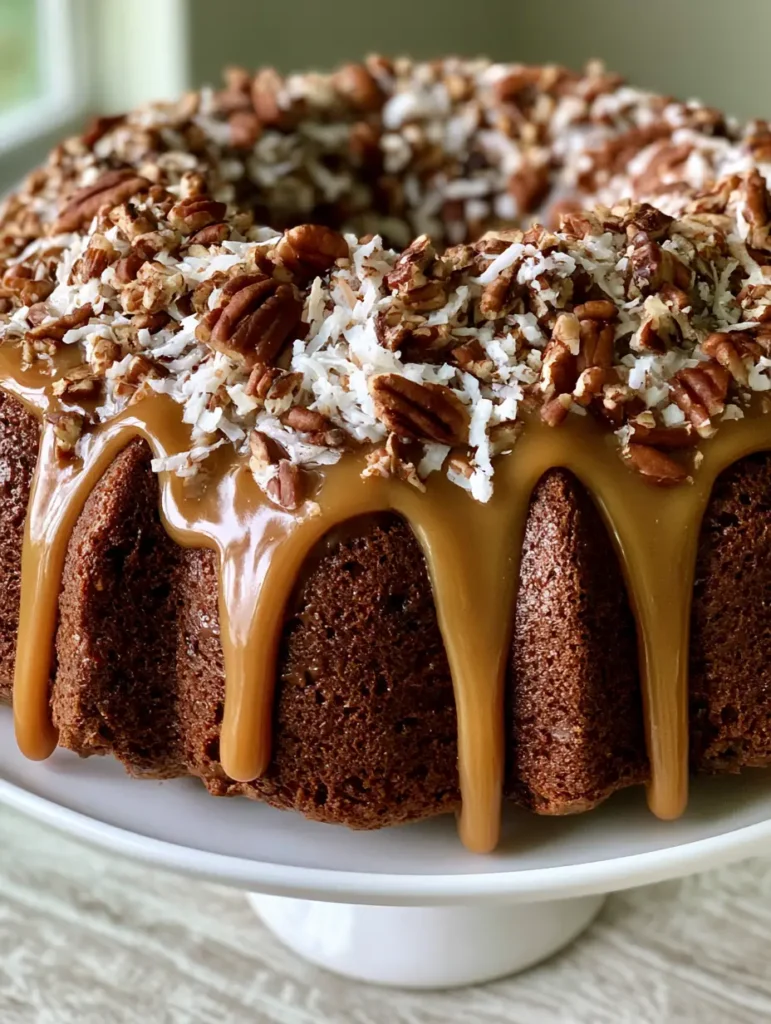
While the cake cools, combine 1 cup (240ml) of evaporated milk, 1 cup (200g) of sugar, and 3 large egg yolks in a saucepan over medium heat. Whisk constantly. Once the mixture thickens and reaches a “viscous” state that coats the back of a spoon—usually about 10-12 minutes—remove from heat. Stir in 1/2 cup (115g) of butter, 1 tsp (5ml) of vanilla, the toasted coconut, and the large chunks of pecans.
6. The Final Pour and Artistic Drip
Allow the glaze to cool slightly until it is thick but still pourable. Using a large spoon or a small pitcher, slowly pour the glaze over the top of the cake. Target the ridges of the fluted pan so the glaze creates those heavy drips slowly running down the sides. The texture should look dense, with the white coconut and brown pecans creating a beautiful, irregular landscape on the deep chocolate background.
Expert Tips for a Flawless German Chocolate Bundt
- Temperature Control: Ensure your eggs, butter, and buttermilk are all at room temperature. Cold ingredients will not emulsify, leading to a “leathery” or “greasy” cake crumb.
- Sift the Cocoa: Cocoa powder is notoriously lumpy. Sifting it with the flour is the only way to avoid biting into a pocket of dry, bitter powder in your final cake.
- The 10-Minute Rule: Do not leave the cake in the pan longer than 10 minutes after baking. The steam will begin to condense, making the cake stick to the pan ridges.
- Toast for Depth: Never use raw pecans or raw coconut. The heat from the oven/skillet transforms the flavor profile and creates the “toasted brown” color required for the authentic visual blueprint.
Storage, Reheating, and Freezing Advice
Because this German Chocolate Pound Cake is exceptionally moist, it keeps well at room temperature for up to 3 days when covered with a cake dome. For longer storage, refrigerate for up to 7 days. If you prefer a “straight-from-the-oven” feel, a quick 10-second zap in the microwave will soften the caramel glaze and the butter in the cake crumb beautifully.
To freeze, it is best to freeze the cake without the glaze. Wrap the cooled chocolate bundt tightly in plastic wrap and then foil; it will stay fresh for up to 3 months. When ready to serve, thaw at room temperature and then prepare a fresh batch of the coconut pecan glaze to pour over the top for that signature viscous finish.
What to Serve With This Decadent Dessert
The richness of the German Chocolate Pound Cake calls for a pairing that provides a bit of contrast. A strong, dark roast coffee or a glass of cold milk is the classic choice. If you are serving this as part of a larger spread, consider balancing the heavy chocolate with a fresh Cucumber Beetroot Salad for a refreshing palate cleanser before dessert.
If you’re hosting a full dinner event, this cake follows beautifully after a savory main like our Strawberry Basil Balsamic Chicken. For those who love a variety of textures, adding a side of our Guy Fieri Macaroni Salad to your picnic spread ensures there is something for everyone before the main chocolate event. And if you’re a fan of complex buttery finishes, you’ll definitely want to save our Cowboy Butter Recipe for your next steak night.
Frequently Asked Questions
You can make a quick substitute by adding 1 tablespoon of lemon juice or white vinegar to 1 cup of regular milk, but full-fat buttermilk provides the best texture and moisture for this pound cake.
Yes, you can use unsweetened shredded coconut. However, we recommend toasting it first to ensure it develops the golden-brown edges seen in the visual blueprint.
Use a baking spray with flour or ‘cake goop’ (oil, shortening, and flour). Most importantly, only let the cake cool for 10 minutes in the pan before inverting it onto a pedestal.
Traditional German chocolate cake is milder and sweeter, often using Sam German’s sweet baking chocolate. Our pound cake version uses Dutch-processed cocoa for a deeper, darker cocoa-brown visual and a more moist, dense crumb.
The glaze needs to be cooked until it effectively coats the back of a spoon. If it is too thin, continue simmering over medium heat to reduce the evaporated milk further until it reaches a viscous, drip-worthy consistency.
The Ultimate German Chocolate Pound Cake Recipe
This recipe is the culmination of culinary science and visual artistry. By following these steps, you will create a cake that isn’t just a dessert, but a conversation piece. The combination of the deep cocoa-brown base and the heavy, pecan-laden caramel drips creates a sensory experience that is as satisfying to look at as it is to eat. Gather your ingredients, preheat your oven, and prepare to bake the most impressive bundt cake of your life.
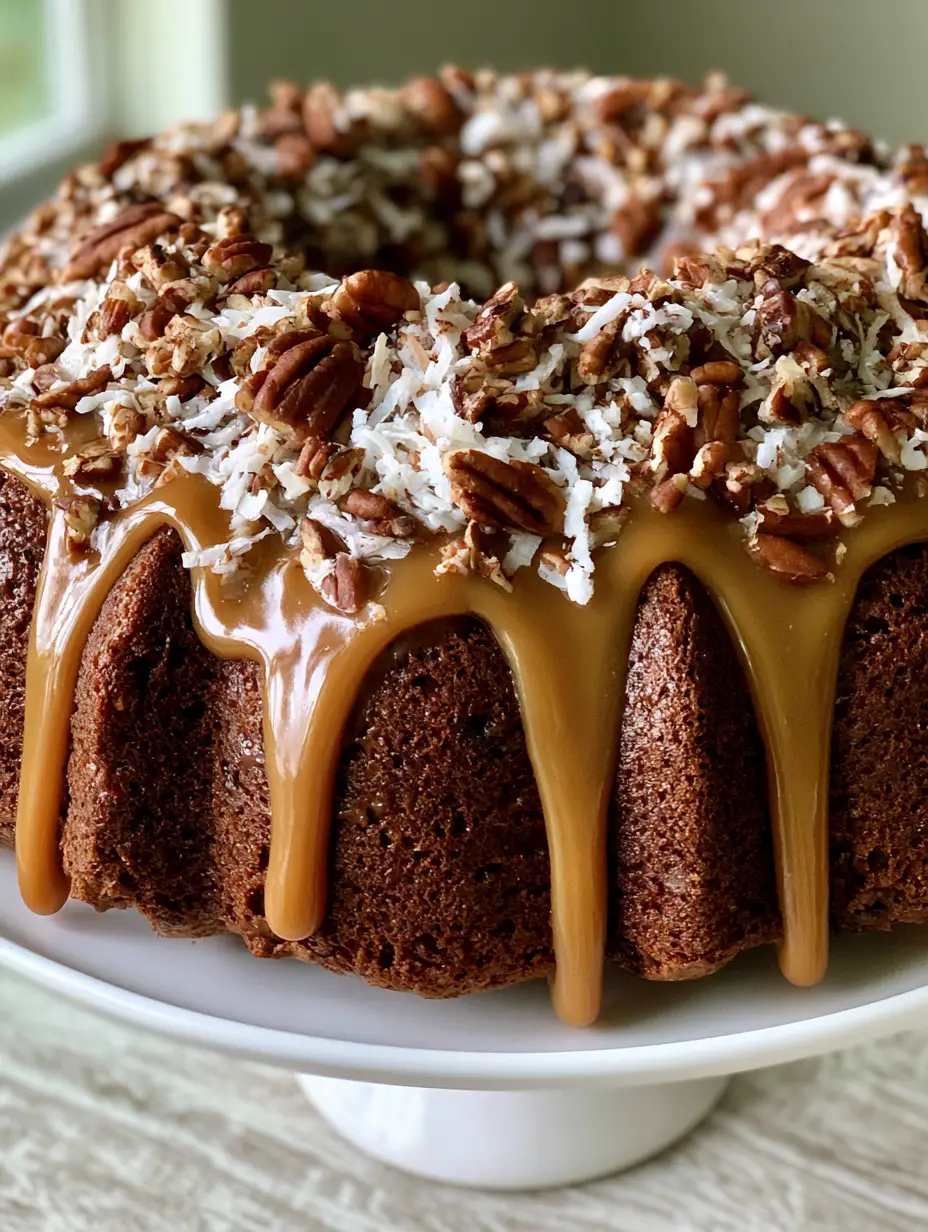
German Chocolate Pound Cake with Rich Coconut Pecan Glaze
Ingredients
Equipment
Method
- Preheat oven to 325°F (165°C). Liberally grease and flour a 10-12 cup fluted bundt pan.
- In a stand mixer, cream 1.5 cups (340g) butter and 2.5 cups (500g) sugar for 5 minutes until pale and fluffy. Add 5 eggs one at a time.
- Sift together 3 cups (375g) flour, 3/4 cup (75g) cocoa powder, baking powder, and salt.
- Add dry ingredients and 1 cup (240ml) buttermilk to the mixer alternately, beginning and ending with flour.
- Pour into pan and bake for 65-75 minutes until a skewer comes out clean. Cool in pan for 10 minutes, then invert onto a pedestal.
- In a saucepan, whisk evaporated milk, 1 cup sugar, and egg yolks over medium heat until thickened (about 12 minutes).
- Stir in butter, vanilla, toasted coconut, and toasted pecans. Let cool slightly, then pour over the cake, allowing for heavy drips.
Notes
Toast the coconut and pecans in a 350°F (175°C) oven for 5-8 minutes before adding to the glaze.
Closing & Call to Action
Baking a German Chocolate Pound Cake is about more than just satisfying a sweet tooth; it’s about mastering the art of the bundt and the science of the perfect caramel. We hope this guide helps you achieve that perfect “heavy drip” look and “moist crumb” feel. If you enjoyed this recipe, please leave a comment below and let us know how your glaze turned out! Don’t forget to follow us on Pinterest for more visually stunning recipe inspiration and share your creations with our community.