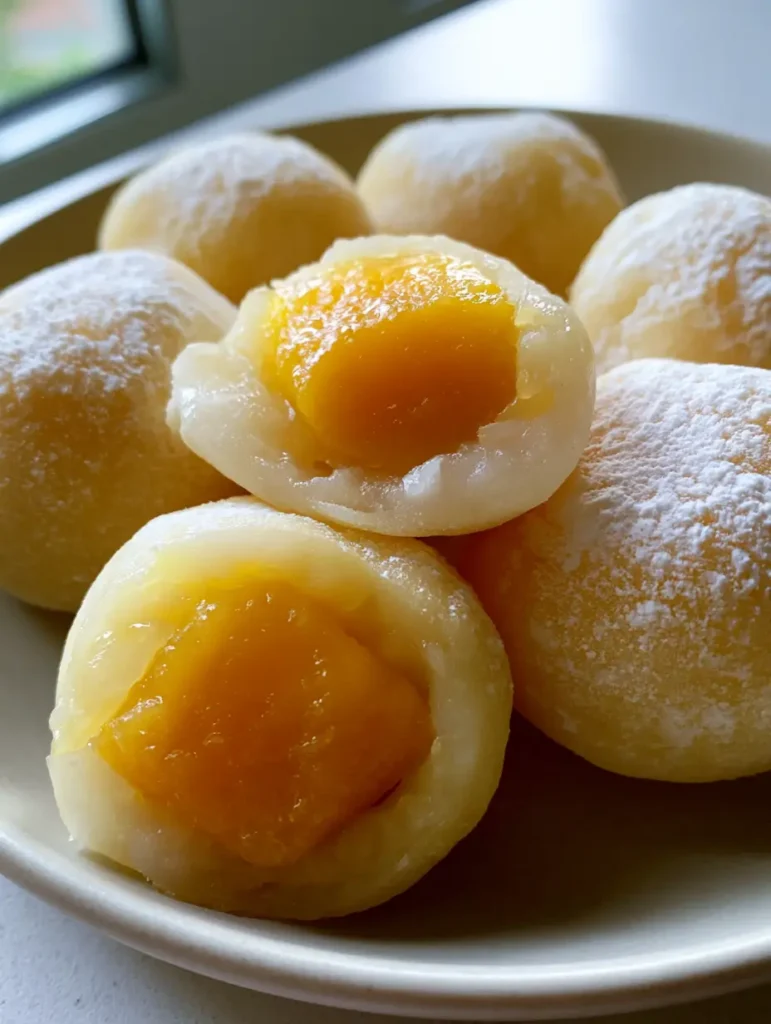
There is nothing quite like the sensory experience of biting into a perfectly crafted Homemade Mango Mochi. Imagine a pillowy, soft, pale yellow glutinous rice dough that yields effortlessly to reveal a vibrant, juicy, deep orange cube of ripe mango tucked inside.
This traditional-meets-modern dessert is a celebration of texture and tropical flavor. The delicate balance of the chewy, translucent casing and the honey-like sweetness of fresh fruit makes it a standout treat for any occasion.
Whether you are a seasoned confectioner or a curious home cook, mastering this recipe allows you to bring the authentic taste of a boutique Asian bakery right into your own kitchen. With just a few staple ingredients and the right technique, you can create these stunning handheld spheres.
Why You Will Love This Tropical Mango Delicacy
- Perfectly Pillowy Texture: The glutinous rice dough is steamed to achieve a soft, bouncy consistency that melts in your mouth.
- Vibrant Natural Color: The pale yellow skin beautifully complements the deep orange mango center, creating a stunning visual contrast.
- Naturally Gluten-Free: Using glutinous rice flour makes this an inclusive dessert option for those with dietary restrictions.
- Pure Fruit Sweetness: Unlike heavy pastries, the primary sweetness comes from fresh, ripe fruit, making it refreshing and light.
Essential Components for Tropical Mochi Bliss
Glutinous Rice Flour (Mochiko): 1.5 cups (160g). This is the foundation of the Homemade Mango Mochi, providing the signature “mochi-mochi” chewiness that cannot be replicated with regular rice flour.
Granulated White Sugar: 1/4 cup (50g). A small amount of sugar is essential to sweeten the dough and keep the texture soft and supple even after it cools.
Full-Fat Coconut Milk or Water: 1 cup (240ml). Using coconut milk adds a subtle richness that pairs perfectly with mango, though water works for a cleaner, more neutral taste.
Mango Juice or Pale Yellow Food Coloring: 1 tbsp (15ml). To achieve that specific pale yellow mochi skin, a splash of juice or a drop of gel coloring is integrated directly into the liquid base.
Fresh Ripe Mangoes: 2 large (approx. 400g). Look for Champagne or Ataulfo mangoes for their fiber-less, buttery texture and deep orange hue that pops against the dough.
Cornstarch (or Potato Starch): 1/2 cup (60g). This is used for the fine white cornstarch dusting to prevent the sticky dough from clinging to your hands and the serving plate.
Professional Tools for Success
To achieve the authentic, handheld smartphone photo-ready look, you will need a heat-proof glass bowl and a sturdy silicone spatula. A steamer basket is preferred for the most even cook, though a microwave can be used for speed.
A sharp paring knife is crucial for slicing the mango into precise, uniform cubes. Finally, a small fine-mesh sieve will help you achieve that perfectly even, snow-like dusting of cornstarch over the finished spheres.
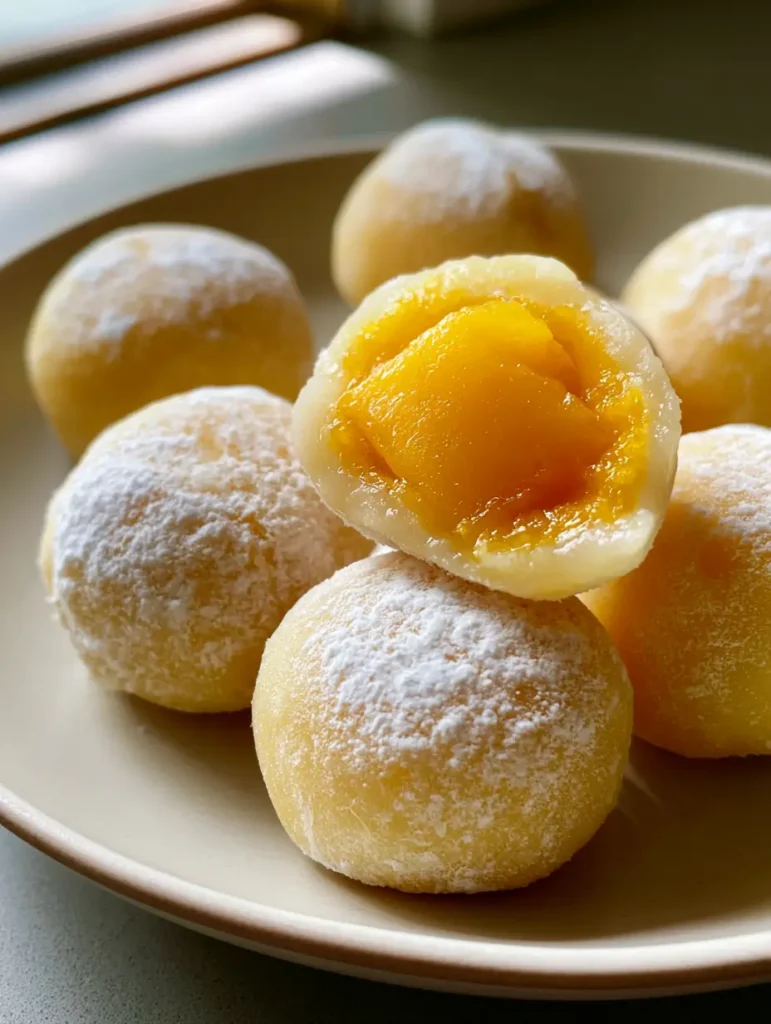
How to Master Homemade Mango Mochi Step-by-Step
Preparing the Vibrant Mango Heart
Begin by selecting mangoes that are fully ripe and fragrant. Peel the fruit carefully and cut the cheeks away from the large central pit.
Slice the flesh into uniform 1-inch (2.5cm) cubes. You want them large enough to be the star of the show but small enough to be easily encased by the pale yellow dough.
Mixing the Translucent Rice Dough
In your heat-proof bowl, whisk together the glutinous rice flour and granulated sugar. Slowly stream in your liquid of choice, whisking constantly to ensure no lumps remain.
Stir in your mango juice or yellow coloring until the mixture is a uniform, pale yellow hue. The consistency should resemble thick pancake batter at this stage.
The Steaming Process for Maximum Chew
Cover the bowl with plastic wrap or a lid and place it in a steamer over boiling water for 15-20 minutes. You will know it is done when the dough turns from opaque to translucent and becomes very sticky.
If using a microwave, heat in 60-second intervals, stirring vigorously with a wet silicone spatula between each burst until the dough is fully cooked and cohesive.
The Art of Dusting and Folding
Generously dust your clean work surface with the fine white cornstarch. Turn the hot dough out onto the starch, flipping it to ensure it is fully coated and no longer tacky to the touch.
Divide the dough into 8-10 equal portions. Flatten a portion into a disk, place a mango cube in the center, and pinch the edges together to form a soft, pillowy sphere.
Expert Tips for the Perfect Mochi Texture
- Don’t Scrimp on Starch: Mochi dough is incredibly adhesive. Keep your hands and surfaces well-dusted with cornstarch to prevent tearing the delicate skin.
- Work While Warm: The dough is most pliable and easiest to seal while it is still warm; once it cools completely, it becomes harder to pinch together.
- Sieving the Starch: For that “authentic mobile photography style” look, use a sifter to apply the cornstarch for an even, professional finish.
- Quality of Mango: If your mango is too watery, pat the cubes dry with a paper towel before wrapping to prevent the dough from becoming soggy.
Practical Storage and Serving Advice
Homemade Mango Mochi is best enjoyed within a few hours of assembly when the dough is at its softest. Because fresh fruit has high water content, the dough will eventually begin to absorb moisture and lose its structural integrity.
If you must store them, place them in an airtight container at room temperature for up to 24 hours. Avoid refrigerating mochi if possible, as the cold temperature causes the glutinous rice starch to undergo retrogradation, making the skin tough and chewy.
What to Serve With Fresh Mango Mochi
These tropical treats are the perfect conclusion to a vibrant summer meal. They pair exceptionally well with other fruit-forward dishes like a Peach Burrata Salad or as a sweet follow-up to a savory Huli Huli Chicken dinner.
If you are hosting a themed gathering, consider serving these alongside other handheld favorites like Hawaiian Ham and Cheese Sliders. For those who love a variety of textures, a bowl of Hawaiian Cheesecake Salad provides a creamy contrast to the chewy mochi.
Frequently Asked Questions
Refrigeration is not recommended as it causes the rice starch to harden, making the mochi tough. If you must, store for a very short time and allow it to come to room temperature before eating.
While fresh mango is preferred for its firm texture and vibrant orange color, you can use thawed frozen mango if you pat it completely dry. Note that frozen mango may be softer and more difficult to wrap.
The pale yellow hue is achieved by adding a small amount of mango juice or a single drop of yellow gel food coloring to the liquid batter before steaming the dough.
Yes, as long as you use water or coconut milk as your liquid base and standard granulated sugar, this recipe is naturally vegan and gluten-free.
Sticky dough is a sign of correctly cooked glutinous rice flour. Ensure you use a generous amount of cornstarch on your hands and work surface to manage the stickiness without tearing the dough.
The Ultimate Recipe for Homemade Mango Mochi

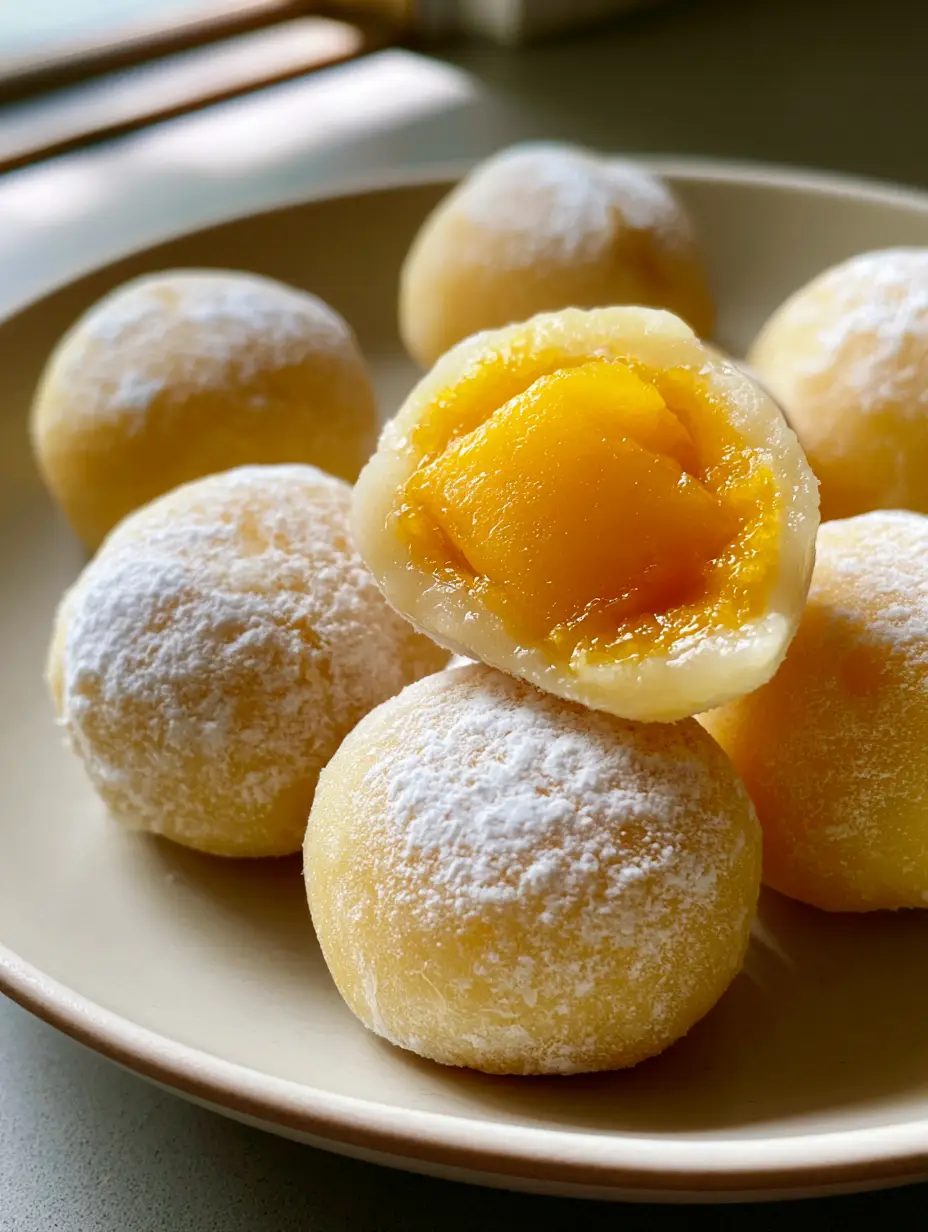
Homemade Mango Mochi: The Ultimate Pillowy Fresh Fruit Treat
Ingredients
Equipment
Method
- Peel the mangoes and slice the flesh into 1-inch (2.5cm) cubes. Pat them dry with a paper towel if they are excessively juicy.
- In a heat-proof bowl, whisk glutinous rice flour, sugar, and liquid until a smooth batter forms.
- Steam the covered bowl for 15-20 minutes until the dough is translucent and very sticky. Stir halfway through if using a microwave.
- Turn the warm dough onto a surface heavily dusted with cornstarch. Divide into 10 portions.
- Flatten each piece of dough, place a mango cube in the center, and pinch the edges to seal. Roll gently to form a smooth sphere.
- Use a sieve to apply a final fine white cornstarch dusting over the spheres for a clean finish.
Notes
Store at room temperature for up to 24 hours for best texture.
Join the Rustic Cooks Community
We hope you find as much joy in making these Homemade Mango Mochi as we do! The combination of the soft, pale yellow casing and the juicy orange fruit is a true culinary masterpiece that anyone can achieve at home.
If you enjoyed this recipe, please leave a comment below and share your results with us. Don’t forget to follow us on Pinterest for more daily recipe inspiration and beautiful food photography tips!