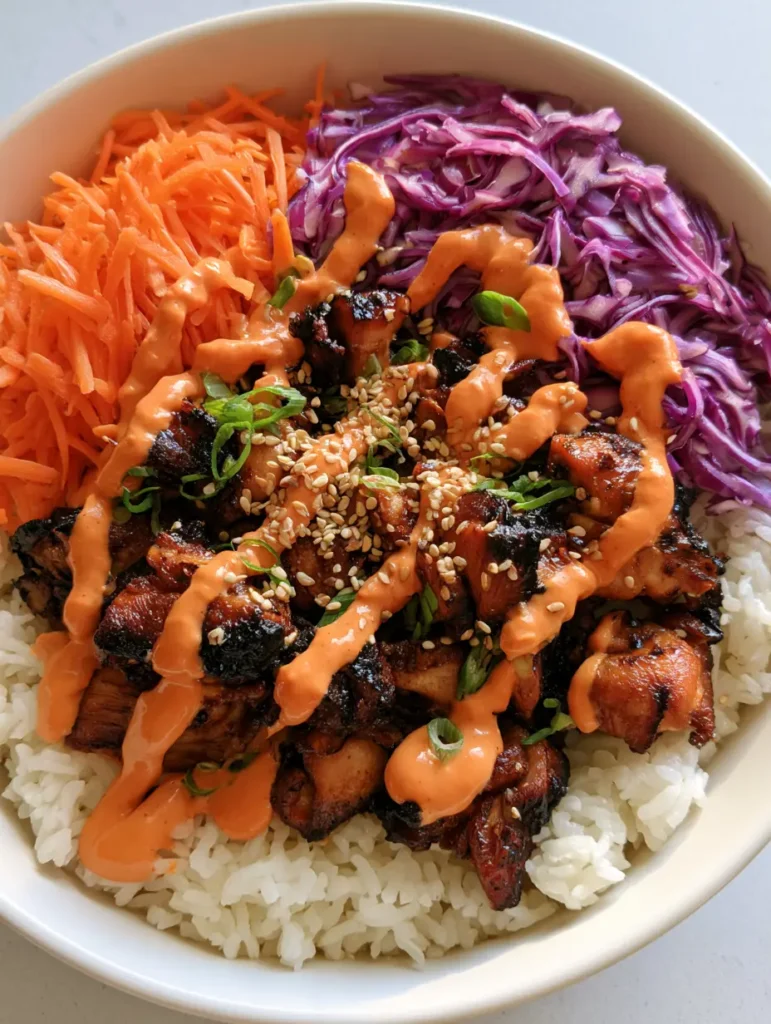
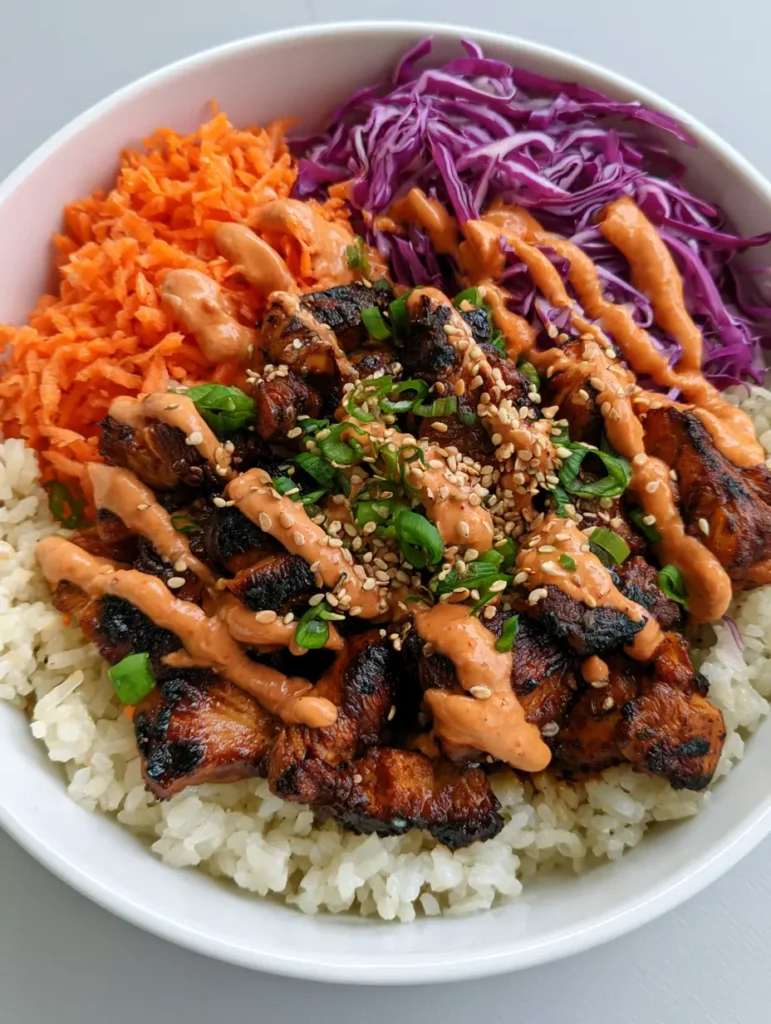
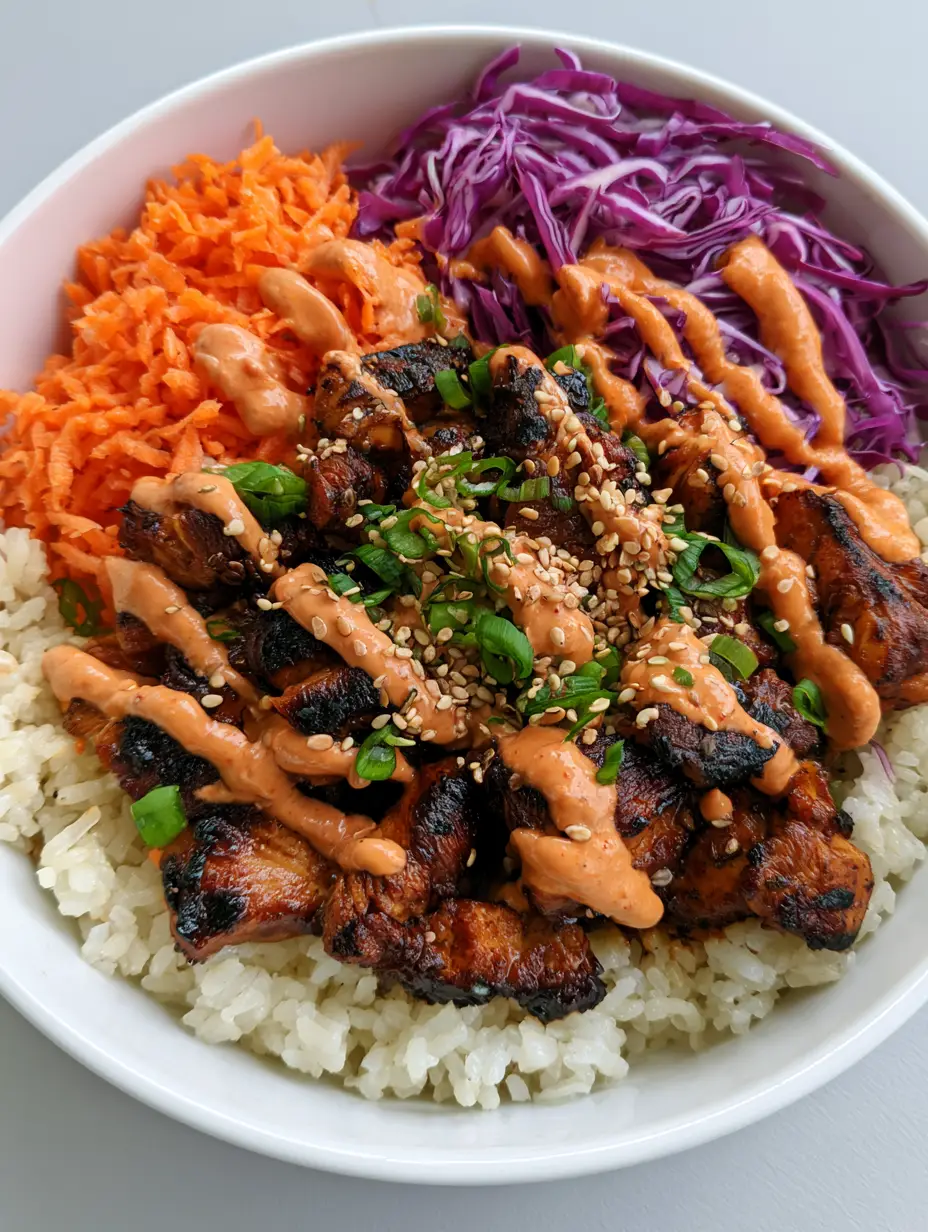
There is something undeniably satisfying about the perfect Korean BBQ Chicken Bowls. Imagine tucking into a white ceramic dish where every element is designed for maximum flavor and textural contrast. The base is a cloud-like foundation of fluffy, steamed white rice, acting as the perfect canvas for what comes next.
The star of the show is the bite-sized chicken breast, which we sear until it develops deeply caramelized, charred edges and a rich, dark brown glaze. To balance that savory intensity, we add mounds of finely shredded bright orange carrots and thinly sliced vibrant purple cabbage for a refreshing, raw crunch.
To tie it all together, a thick, creamy, salmon-colored gochujang sauce is drizzled in a striking zigzag pattern over the entire bowl. Finished with toasted white sesame seeds and a scattering of fresh green scallions, these Korean BBQ Chicken Bowls look like they stepped right out of a high-end bistro—yet you can make them in your own kitchen in under 40 minutes.
Why These Korean Chicken Rice Bowls Are a Weeknight Game Changer
- The Maillard Magic: By using a high-heat searing technique, we achieve those signature charred edges on the chicken that mimic an outdoor grill.
- Nutritional Harmony: This bowl balances lean protein with raw, fiber-rich vegetables like carrots and red cabbage for a meal that feels light yet filling.
- That Signature Sauce: The creamy gochujang drizzle provides a mild heat and a luxurious mouthfeel that balances the salty-sweet glaze of the meat.
- Meal Prep Perfection: You can easily prep the vegetables and sauce ahead of time, making this one of the fastest Korean BBQ Chicken Bowls for a busy Tuesday night.
The Essential Pantry Staples for Your Korean Chicken Bowls
Chicken Breast: 1.5 lbs (680g) of boneless, skinless breast provides a lean, high-protein base that absorbs the marinade quickly. We cut these into bite-sized pieces to ensure maximum surface area for that essential caramelization.
Long-Grain White Rice: 2 cups (400g) of dry rice creates the fluffy foundation required to soak up the stray drops of creamy sauce. Be sure to rinse it thoroughly to remove excess starch for the best texture.
Gochujang (Korean Chili Paste): 2 tbsp (30g) for the marinade and more for the sauce. This fermented staple provides the deep, earthy heat and the “salmon” hue when blended with creamy elements.
Mayonnaise: 1/2 cup (120ml) acts as the base for our creamy drizzle. It mellows the heat of the chili paste while providing the thick consistency needed for a perfect zigzag drizzle.
Fresh Carrots and Red Cabbage: 1 cup (100g) of each, finely shredded. These are served raw to provide a cooling contrast to the warm, charred chicken and the steamed rice.
Soy Sauce and Brown Sugar: 3 tbsp (45ml) soy and 2 tbsp (25g) sugar. This combination is scientifically essential for the “deeply caramelized” result described in our visual blueprint.
Toasted Sesame Oil: 1 tbsp (15ml) adds an unmistakable nutty aroma. This oil has a lower smoke point, so we use it primarily for flavor rather than the high-heat sear.
The Garnishes: 1 tbsp (9g) toasted white sesame seeds and 2 thinly sliced scallions. These provide the final aesthetic touch and a hit of fresh, oniony brightness.
Must-Have Tools for the Ultimate Char
To achieve the specific visual result of charred, dark brown chicken, a heavy-bottomed skillet is non-negotiable. A cast-iron pan is the gold standard here because it retains heat effectively, ensuring the chicken sears rather than steams.
You will also need a sharp chef’s knife or a mandoline slicer for the vegetables. To get that “finely shredded” carrot and “thinly sliced” purple cabbage look, precision is key. A squeeze bottle is also helpful if you want to master the professional zigzag sauce pattern seen in our photos.
Mastering the Perfect Char: Step-by-Step Guide
Preparing the Flavor Foundation
In a large bowl, whisk together the soy sauce, brown sugar, 1 tablespoon of gochujang, and sesame oil. Pat your chicken breast pieces dry with a paper towel—this is a professional secret for better browning. Toss the chicken in the marinade and let it sit for at least 15 minutes while you prepare the rice.
Achieving the Fluffiest Steamed Rice
Rinse 2 cups (400g) of white rice under cold water until the water runs clear. Combine with 3 cups (720ml) of water in a pot. Bring to a boil, then reduce heat to the lowest setting, cover, and simmer for 18 minutes. Remove from heat and let it sit, covered, for 5 minutes before fluffing with a fork.
Searing for Visual and Flavor Intensity
Heat 2 tbsp (30ml) of high-smoke-point oil (like avocado or canola) in your skillet over medium-high heat. Once the oil is shimmering, add the chicken in a single layer. Do not crowd the pan; work in batches if necessary.
Let the chicken sit undisturbed for 3-4 minutes. You are looking for a deep golden-brown crust to form. Flip and cook for another 3 minutes until the edges are charred and the glaze has thickened into a dark, sticky coating.
Whisking the Salmon-Colored Creamy Sauce
In a small bowl, combine the mayonnaise, 1 tablespoon of gochujang, and a splash of rice vinegar. Whisk until completely smooth. The result should be a thick, creamy, salmon-colored sauce that holds its shape when drizzled.
Pro Secrets for Restaurant-Quality Caramelization
- Dry the Meat: Moisture is the enemy of the sear. If the chicken is wet, it will steam in the pan instead of developing those charred edges.
- Don’t Stir Too Soon: Patience is required for the Maillard reaction. Let the chicken sit against the hot metal until it naturally releases.
- The Sauce Consistency: If your gochujang sauce is too thick to drizzle, add 1 teaspoon of water at a time until it reaches a “ribbon” consistency.
- Cold Veggies: Keep your shredded carrots and cabbage in ice water until serving, then spin them dry. This makes them exceptionally crisp.
What to Serve With Your Korean BBQ Chicken Bowls
These bowls are a complete meal on their own, but they also pair beautifully with other Asian-inspired dishes. If you are looking for a lighter appetizer, try serving them alongside our fresh chicken lettuce wraps.
For those who love a bit of heat, you might also enjoy the flavor profile of our hot honey chicken bowls. If you have leftover chicken, it works remarkably well when tucked into teriyaki chicken wonton tacos for a fusion lunch the next day.
Frequently Asked Questions
Absolutely! Chicken thighs have a higher fat content, which makes them even easier to char without drying out. Follow the same dicing and searing instructions.
Ensure your pan is fully preheated and the oil is shimmering before adding the chicken. Let the chicken cook undisturbed; it will release naturally once a crust forms.
You can decrease the amount of gochujang paste and increase the mayonnaise, or add a teaspoon of honey to the sauce to balance the heat with sweetness.
Not usually. Most gochujang brands contain barley or wheat. If you are gluten-free, look specifically for a certified gluten-free brand or use a GF sriracha-mayo blend.
Reheat the chicken and rice separately in a microwave or skillet. Always keep the raw carrots and cabbage cold and add them back to the bowl after heating.
The Full Korean BBQ Chicken Bowls Recipe
Korean BBQ Chicken Bowls with Creamy Gochujang Drizzle
Ingredients
Equipment
Method
- Whisk soy sauce, brown sugar, gochujang, and sesame oil. Toss chicken pieces in marinade for 15 minutes.
- Heat oil in a skillet over medium-high heat. Add chicken in a single layer and cook until deeply caramelized and charred on the edges, about 6-8 minutes total.
- Scoop fluffy steamed rice into white ceramic bowls.
- Arrange sections of shredded carrots, sliced cabbage, and charred chicken over the rice.
- Whisk mayo and gochujang until salmon-colored. Drizzle in a zigzag pattern over the bowl.
Notes
Keep vegetables in ice water for extra crunch before serving.
Closing & Call to Action
These Korean BBQ Chicken Bowls prove that you don’t need a grill to get that authentic charred flavor. With the crunch of raw vegetables and the creamy heat of gochujang, it is a balanced masterpiece. If you enjoyed this recipe, please leave a comment below and let us know how your caramelization turned out!
Don’t forget to follow us and save this recipe to your boards on Pinterest so you can find it whenever the craving for Korean BBQ hits.