The Salmon Sushi Bake has taken the culinary world by storm, transforming the delicate art of sushi into a warm, comforting, and shareable feast. Imagine the structural integrity of a traditional California roll reimagined as a rich, bubbling casserole that you can scoop up with crispy seaweed sheets. This dish is not just a meal; it is a multisensory experience that combines the tang of seasoned vinegar rice with the decadence of roasted seafood and spicy mayo.
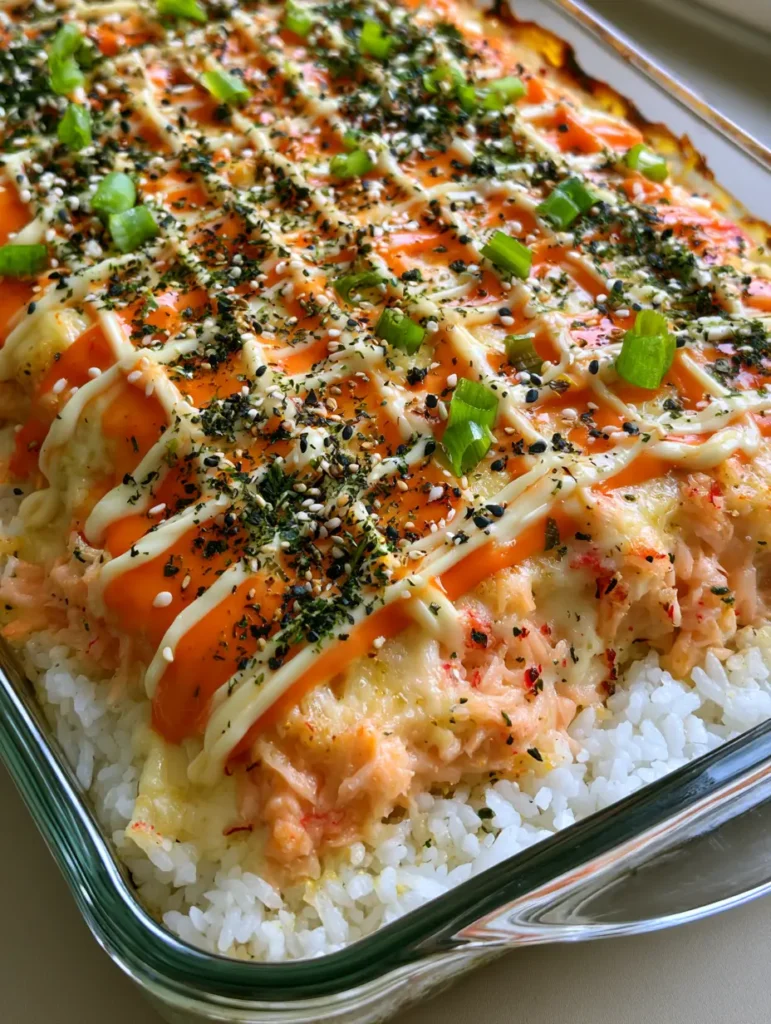
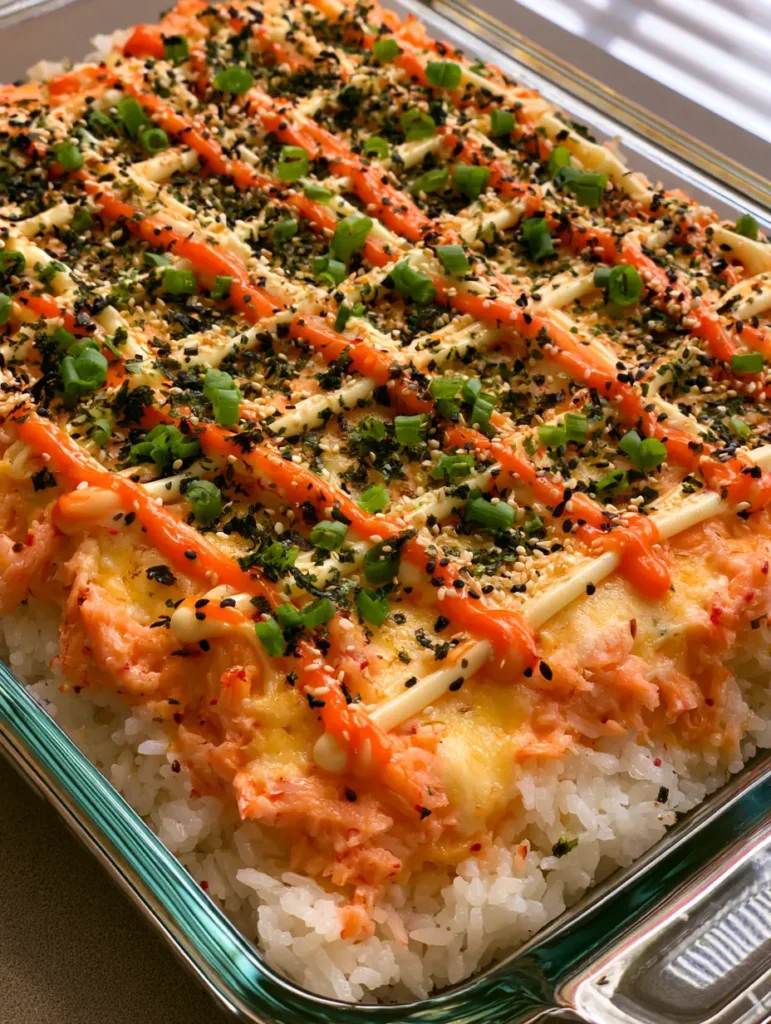
When you pull this dish from the oven, you are greeted by a stunning visual display: a golden, bubbly top layer of shredded salmon and crab, decorated with a precise cross-hatch of creamy white and vibrant orange drizzles. The aroma of toasted sesame and savory furikake fills the kitchen, promising a bite that is simultaneously crunchy, creamy, and umami-rich. Whether you are hosting a potluck or seeking a family-favorite weeknight dinner, this recipe delivers restaurant-quality results with home-cooked soul.
This particular version focuses on achieving that perfect smartphone-ready aesthetic—a thick bed of pearly white rice topped with a lush seafood medley. The contrast of the bright green scallions against the dark green furikake creates a professional finish that looks just as good as it tastes. Let’s dive into the science and technique behind the perfect Salmon Sushi Bake.
Why You Will Crave This Deconstructed Sushi Masterpiece
- Textural Contrast: You get the softness of steamed sushi rice paired with a creamy, bubbly seafood topping and the snap of fresh scallions.
- Visual Precision: The signature cross-hatch mayo drizzle ensures every scoop looks like a work of art from a high-end bistro.
- Umami Bomb: Between the furikake flakes and the toasted sesame seeds, every bite is packed with savory, deep flavors.
- Crowd-Pleasing Simplicity: It offers all the flavors of a salmon avocado roll but in a format that feeds a whole family without the tedious rolling process.
The Essential Components for a Professional Salmon Sushi Bake
Sushi Grade Short-Grain Rice: You need 3 cups (600g) of cooked white sushi rice to provide the sturdy foundation. Short-grain rice contains the high starch content necessary to stay clumped together while remaining fluffy under the weight of the toppings.
Fresh Salmon Fillets: You will need 1 lb (450g) of salmon, seasoned and baked until it flakes easily. The natural fats in the salmon render during the second bake, creating a moist and rich middle layer.
Imitation Crab (Surimi): 8 oz (225g) of shredded imitation crab adds a distinct sweetness and a fibrous texture that mimics the best California rolls. It provides a structural contrast to the softer salmon flakes.
Kewpie Mayo: Use 1/2 cup (120ml) for the mixture and more for the drizzle. Unlike American mayo, Kewpie uses only egg yolks and rice vinegar, offering a deeper yellow hue and a much richer, custard-like consistency.
Sriracha Chili Sauce: 2 tbsp (30ml) provides the “kick.” When whisked with Kewpie, it creates that iconic vibrant orange spicy mayo that defines the Salmon Sushi Bake aesthetic.
Seasoned Rice Vinegar: 3 tbsp (45ml) mixed into the rice is what gives the dish its “sushi” identity. The acidity balances the heavy fats in the mayo and salmon.
Furikake Flakes: This Japanese seasoning (typically containing seaweed, dried fish, and salt) is the secret to the savory crust. It acts as a bridge between the rice and the seafood layers.
Toasted Sesame Seeds: A combination of 1 tbsp (9g) white and 1 tbsp (9g) black sesame seeds provides the visual “pop” and a nutty crunch that rounds out the flavor profile.
Green Onions: 1/2 cup (50g) of finely sliced scallions adds a necessary sharp freshness. The bright green color is essential for that final “smartphone-photo” look.
Must-Have Tools for the Perfect Casserole Structure
To achieve the look of a professional Salmon Sushi Bake, you should use a 9×13 inch (23×33 cm) rectangular glass baking dish. The transparency of the glass allows you to see the distinct layers of white rice and pink seafood, which is vital for presentation. You will also need squeeze bottles for the mayo and sriracha to achieve that precise, professional cross-hatch pattern. A sturdy rice paddle is helpful for pressing the rice into an even, compressed bed without crushing the grains.
Step-by-Step Evolution of the Salmon Sushi Bake
Preparing the Perfect Rice Foundation
Start by rinsing your sushi rice until the water runs clear; this removes excess surface starch and prevents the base from becoming a gummy mess. Once cooked, gently fold in the rice vinegar, a teaspoon of sugar, and a pinch of salt while the rice is still steaming. Transfer the seasoned rice to your glass dish and press it down firmly but gently. You want a thick, even bed that can support the heavy seafood topping without falling apart when sliced.
Roasting and Shredding the Seafood Medley
Season your salmon fillets with a touch of oil and salt, then bake at 400°F (200°C) for about 12-15 minutes. Once cooled slightly, flake the salmon into a large mixing bowl, removing any skin or bones. Add your shredded imitation crab to the bowl. The key here is to keep the shreds somewhat coarse to maintain texture; don’t over-mix them into a paste. Fold in the Kewpie mayo and a dash of sriracha until the mixture is cohesive and creamy.
Layering for Maximum Flavor Impact
Sprinkle a generous layer of furikake over the pressed rice—this creates a flavor barrier that prevents the rice from getting soggy. Spread the salmon and crab mixture evenly over the furikake-covered rice. Use a spatula to smooth the top so it is perfectly level. This ensures that when the Salmon Sushi Bake goes back into the oven, the heat is distributed evenly across the seafood layer.
The Final Bake and Signature Drizzle
Place the dish back in the oven at 425°F (220°C) for 10-15 minutes. Look for sensory cues: the edges should be bubbling, and the top should develop a slight golden-brown tint. Once removed, let it sit for 5 minutes. Now, use your squeeze bottles to create a tight cross-hatch pattern with plain Kewpie mayo and sriracha mayo. The orange and white lines should be thin and sharp.
Garnishing for the Visual “Wow” Factor
Finish the dish by showering it with the toasted white and black sesame seeds. The duo-tone seeds add a sophisticated touch. Sprinkle the bright green sliced scallions across the top, followed by one final dusting of furikake. The result should look exactly like a handheld smartphone photo of a gourmet meal—authentic, unedited, and incredibly appetizing.
Pro Tips for a Restaurant-Quality Finish
- The “Rice Press”: Wet your rice paddle or hands with water before pressing the rice. This prevents the sticky grains from clinging to you and allows for a smoother surface.
- Crispy Edges: If you love texture, use the broiler for the last 2 minutes of cooking. This will give the crab meat slightly charred, crispy tips.
- Mayo Consistency: If your sriracha mayo is too thick to drizzle, add a few drops of water or lemon juice to thin it out for that perfect “line” look.
- Serving Style: Always serve with small squares of roasted seaweed (nori). The saltiness of the nori is the final piece of the flavor puzzle.
Mastering Storage and Reheating
The Salmon Sushi Bake is best enjoyed fresh, but it can be stored in the refrigerator in an airtight container for up to 2 days. To reheat, avoid the microwave if possible, as it can make the rice rubbery. Instead, place a portion in a toaster oven or air fryer at 350°F (175°C) until warmed through. This helps maintain the creamy texture of the topping while keeping the rice base relatively soft. Freezing is not recommended, as the mayo-based topping may break and become oily upon thawing.
What to Serve With Your Sushi Bake
This dish is quite rich, so pairing it with light, acidic sides is the way to go. A simple cucumber salad with a rice vinegar dressing works beautifully. If you want a full Asian-inspired spread, consider starting with a bowl of garlic sauce chicken ramen or serving alongside some crispy air fryer green beans. If you’re looking for a lighter protein alternative for another night, my parmesan crusted baked salmon offers a similarly delicious oven-baked finish.
For those who love a bit of spice in every meal, you might also enjoy these easy sheet pan chicken fajitas for a different kind of one-pan wonder. No matter what you choose, the Salmon Sushi Bake will undoubtedly be the star of the show.
Frequently Asked Questions
While fresh baked salmon provides the best flavor and texture, you can use high-quality canned salmon in a pinch. Just ensure it is well-drained and flaked.
The traditional way is to scoop a portion of the warm bake into a small square of roasted nori (seaweed), fold it like a taco, and eat it in one or two bites.
Kewpie mayo is highly recommended for its unique umami flavor and rich texture. If you must substitute, use regular mayo with a splash of rice vinegar and a pinch of sugar.
Short-grain white sushi rice is essential. Its high starch content allows it to hold together as a solid base for the heavy seafood toppings.
Soggy rice usually happens if the rice wasn’t rinsed properly or if the seafood mixture is too watery. Ensure you follow the furikake layering step to create a barrier.
The Ultimate Salmon Sushi Bake Recipe Card
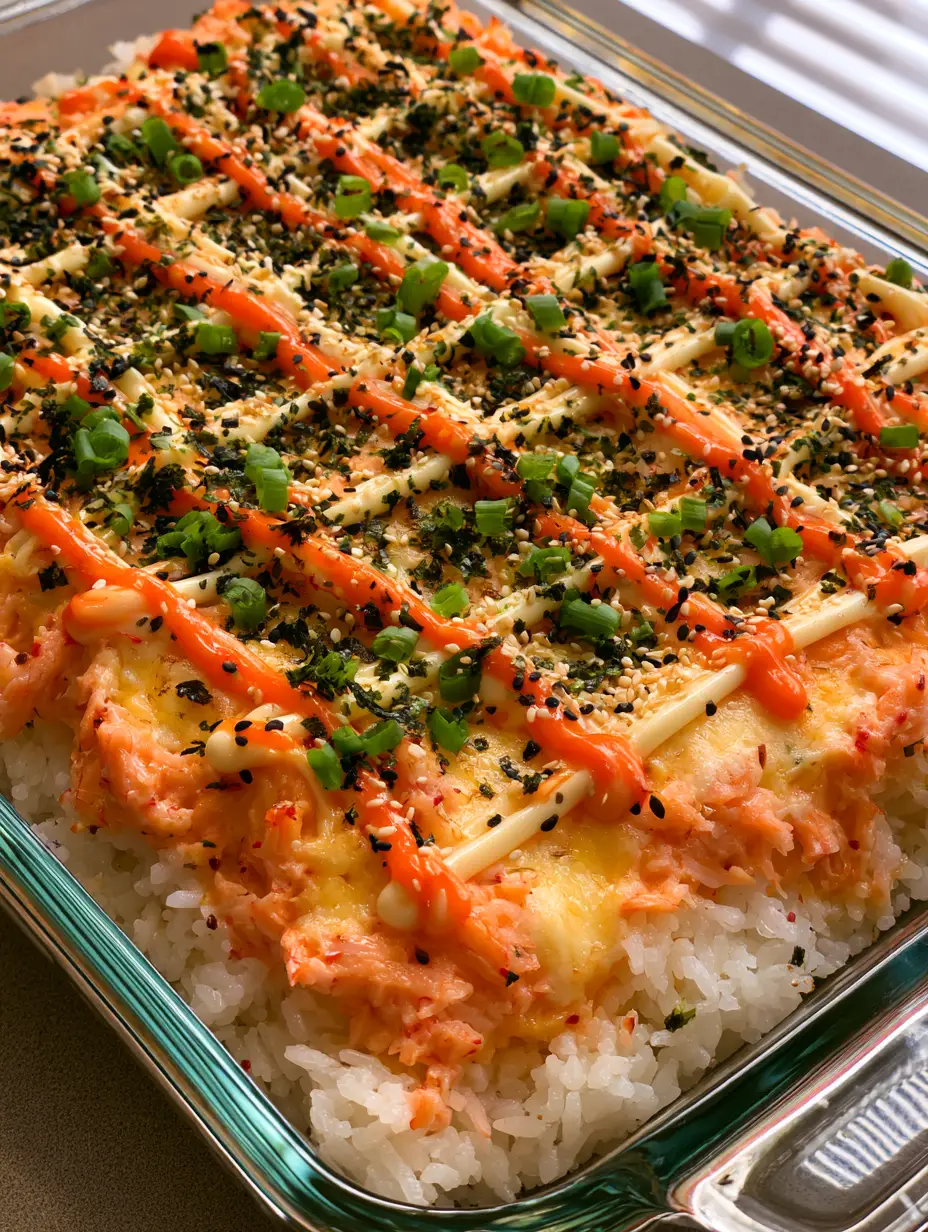
Salmon Sushi Bake: The Ultimate Creamy and Deconstructed Sushi Casserole
Ingredients
Equipment
Method
- In a large bowl, fold rice vinegar into the warm cooked sushi rice. Press the rice into a thick, even bed at the bottom of the glass baking dish.
- Sprinkle half of the furikake flakes evenly over the rice to create a savory barrier.
- In a separate bowl, combine the shredded cooked salmon, shredded imitation crab, Kewpie mayo, and sriracha. Mix until creamy but still textured.
- Evenly spread the seafood mixture over the rice layer, smoothing the top with a spatula.
- Bake at 425°F (220°C) for 15 minutes until the top is bubbling and slightly golden.
- Remove from oven. Using squeeze bottles, apply a cross-hatch pattern of Kewpie mayo and sriracha. Top with toasted white and black sesame seeds, sliced green onions, and the remaining furikake.
Notes
Use roasted seaweed (nori) sheets to scoop up the bake for the best experience.
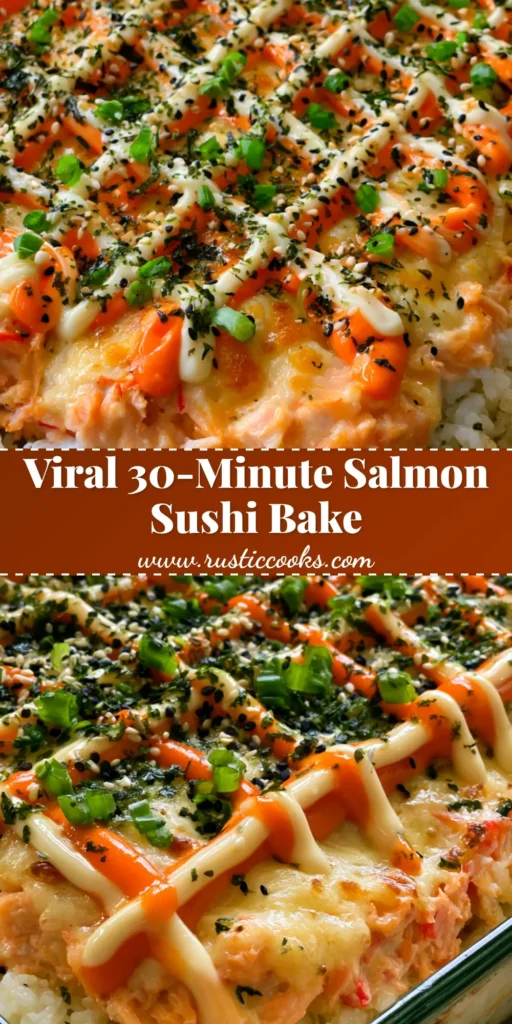
Wrap Up Your Sushi Bake Adventure
Creating a Salmon Sushi Bake is a rewarding way to bring the complex flavors of Japanese-inspired cuisine into your home kitchen without the stress of rolling individual pieces. The combination of baked salmon, sweet crab, and that signature spicy mayo drizzle creates a comfort food profile that is hard to beat. We hope you enjoy the process of layering and decorating this dish as much as you enjoy eating it!
If you loved this recipe, please leave a comment below and let us know how your cross-hatch drizzle turned out! Don’t forget to share your creations on Pinterest and tag us. Happy cooking!