Go Back
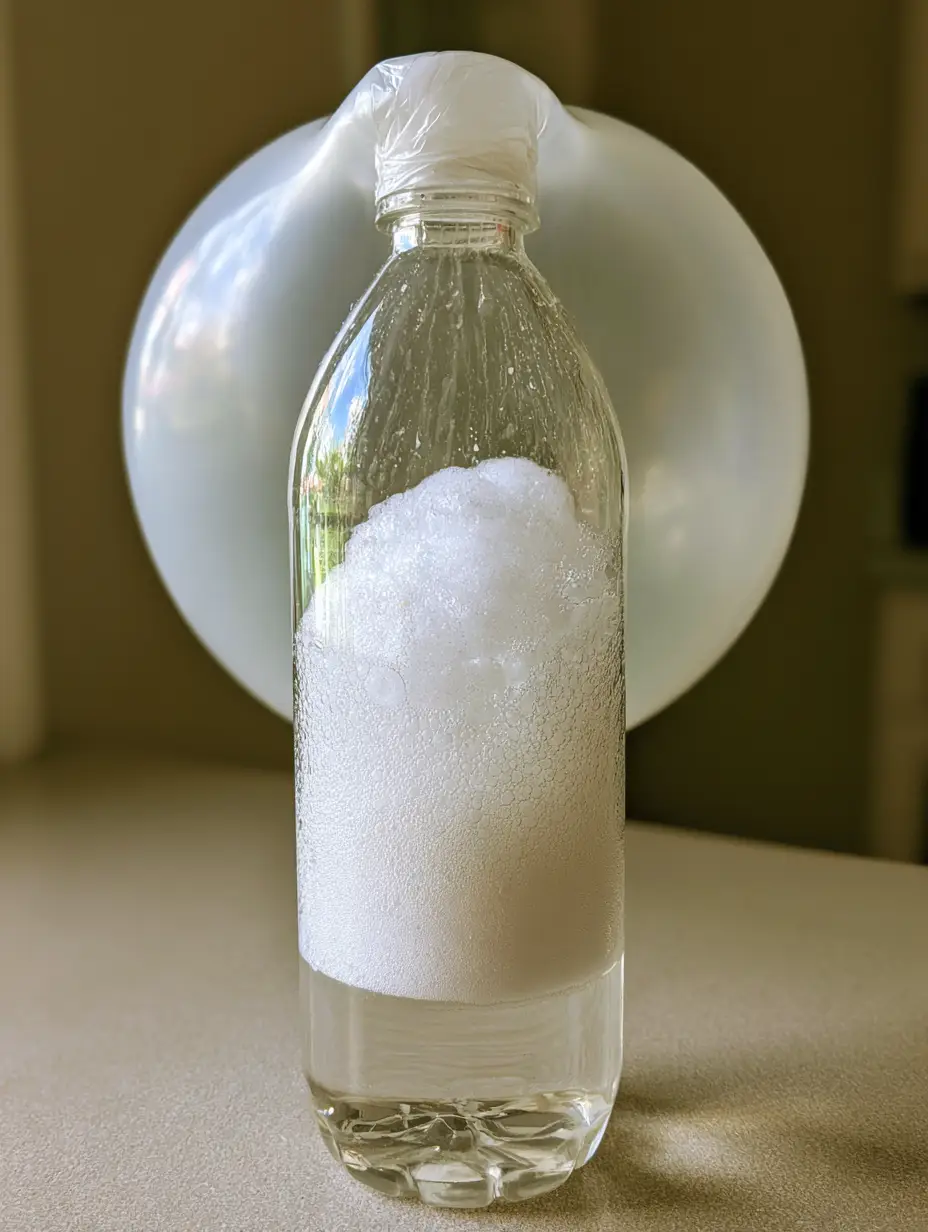
Detailed view of white baking soda reacting with vinegar in a bottle, creating dense fizzy foam and active carbon dioxide bubbles. (Baking Soda Balloon Experiment)

Baking Soda Balloon Experiment: How to Inflate a Balloon with Science

Learn the Baking Soda Balloon Experiment! This fun science project uses a chemical reaction between vinegar and baking soda to produce carbon dioxide, creating a vibrant inflated balloon right on your kitchen counter.
Prep Time 10 minutes
Cook Time 5 minutes
Total Time 15 minutes
Servings: 1 experiment
Course: Educational, Family Activity
Cuisine: American

Ingredients
  

Core Components
  • 1/2 cup Distilled White Vinegar 120ml
  • 2 tbsp White Baking Soda Powder 30g

Equipment

  • 1 Clear Plastic Bottle (16.9 oz) Ensure it is clean and dry
  • 1 Latex Balloon 12-inch size works best
  • 1 Small Funnel For transferring baking soda

Method
 

Setup and Execution
  1. Pour 1/2 cup (120ml) of distilled white vinegar into the clear plastic bottle.
  2. Using a funnel, add 2 tbsp (30g) of white baking soda powder into the latex balloon.
  3. Stretch the balloon rim over the bottle mouth without dropping the powder in yet.
  4. Lift the balloon to drop the soda into the vinegar; watch the fizzy foam and bubbles inflate the balloon.

Notes

Pre-stretch the balloon for easier inflation.
Use room temperature vinegar for a faster chemical reaction.