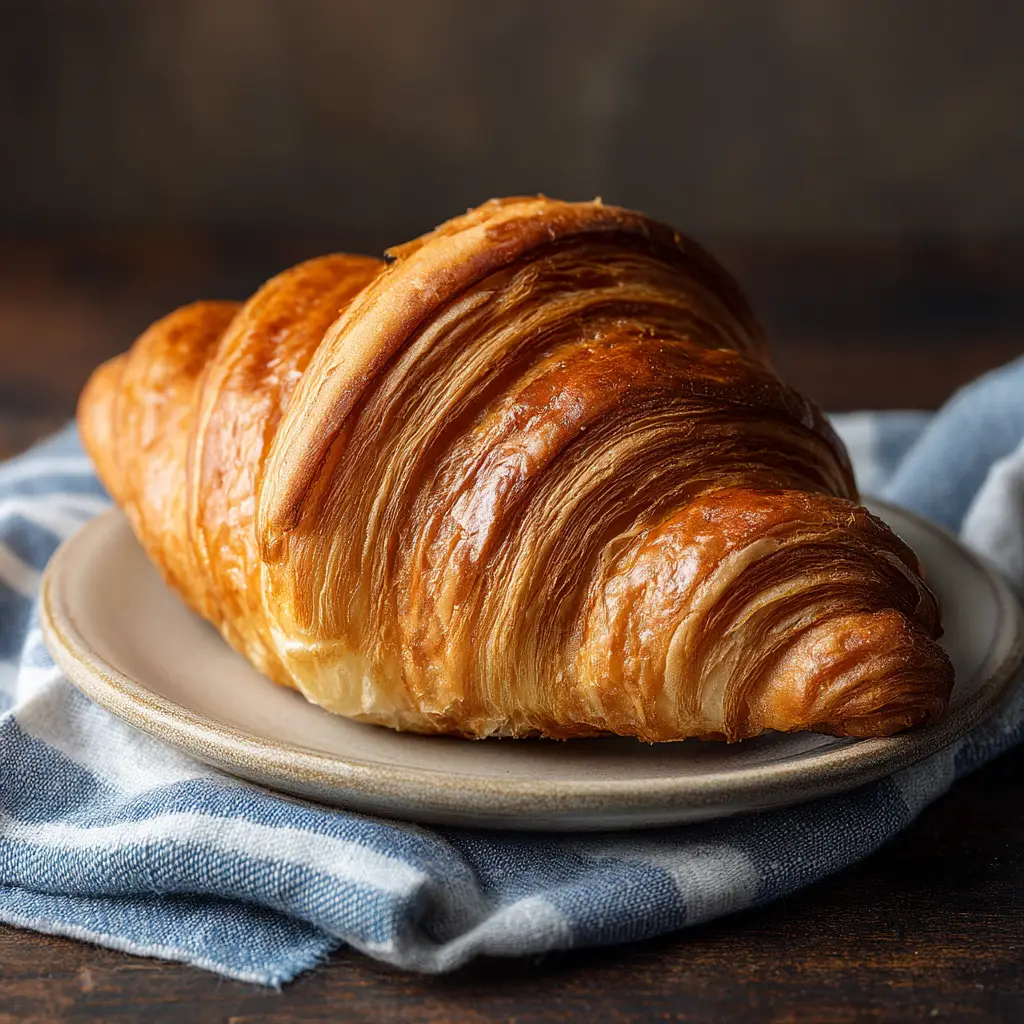
Ingredients
Equipment
Method
Day 1: Making the Dough (Détrempe)
- Activate Yeast: In a small bowl, combine the warm milk, sugar, and yeast. Let it stand for 5-10 minutes until foamy.
- Mix Dough: In a large bowl or the bowl of a stand mixer, whisk together bread flour and salt. Add the yeast mixture and melted butter. Mix until a shaggy dough forms, then knead on a lightly floured surface for 3-5 minutes until smooth. Do not overwork.
- First Rest: Shape the dough into a 1-inch thick rectangle, wrap tightly in plastic wrap, and refrigerate overnight.
Day 2: Lamination
- Prepare Butter Block: Place the cold butter between two sheets of parchment paper. Pound and roll it into a 6x6 inch square. Refrigerate.
- Encase Butter: Roll the chilled dough into a 9x9 inch square. Place the butter block diagonally in the center and fold the dough corners over the butter, pinching the seams to seal it completely.
- First Turn: Roll the dough into an 8x24 inch rectangle. Perform a letter fold (bottom third up, top third down). Wrap and refrigerate for 1 hour.
- Second & Third Turns: Repeat the rolling and folding process two more times, refrigerating for 1 hour after each turn. After the third turn, wrap the dough and refrigerate overnight.
Day 3: Shaping, Proofing & Baking
- Roll and Cut: On a lightly floured surface, roll the dough into a large rectangle (approx. 8x30 inches). Trim the edges. Cut into long triangles with a 4-inch base.
- Shape: Gently stretch each triangle, then roll it up from the base to the tip. Place on a parchment-lined baking sheet with the tip tucked under.
- Proof: Cover loosely and let the croissants rise in a warm place (75°F/24°C) for 1.5-2.5 hours, until they are very puffy and jiggle.
- Bake: Preheat oven to 400°F (200°C). Brush the croissants with egg wash. Bake for 15-20 minutes until deep golden brown. Cool on a wire rack.
Notes
Temperature is Key: Ensure your butter and dough remain cold throughout the lamination process. If the butter starts to feel soft, return the dough to the refrigerator immediately.
Use High-Quality Butter: European-style butter with at least 82% fat content will yield the flakiest, most flavorful results.
Don't Rush Proofing: A proper proof is essential for the light, airy texture. Under-proofed croissants will be dense.
Use High-Quality Butter: European-style butter with at least 82% fat content will yield the flakiest, most flavorful results.
Don't Rush Proofing: A proper proof is essential for the light, airy texture. Under-proofed croissants will be dense.