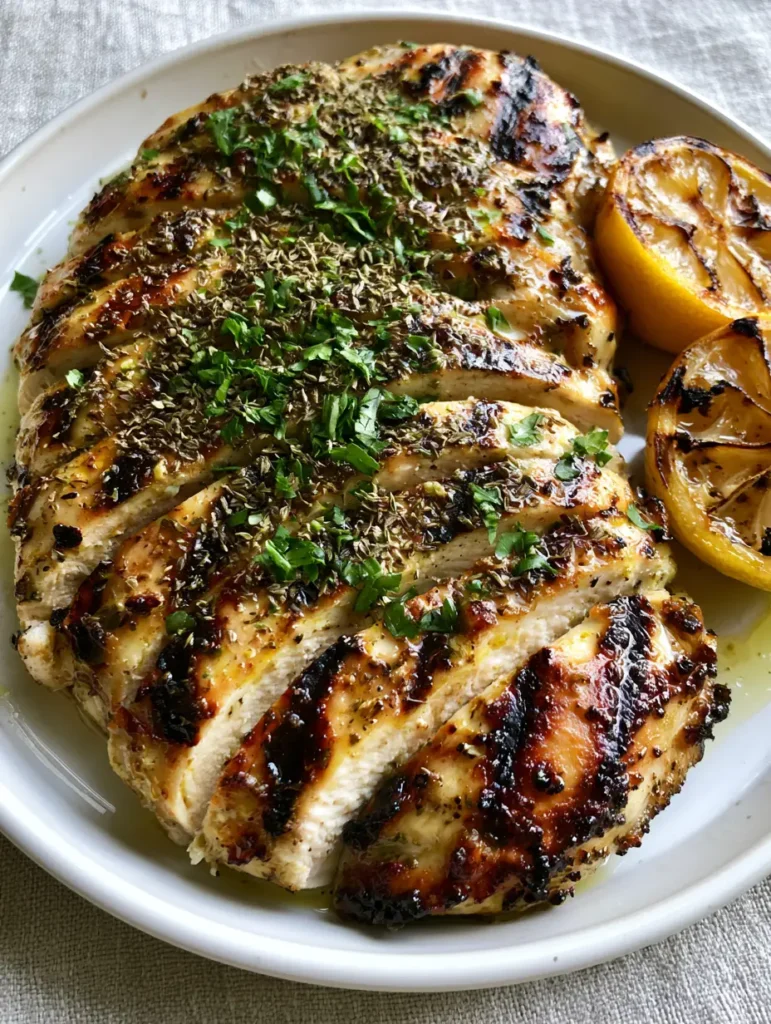
There is nothing quite like the sight of perfectly executed Greek Grilled Chicken resting on a crisp white ceramic plate. Imagine thick, juicy slices of chicken breast boasting deep, dark char marks that tell the story of a high-heat sear. The meat glistens under a generous drizzle of lemon-herb oil, while a heavy dusting of dried oregano and freshly chopped parsley adds layers of Mediterranean aromatics. This recipe isn’t just about feeding a family; it is about achieving that handheld smartphone photo aesthetic—unedited, realistic, and utterly mouthwatering.
When you prepare this Greek Grilled Chicken, you are leaning into centuries of culinary tradition optimized for the modern kitchen. Whether you are using an outdoor charcoal grill or a heavy-duty cast-iron grill pan indoors, the goal remains the same: a golden-brown skin with a tender, moist interior. The addition of charred lemon halves on the side isn’t just for show; the heat caramelizes the citrus sugars, creating a mellow, smoky juice that elevates the entire dish to restaurant-quality status.
Why This Mediterranean Masterpiece Works Every Time
- Visual Texture: The contrast between the dark, distinct char marks and the golden-brown chicken skin creates a professional, rustic presentation.
- Flavor Layering: We use a dual-herb approach, utilizing the earthy, concentrated notes of dried oregano paired with the bright, peppery snap of fresh flat-leaf parsley.
- Moisture Retention: The lemon-herb oil marinade acts as a protective barrier, ensuring the chicken stays glistening and succulent even after slicing.
- Caramelized Citrus: Grilling the lemon halves transforms the sharp acidity into a complex, sweet-and-smoky finishing touch.
Essential Components for the Perfect Greek Grilled Chicken
To achieve the specific visual and flavor profile of this Greek Grilled Chicken, we need to select ingredients that balance fat, acid, and earthiness. Every item on this list serves a functional purpose in creating that “glistening” finish you see in the photos.
Chicken Breasts: 2 lbs (907g) of boneless, skinless chicken breasts. Choose pieces of uniform thickness to ensure even cooking and those beautiful, clean slices.
Extra Virgin Olive Oil: 1/2 cup (120ml) of high-quality oil. This is the carrier for our flavors and the secret to the “glistening” marinade that coats the charred meat.
Fresh Lemon Juice and Zest: 1/4 cup (60ml) of juice plus the zest of one lemon. The acid tenderizes the protein fibers while the oils in the zest provide a punchy, citrus fragrance.
Dried Oregano: 2 tbsp (6g). This is the “heavy sprinkle” mentioned in the blueprint, providing that classic Mediterranean earthy undertone that survives high heat.
Fresh Flat-Leaf Parsley: 1/4 cup (15g), finely chopped. Added at the very end, this provides a vibrant green contrast against the dark char marks of the chicken.
Garlic: 4 cloves (20g), minced. Garlic is foundational for savory depth and helps create the flavorful crust during the searing process.
Kosher Salt and Cracked Black Pepper: 1 tsp (6g) each. Essential for drawing out the natural juices of the chicken and enhancing the herb profiles.
Whole Lemons: 2 large lemons, halved. These will be charred directly on the grates to serve alongside the chicken for a hit of smoky acidity.
Tools for Achieving Professional Char Marks
If you want your Greek Grilled Chicken to look like it was prepared by a professional chef, your equipment matters. A standard frying pan won’t give you the dark, distinct ridges required for this visual blueprint.
A heavy-duty outdoor grill or a cast-iron grill pan is non-negotiable for those “dark char marks.” Cast iron retains heat better than almost any other material, ensuring the temperature doesn’t drop when the cold chicken hits the surface. You will also need a pair of long-handled stainless steel tongs to flip the meat without piercing it, which would cause precious juices to escape. Finally, an instant-read meat thermometer is your best friend to ensure the chicken reaches exactly 165°F (74°C) without becoming dry and chalky.
The Art of the Greek Marinade and Preparation
Crafting the Lemon-Herb Oil Base
In a medium glass bowl, whisk together the extra virgin olive oil, lemon juice, lemon zest, minced garlic, and 1 tablespoon (3g) of the dried oregano. Reserve the remaining oregano and all the parsley for the final garnish. The oil in this marinade is crucial; it prevents the chicken from sticking to the grates and helps conduct heat into the surface of the meat for that golden-brown skin.
Tenderizing and Marinating the Chicken
Place your chicken breasts between two sheets of plastic wrap and lightly pound them to an even thickness of about 3/4 inch (2cm). This ensures that the entire breast cooks at the same rate, preventing the thin tail from drying out while the center stays raw. Submerge the chicken in the marinade for at least 30 minutes, but no more than 4 hours, as the lemon juice will begin to “cook” the meat and change its texture if left too long.
Mastering the High-Heat Sear
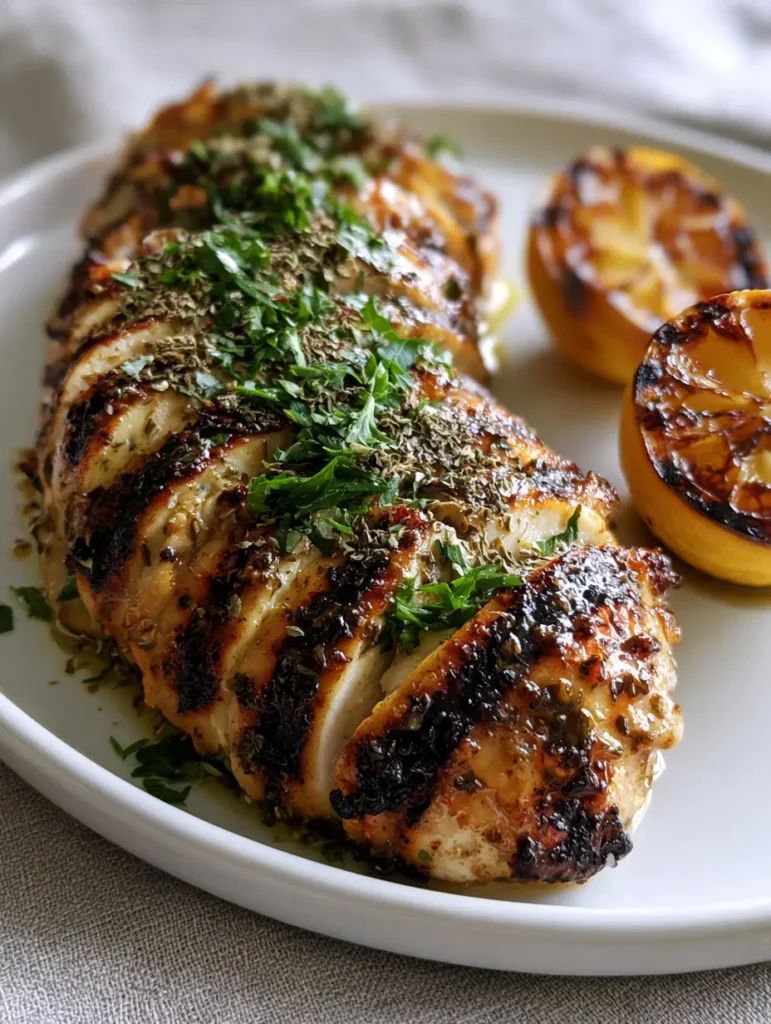
Preheat your grill to medium-high heat, roughly 400°F (204°C). Clean the grates thoroughly and wipe them with an oil-soaked paper towel. Place the chicken on the grates and leave it undisturbed for 5-6 minutes. Resist the urge to peek; that contact time is what creates the “distinct dark char marks” that define this Greek Grilled Chicken. Flip the chicken and cook for another 5-6 minutes until the internal temperature hits 165°F (74°C).
Charring the Lemons for Maximum Flavor
While the chicken is in its final minutes of cooking, place the lemon halves cut-side down directly onto the hottest part of the grill. Leave them for 2-3 minutes until the flesh is blackened and the fruit is softened. This process concentrates the sugars and makes the lemons incredibly juicy, providing a smoky “sauce” for the sliced meat.
Expert Tips for Visual and Culinary Success
- The “No-Stick” Rule: If the chicken feels stuck to the grill when you try to flip it, it isn’t ready. The meat will naturally release from the grates once a proper crust (the Maillard reaction) has formed.
- Rest Before Slicing: Always let your chicken rest on a cutting board for at least 5-7 minutes before slicing. This allows the juices to redistribute, ensuring the “glistening” look on the plate rather than a puddle on the board.
- The Garnish Layer: For the best visual result, sprinkle the dried oregano from a height to get an even “heavy sprinkle” across the sliced pieces, then follow with the fresh parsley.
- Temperature Control: If using a charcoal grill, create a two-zone fire. Sear over the coals for the marks, then move to the cooler side to finish cooking through.
Preserving Your Leftovers
Greek Grilled Chicken makes for incredible meal prep. Store leftover slices in an airtight container in the refrigerator for up to 4 days. When reheating, do so gently in a covered skillet with a splash of water or chicken broth to maintain that juicy texture. Avoid the microwave if possible, as it can turn the chicken rubbery and dull the vibrant herb flavors.
What to Serve with This Mediterranean Classic
To turn this protein into a full Mediterranean feast, consider pairing it with a bright authentic Greek salad featuring salty feta and crisp cucumbers. If you have leftovers, they are the perfect filling for a Greek chicken flatbread or chopped up for a creamy chicken pasta salad. For those looking for a lighter side, a cucumber beetroot salad provides an earthy sweetness that complements the charred lemon perfectly.
Frequently Asked Questions about Greek Chicken
Yes! Chicken thighs are more forgiving and stay very juicy. Increase the cooking time by 2-3 minutes per side and ensure the internal temperature reaches 175°F (79°C) for the best texture.
The key is high heat and patience. Ensure your grill is preheated to at least 400°F (204°C) and do not move the chicken for at least 5 minutes once it hits the grates. The oil in the marinade helps conduct the heat to create that dark sear.
Aim for 30 minutes to 4 hours. Because the marinade contains lemon juice (an acid), marinating for too long (over 6-8 hours) can break down the proteins too much, resulting in a mushy texture.
Always reserve a small portion of the lemon-herb oil marinade (that hasn’t touched raw chicken) to drizzle over the slices just before serving. This creates that professional, moist appearance.
Grilling the lemons caramelizes their natural sugars and softens the pulp. This results in a juice that is less sharp and more complex, adding a smoky sweetness that complements the savory oregano and garlic.
The Ultimate Greek Grilled Chicken Recipe
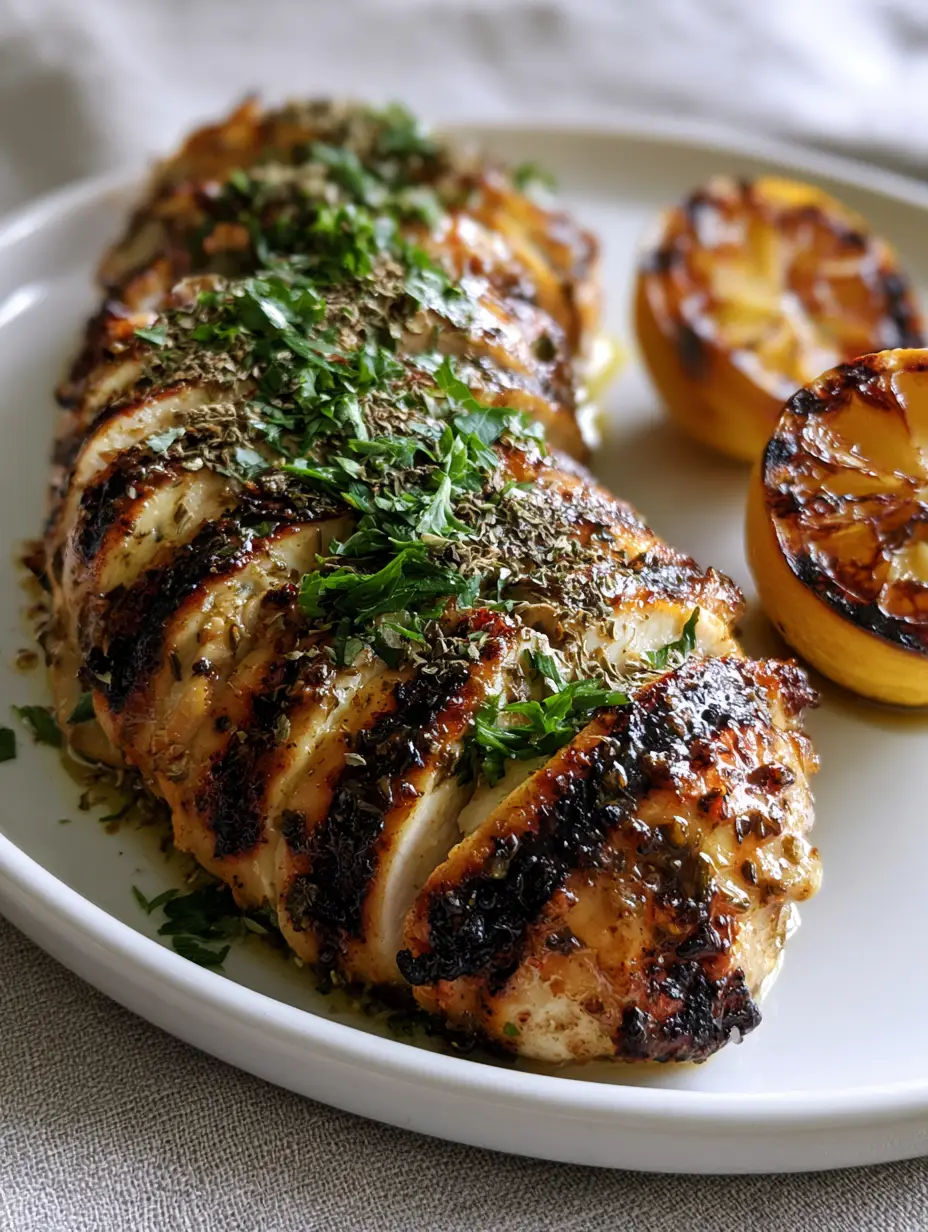
Greek Grilled Chicken with Lemon-Herb Oil and Charred Lemons
Ingredients
Equipment
Method
- Pound chicken breasts to an even 3/4 inch (2cm) thickness. Whisk olive oil, lemon juice, zest, garlic, and 1 tbsp oregano in a bowl. Add chicken and marinate for 30 minutes.
- Heat your grill or grill pan to medium-high (400°F / 204°C). Lightly oil the grates to ensure the chicken doesn't stick.
- Place chicken on the grill. Cook for 5-6 minutes per side without moving them to develop dark, distinct char marks. Cook until the internal temperature is 165°F (74°C).
- In the last 3 minutes of cooking, place lemon halves cut-side down on the grill until blackened and caramelized.
- Rest the chicken for 5 minutes, then slice. Drizzle with leftover marinade oil, then top with a heavy sprinkle of the remaining dried oregano and fresh parsley. Serve on a white plate with charred lemons.
Notes
Let the meat rest before slicing to keep it glistening and juicy.
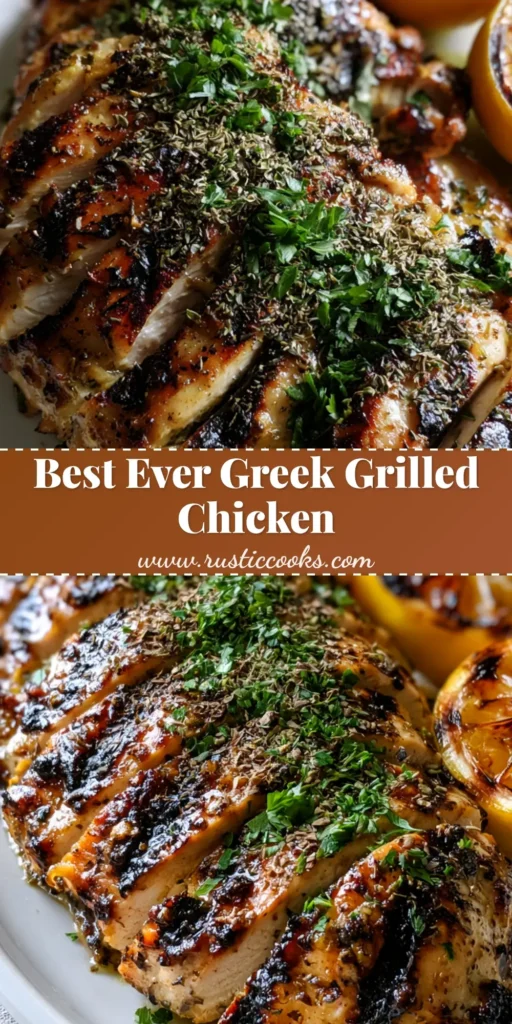
Creating this Greek Grilled Chicken is about more than just a meal; it’s about bringing the vibrant, sun-drenched flavors of the Mediterranean into your home. The combination of the heavy oregano, fresh parsley, and those smoky charred lemons creates a sensory experience that is as beautiful to look at as it is delicious to eat. We hope this recipe becomes a staple in your kitchen!
If you enjoyed this recipe, please leave a comment below and let us know how your char marks turned out! Don’t forget to follow us and share your creations on Pinterest for more culinary inspiration.