There is a specific kind of magic that happens when a single pan transforms humble pantry staples into a restaurant-quality masterpiece. This One-Pot Tuscan Chicken Pasta is the embodiment of that culinary alchemy, delivering a dish that looks as though it stepped right out of a high-end trattoria in Florence.
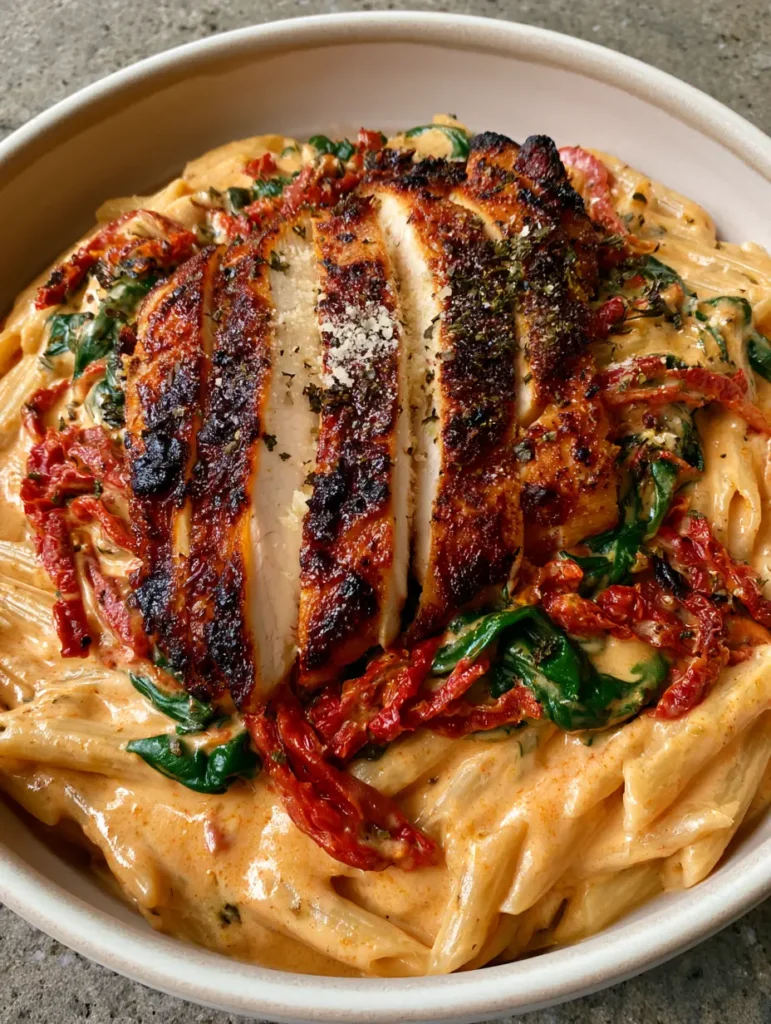
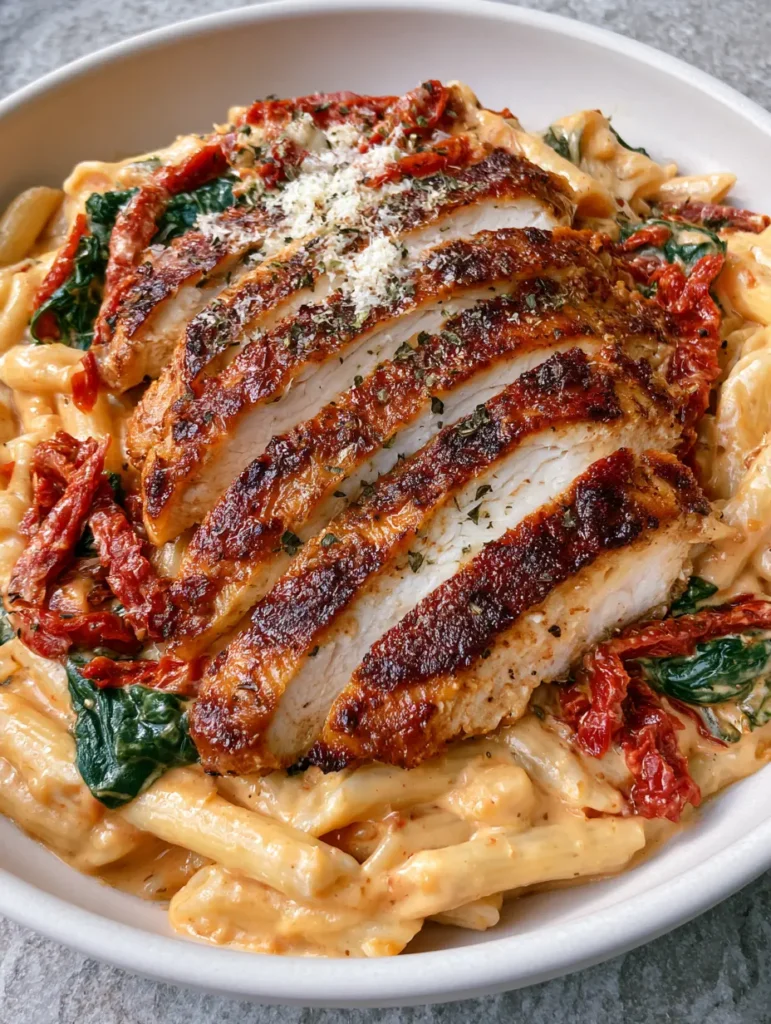
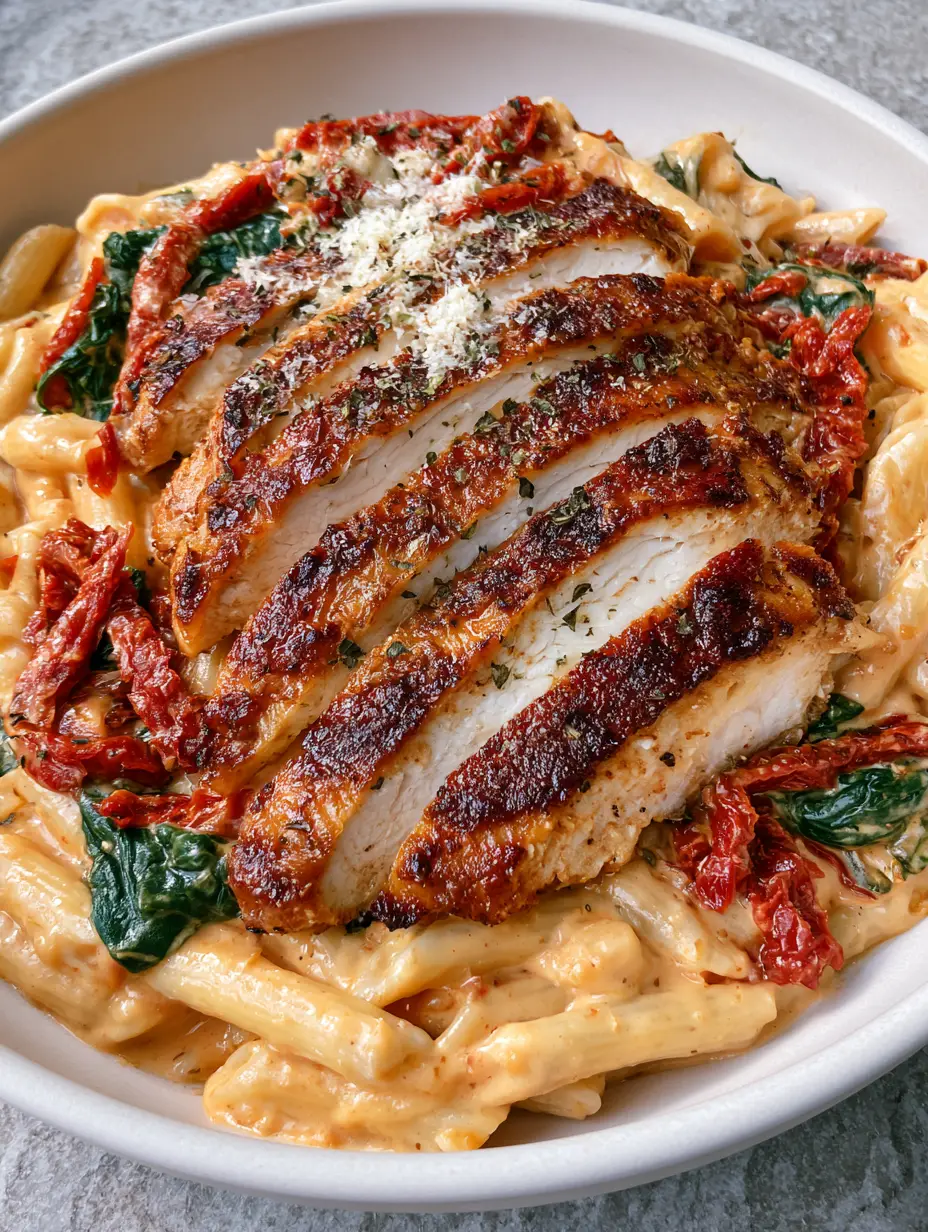
Imagine tender penne pasta enveloped in a thick, glossy, pale-orange cream sauce that clings to every ridge. The visual appeal is heightened by thick diagonal slices of pan-seared chicken breast, boasting deeply browned, caramelized edges that contrast beautifully with a moist white interior.
We aren’t just making dinner; we are engineering a sensory experience. From the vibrant red of julienned sun-dried tomatoes to the earthy, dark green of wilted baby spinach, every element in this One-Pot Tuscan Chicken Pasta is designed for maximum flavor impact and visual “wow” factor.
The Anatomy of a Perfect One-Pot Tuscan Chicken Pasta
Achieving the specific “pale-orange” hue and “glossy” texture described in our visual blueprint requires a deep understanding of emulsification and the Maillard reaction. We don’t just boil meat; we sear it to build a foundation of flavor.
- Textural Contrast: The “al dente” bite of the penne provides a necessary structural base for the velvety cream sauce.
- Caramelized Aromatics: Searing the chicken at high heat creates those “deeply browned edges” seen in the prompt, which then release their fond into the sauce.
- Color Theory: The pale-orange tint comes naturally from the concentrated oils of the sun-dried tomatoes bleeding into the heavy cream.
- Freshness Factor: A final dusting of grated parmesan and dried parsley flakes adds the fine-grained texture that completes the professional plating.
The Tuscan Pantry: Every Ingredient for Success
To achieve the result shown in our handheld smartphone photo, we must select ingredients that provide both flavor and the specific visual markers required for an elite One-Pot Tuscan Chicken Pasta.
Chicken Breast (1 lb / 450g): We use boneless, skinless breasts sliced into thick cutlets. This allows for rapid searing to get those caramelized edges without overcooking the center.
Penne Rigate (12 oz / 340g): The ridges (rigate) are essential for “grabbing” the thick garlic cream sauce. This ensures every bite is thoroughly coated.
Sun-Dried Tomatoes (1/2 cup / 60g): Look for julienned tomatoes packed in oil. We will use a tablespoon of that oil to jumpstart our flavor base.
Heavy Cream (1.5 cups / 355ml): This is the secret to the “thick and glossy” finish. Do not substitute with milk, or the sauce will lack the necessary viscosity.
Chicken Broth (2.5 cups / 600ml): This serves as our cooking liquid for the pasta, infusing the penne with savory depth from the inside out.
Baby Spinach (2 cups / 60g): Fresh leaves that will be folded in at the very last second to achieve that “wilted, dark green” look without becoming mushy.
Garlic (4 cloves, minced): Provide the “thick garlic cream sauce” flavor profile. We want enough garlic to be present but not bitter.
Parmesan Cheese (1/2 cup / 45g): Finely grated to melt into the sauce and used as a “fine dusting” for the final garnish.
Foundational Spices: 1 tsp (5g) Kosher salt, 1/2 tsp (2g) black pepper, 1/2 tsp (1g) smoked paprika (for that pale orange glow), and 1 tsp (1g) dried parsley flakes.
Essential Kitchen Tools for One-Pot Mastery
To replicate the rustic matte white bowl presentation, you need a heavy-bottomed vessel that distributes heat evenly. This prevents the cream sauce from breaking or scorching.
A large 12-inch (30cm) deep skillet or a Dutch oven is ideal. The wide surface area is critical for searing the chicken breast slices to achieve those deeply browned, caramelized edges.
You will also need a sharp chef’s knife for julienning the sun-dried tomatoes and a microplane for the fine dusting of parmesan cheese that completes the visual prompt.
Step-by-Step Instructions: Engineering the Perfect Sear and Sauce
Phase 1: Achieving the Perfect Chicken Sear
Start by patting your chicken breast completely dry with paper towels. Moisture is the enemy of the Maillard reaction; if the chicken is wet, it will steam rather than sear.
Heat 1 tbsp (15ml) of oil from the sun-dried tomato jar in your skillet over medium-high heat. Once the oil shimmers, add the chicken slices in a single layer.
Cook for 3-4 minutes per side. Look for the “Visual Cue”: a deep golden-brown crust should form on the edges. Remove the chicken and set aside; it will finish cooking in the sauce later.
Phase 2: Building the Pale-Orange Flavor Base
In the same pan, reduce heat to medium. Add the minced garlic and julienned sun-dried tomatoes. Sauté for 60 seconds until the garlic is fragrant and the oil turns a light red.
Add the smoked paprika and stir quickly. This spice, combined with the tomato oil, is what creates the “pale-orange” hue in the final thick cream sauce.
Pour in the chicken broth and use a wooden spoon to scrape up the “fond” (the brown bits) from the bottom of the pan. This is concentrated flavor that would be lost in a traditional multi-pot method.
Phase 3: The One-Pot Pasta Emulsification
Add the dry penne pasta to the simmering broth. Ensure the pasta is mostly submerged. Cover the pan and simmer for 8-10 minutes, stirring occasionally.
When the pasta is just shy of “al dente,” pour in the heavy cream. Stir continuously as the sauce thickens. You are looking for a “glossy” finish that coats the back of a spoon.
The starch released from the pasta directly into the sauce is what creates that professional, thick consistency without the need for a flour roux.
Phase 4: The Final Assembly and Garnish
Fold in the baby spinach and the seared chicken slices (along with any juices on the plate). The heat from the sauce will wilt the spinach into that “dark green” state in about 30 seconds.
Stir in half of the grated parmesan cheese until melted. Turn off the heat immediately to prevent the cream from separating.
Transfer to a wide shallow bowl. Slice the chicken diagonally and rest it on top of the pasta. Garnish with a fine dusting of parmesan and dried parsley flakes.
Expert Tips for Success
- The Sauce Thickness: If the sauce is too thick before the pasta is done, add broth 1/4 cup (60ml) at a time. The goal is “glossy,” not dry.
- Temperature Control: Never boil the sauce after adding the heavy cream. High heat can cause the dairy to curdle, ruining the “thick garlic cream sauce” texture.
- The “Carryover” Cook: Remember that the pasta will continue to absorb liquid even after you turn off the heat. Serve immediately for the best “handheld smartphone photo” look.
- Acid Balance: If the sauce feels too heavy, a tiny squeeze of lemon juice can brighten the entire One-Pot Tuscan Chicken Pasta without changing the color.
How to Store and Reheat Your Tuscan Pasta
Leftovers of this One-Pot Tuscan Chicken Pasta stay delicious for up to 3 days in an airtight container in the refrigerator. However, cream-based sauces tend to thicken significantly when cold.
To reheat, place the pasta in a skillet over low heat. Add a splash of broth or water (about 1 tbsp per serving) to loosen the sauce and restore that “glossy” pale-orange appearance.
We do not recommend freezing this dish, as the heavy cream and pasta texture may degrade and become grainy upon thawing.
What to Serve with One-Pot Tuscan Chicken Pasta
To round out this meal, consider a crisp green salad or a side of crusty bread to soak up the extra garlic cream sauce. If you enjoy one-pot meals, you might also love our One-Pot Chicken Sausage Orzo.
For those who prefer a different flavor profile, this dish pairs excellently with a side of Oven Fried Chicken if you’re feeding a larger crowd. If you want to keep the “creamy” theme going for another night, check out our Creamy Chicken Alfredo.
Alternatively, if you have leftover sun-dried tomatoes, they work beautifully in a Chicken Torta Sandwich for lunch the following day.
Frequently Asked Questions
Absolutely. Use your favorite gluten-free penne, but check it 2 minutes early as gluten-free pasta can soften quickly in one-pot sauces.
Yes, chicken thighs work beautifully and are more forgiving of high heat, though they may take 1-2 minutes longer to sear.
No, that is the beauty of this recipe! The dry pasta cooks directly in the broth and cream, which helps thicken the sauce with its natural starches.
Ensure you use full-fat heavy cream and avoid bringing the sauce to a rolling boil once the dairy is added; a gentle simmer is best.
The pale-orange hue comes from the oil in the sun-dried tomatoes and a pinch of smoked paprika emulsifying into the heavy cream.
The Master Recipe: One-Pot Tuscan Chicken Pasta
One-Pot Tuscan Chicken Pasta: The Ultimate Creamy 30-Minute Dinner
Ingredients
Equipment
Method
- Heat tomato oil in a large skillet. Add chicken slices and sear until deeply browned with caramelized edges (about 4 minutes per side). Remove and set aside.
- Add garlic and sun-dried tomatoes to the same skillet. Cook for 1 minute until fragrant.
- Add broth, scraping the bottom of the pan. Stir in penne. Cover and simmer for 8-10 minutes until pasta is nearly al dente.
- Stir in heavy cream and smoked paprika. Simmer uncovered until the sauce is thick and glossy.
- Add spinach, seared chicken, and half the parmesan. Stir until spinach is wilted and chicken is heated through.
Notes
Use the oil from the sun-dried tomato jar for extra flavor depth.
Closing & Call to Action
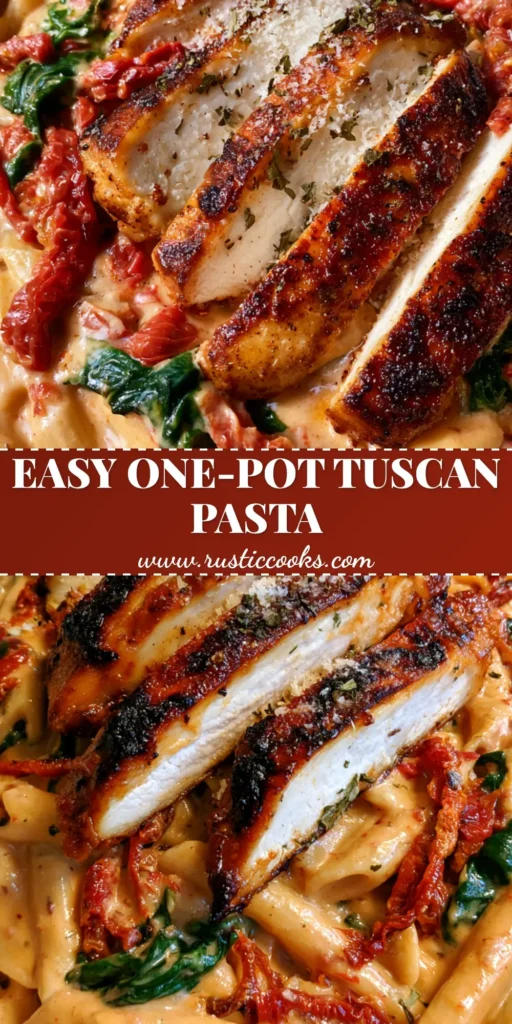
This One-Pot Tuscan Chicken Pasta proves that you don’t need a sink full of dishes to create a gourmet meal. With its deeply browned chicken and vibrant sun-dried tomatoes, it is as beautiful as it is delicious. If you enjoyed this recipe, please leave a comment below and share your photos with us!
Don’t forget to follow us and save this recipe to your boards on Pinterest so you never lose this weeknight staple!