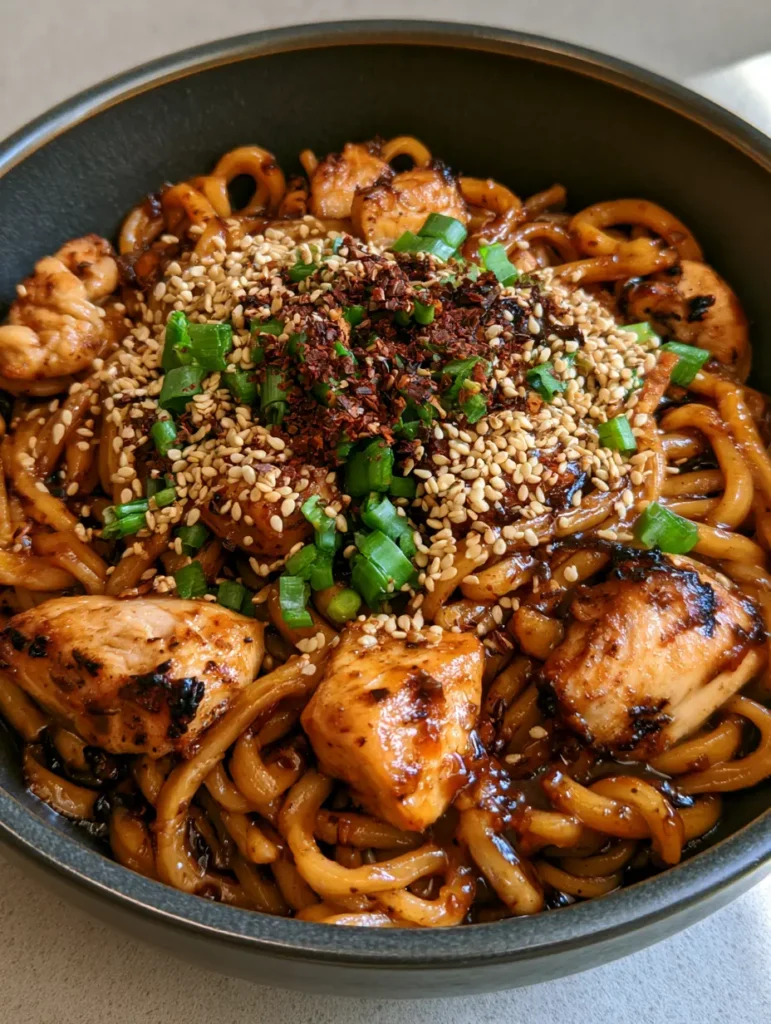
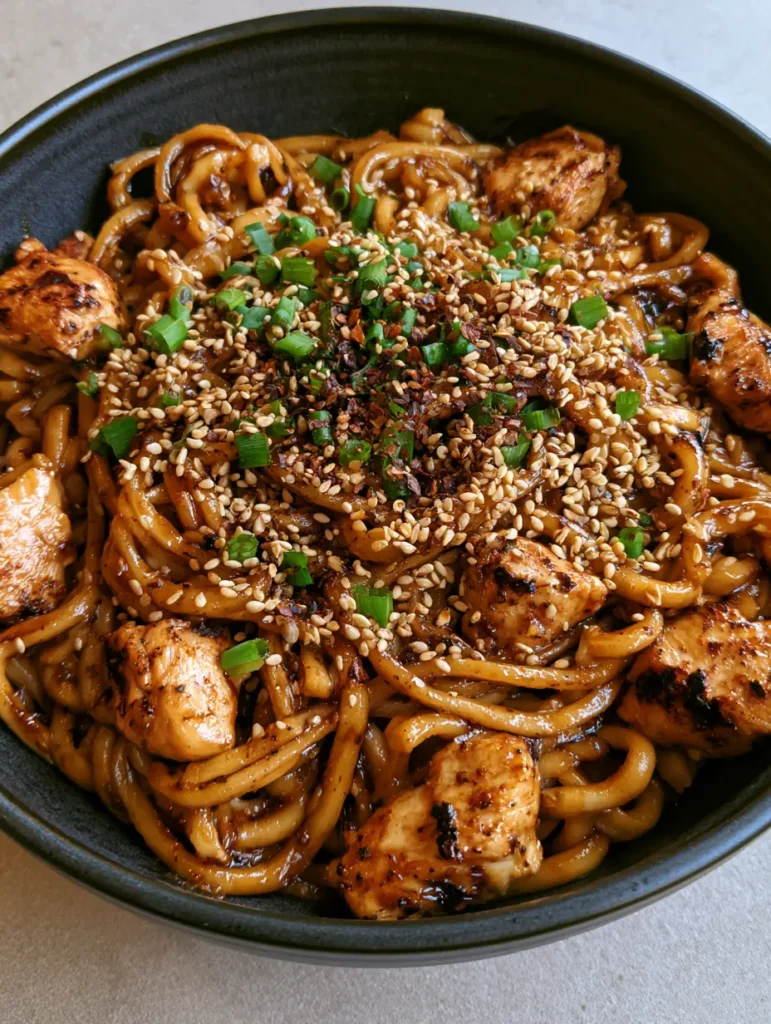
There is a specific, primal satisfaction that comes from a bowl of Sticky Garlic Chicken Noodles. Imagine a dark ceramic bowl, heavy in your hands, filled to the brim with thick, glossy lo mein noodles that have been tossed in a translucent, mahogany-hued sauce. Every strand is coated in a glaze that is both sweet and aggressively garlicky, punctuated by the heat of dried red pepper flakes. The visual contrast of the bright green scallions and the ivory crunch of toasted white sesame seeds against that deep brown sauce makes this dish a feast for the eyes before it ever hits your tongue.
Achieving that restaurant-quality “stickiness” isn’t about luck; it is about the chemistry of the glaze and the temperature of your pan. We are looking for those signature golden-brown charred edges on the chicken breast—a sign of the Maillard reaction in full effect. This isn’t just a quick dinner; it is a sensory experience that combines the soft chew of wheat noodles with the savory snap of perfectly seared poultry. If you enjoy a deep umami profile, you might also find yourself craving our garlic-infused chicken ramen for your next meal prep session.
The Culinary Allure: Why This Noodle Dish Works
- Textural Harmony: The thick lo mein noodles provide a substantial, “bouncy” mouthfeel that holds up against the heavy garlic glaze.
- Visual Depth: The use of dark soy sauce creates a rich, dark brown translucent finish that looks professional and appetizing.
- Flavor Balance: The pungency of fresh garlic is tempered by the sweetness of brown sugar, creating a sticky coating that clings to every ingredient.
- The Perfect Sear: By using high-heat techniques, the chicken breast chunks develop a charred exterior while remaining juicy inside.
The Essential Components for a Glossy Garlic Glaze
To recreate the exact visual from our blueprint, every ingredient serves a dual purpose: flavor and aesthetics. You cannot skip the aromatics if you want that deep, lingering garlic finish that defines Sticky Garlic Chicken Noodles.
Thick Lo Mein Noodles: 8 oz (225g). These wheat-based noodles are the foundation; their thickness ensures they don’t get lost in the heavy sauce. If you can’t find lo mein, a thick spaghetti or linguine can work in a pinch, much like in our garlic parmesan chicken pasta.
Chicken Breast: 1 lb (450g). Sliced into bite-sized chunks, this lean protein provides the “seared” visual. The key is to pat the meat dry before cooking to ensure it browns rather than steams.
Fresh Garlic: 6 cloves (approx. 30g). We aren’t just hinting at garlic here; we are featuring it. Mincing the garlic finely allows it to melt into the glaze, creating that translucent, sticky texture.
Dark Soy Sauce: 2 tbsp (30ml). This is the secret to the “dark brown” color. It is less salty than regular soy sauce but offers a deep, molasses-like hue and rich flavor.
Light Soy Sauce: 3 tbsp (45ml). This provides the primary salt component and the savory umami backbone of the dish.
Brown Sugar or Honey: 3 tbsp (45g). This is the “sticky” factor. The sugar caramelizes in the pan, creating that glossy, handheld-photo-ready finish.
Cornstarch: 1 tsp (5g). Combined with a little water, this acts as the thickening agent to ensure the sauce isn’t watery but instead clings to the noodles.
Aromatic Oil: 2 tbsp (30ml) of a high-smoke point oil like canola or vegetable oil, plus 1 tsp (5ml) of toasted sesame oil for a nutty finish.
Necessary Tools for Stir-Fry Success
Achieving the perfect Sticky Garlic Chicken Noodles requires tools that can handle high heat. A large carbon steel wok or a heavy-bottomed cast-iron skillet is ideal for getting that charred edge on the chicken breast.
You will also need a professional-grade microplane or garlic press to ensure the garlic is finely processed. Coarse chunks of garlic may burn and become bitter, whereas a fine mince integrates seamlessly into the sauce. A pair of long kitchen tongs is also essential for tossing the thick noodles without breaking them apart.
Mastering the Sear: Step-by-Step to Noodle Perfection
Preparing the Noodle Foundation
Bring a large pot of salted water to a boil. Add your 8 oz (225g) of lo mein noodles and cook according to the package directions, usually about 5-7 minutes. You want them “al dente”—they should still have a firm bite, as they will finish cooking in the sauce later. Drain them and toss with a drop of oil to prevent sticking.
Developing the Golden-Brown Chicken Crust
Pat the chicken breast chunks completely dry with paper towels. Season lightly with salt. Heat 1 tbsp (15ml) of oil in your skillet over medium-high heat until it shimmers. Add the chicken in a single layer, leaving space between pieces. Do not stir for at least 2 minutes; this allows the “golden-brown charred edges” to form. Flip and cook for another 2-3 minutes until opaque and seared.
Building the Translucent Garlic Glaze
Lower the heat to medium and add the remaining oil. Toss in the 6 cloves of minced garlic and 1 tsp (2g) of dried red pepper flakes. Sauté for just 30-60 seconds until the garlic is fragrant but not browned. Pour in the mixture of dark soy sauce, light soy sauce, and brown sugar. Stir constantly as the sugar begins to bubble and dissolve into a dark brown liquid.
The Final Toss and Thickening
Add the cooked noodles and the seared chicken back into the skillet. In a small bowl, whisk 1 tsp (5g) of cornstarch with 1 tbsp (15ml) of cold water and pour it over the noodles. Use your tongs to toss everything vigorously. Watch as the sauce transforms from a thin liquid into a thick, glossy, translucent glaze that anchors itself to every surface.
Expert Tips for the Ultimate Sticky Sauce
- Don’t Overcrowd the Pan: If you add too much chicken at once, the temperature of the pan drops and the meat will boil in its own juices instead of searing. Work in batches if necessary.
- The “Gloss” Factor: If your sauce looks dull, add a teaspoon of butter or a splash of sesame oil at the very end. This adds a “handheld photo” shine that is irresistible.
- Noodle Rinse: While some chefs advise against rinsing, a quick cold-water rinse for lo mein noodles removes excess surface starch, preventing them from becoming a gummy mess in the wok.
- Control the Heat: Garlic burns in seconds. If the pan feels too hot after searing the chicken, remove it from the heat for a moment before adding the aromatics.
Smart Storage and Reheating Strategies
These Sticky Garlic Chicken Noodles make for an incredible lunch the next day. Store leftovers in an airtight container in the refrigerator for up to 3 days. The sauce will thicken further as it cools, so the noodles may appear “stuck” together when you first take them out.
To reheat, add the noodles to a pan with a splash of water or chicken broth. Cover with a lid for 1-2 minutes to let the steam loosen the glaze, then toss gently until heated through. Avoid the microwave if possible, as it can make the chicken breast rubbery and the noodles mushy.
What to Serve With Sticky Garlic Chicken Noodles
Since this dish is incredibly rich and savory, it pairs beautifully with light, crisp sides. A simple cucumber salad with rice vinegar or steamed bok choy provides a refreshing contrast to the heavy garlic notes. If you’re looking to expand your weeknight rotation, consider starting with our crispy chicken lettuce wraps for a multi-course Asian-inspired feast.
For those who love a bit of variety, serving these noodles alongside honey garlic chicken provides a double dose of that sweet-and-savory flavor profile that kids and adults alike adore. If you have extra sauce, it also tastes fantastic drizzled over roasted garlic potatoes (coming soon).
Frequently Asked Questions
You can substitute the lo mein with thick rice noodles and use Tamari or gluten-free soy sauce. The result will still be glossy and delicious.
Yes! Chicken thighs have a higher fat content and will remain even juicier. Just ensure you still sear them at high heat to get those signature charred edges.
The stickiness comes from the caramelization of brown sugar and the cornstarch slurry. If it’s not thick enough, simmer for an extra 2 minutes to reduce the liquid.
Light soy sauce is saltier and thinner, used for flavor. Dark soy sauce is aged longer, thicker, and less salty, providing the deep mahogany color seen in this recipe.
Thick wheat-based noodles like lo mein or udon are best. They have the surface area and ‘chew’ needed to hold up against the heavy, sticky garlic glaze.
The Ultimate Sticky Garlic Chicken Noodles Recipe
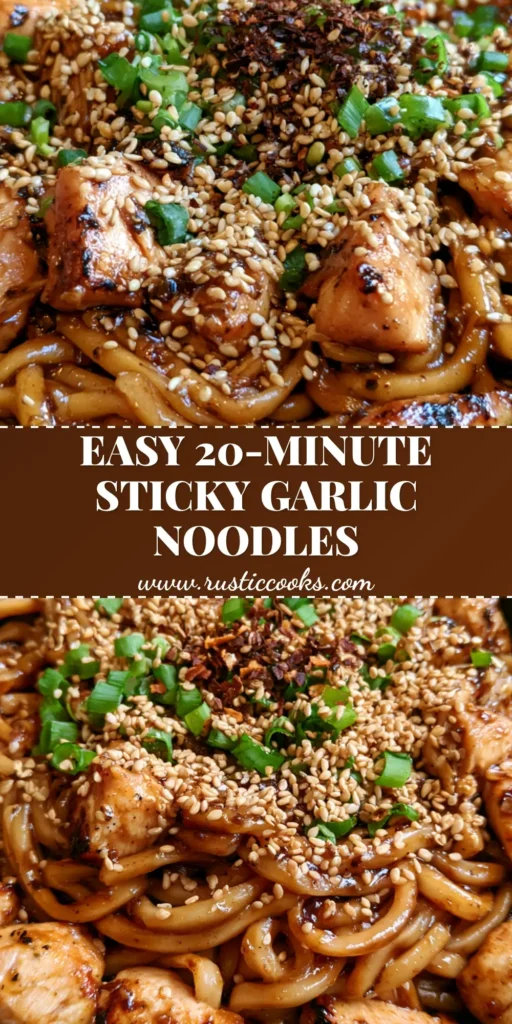
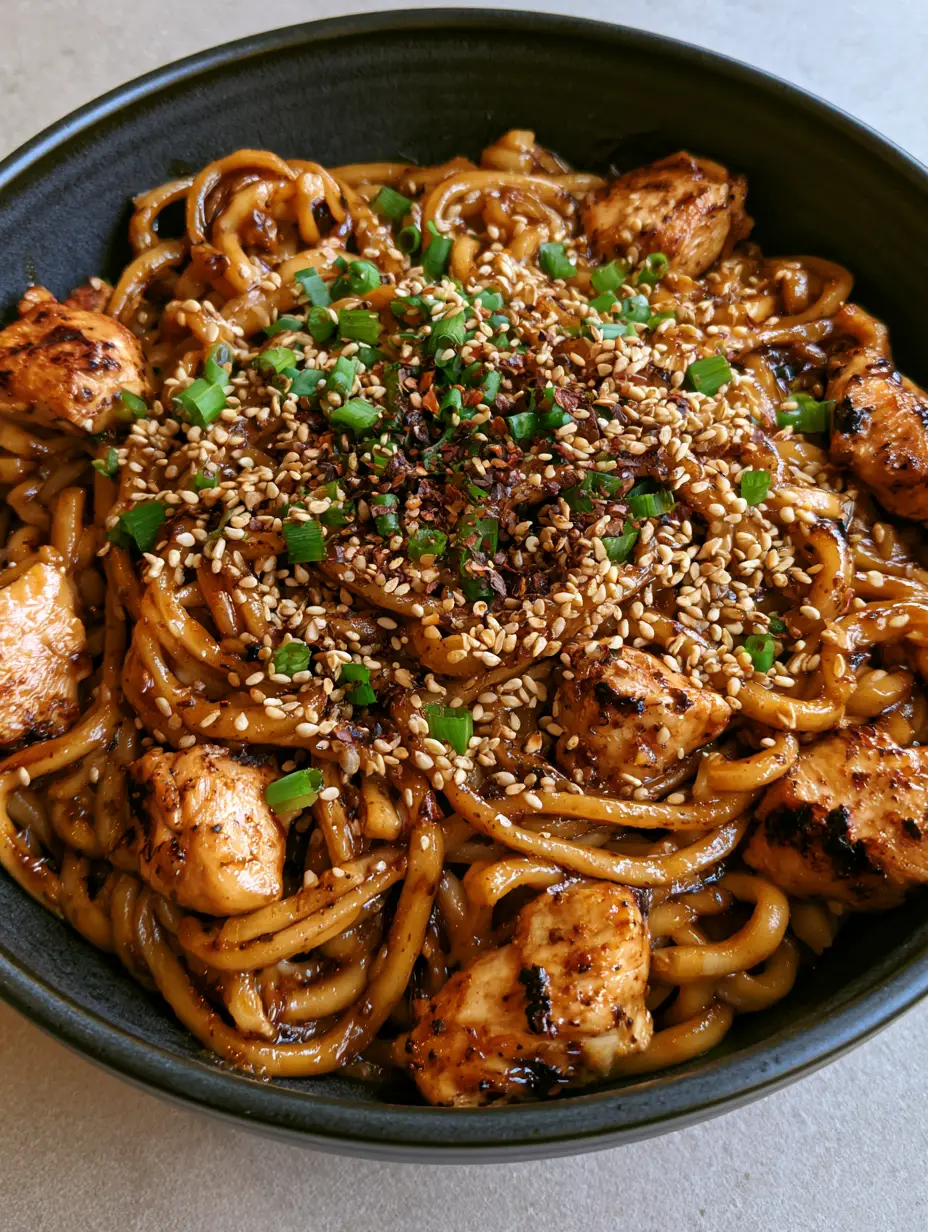
Sticky Garlic Chicken Noodles with a Dark Brown Honey Glaze
Ingredients
Equipment
Method
- Cook lo mein in salted water for 5-7 minutes until al dente. Drain and set aside.
- Heat oil in a skillet. Pat chicken dry and sear until golden-brown charred edges appear, about 5 minutes.
- Add minced garlic and red pepper flakes to the pan, cooking until fragrant (about 45 seconds).
- Whisk soy sauces, sugar, and cornstarch slurry into the pan. Toss with noodles and chicken until sticky and translucent.
Notes
Use dark soy sauce specifically to get that rich mahogany color.
Bring the Heat to Your Kitchen
Making Sticky Garlic Chicken Noodles at home is a rewarding way to master the art of the stir-fry glaze. The combination of high-heat searing and a carefully balanced sauce creates a dish that looks like it came from a professional kitchen but tastes like home-cooked comfort. We would love to see your results! Leave a comment below with your favorite add-ins, or share a photo of your dark ceramic bowl of noodles on Pinterest.