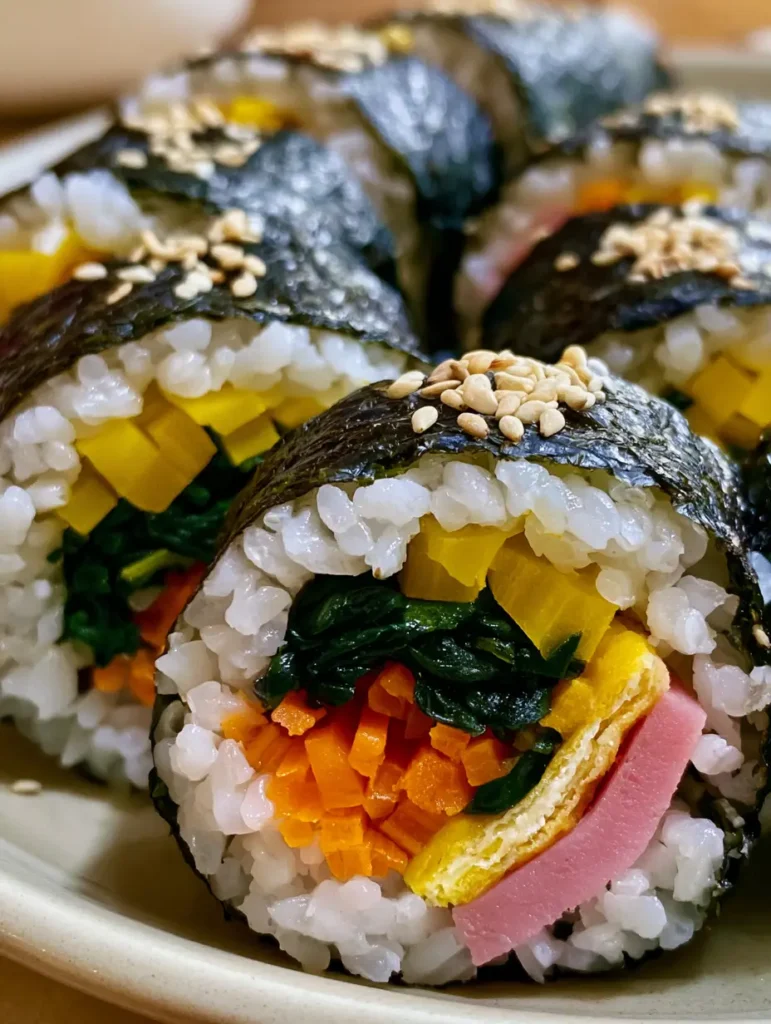
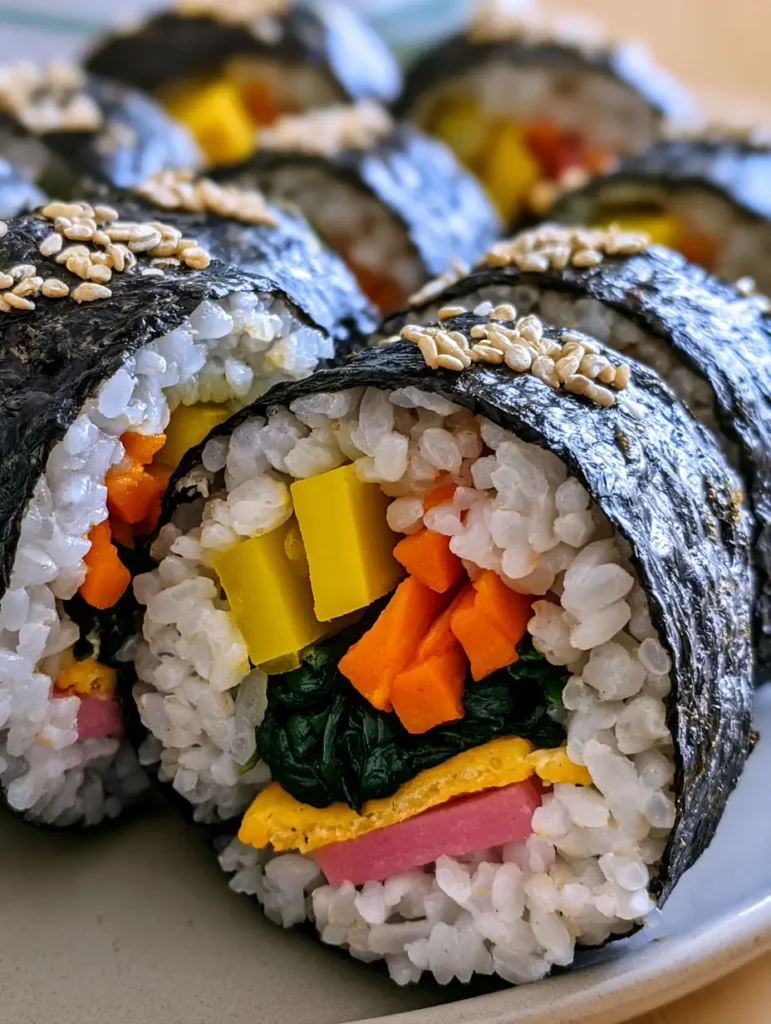
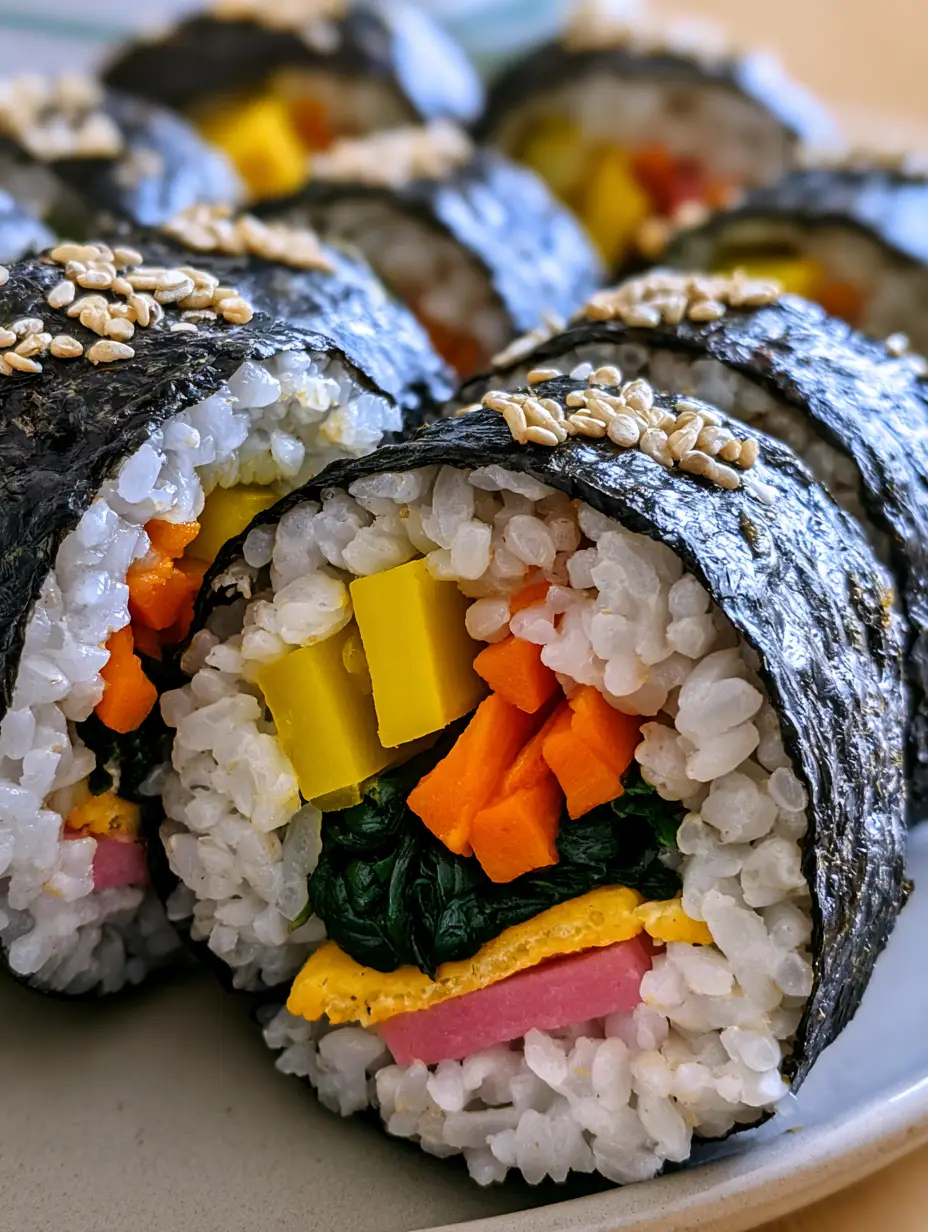
Mastering the perfect Korean Kimbap Recipe is about more than just rolling rice; it is about creating a harmonious balance of colors, textures, and seasoned aromatics. When you look at a freshly sliced kimbap roll, you should see a dark, textured seaweed exterior holding back a wall of fluffy, seasoned white rice that protects a vibrant, tightly packed core.
This recipe delivers that exact handheld smartphone-photo quality: glossy rice grains, golden yellow egg ribbons, and the crunch of pickled radish. Whether you are prepping for a picnic or a cozy dinner, these rolls are as visually stunning as they are delicious.
Why This Authentic Kimbap Method Never Fails
This Korean Kimbap Recipe is designed to produce professional-grade results in a home kitchen. By focusing on the structural integrity of the rice and the precision of the julienned vegetables, we ensure every bite is consistent.
- Vibrant Color Contrast: We use the classic “five colors” (obangsaek) of Korean cuisine—orange, yellow, green, pink, and black—to create a stunning visual cross-section.
- Superior Rice Texture: Our seasoning method ensures the rice is fluffy and distinct, never mushy, with a light coating of toasted sesame oil for that signature gloss.
- Tight, Structural Rolls: By following our specific stacking order, your rolls will remain tightly packed and won’t fall apart when sliced.
- Multi-Sensory Aroma: The combination of roasted seaweed (gim) and a final sesame oil glaze creates an irresistible scent before you even take a bite.
The Anatomy of a Perfect Korean Kimbap Recipe
To achieve the look of the “Visual Recipe Blueprint,” every ingredient must be prepared with care. Each component serves a specific purpose in the flavor profile and the physical structure of the roll.
Short-Grain White Rice: 2 cups (400g) of dry rice. Short-grain rice has the necessary starch content to stay together without being overly sticky, providing the “fluffy” base described in our visual guide.
Roasted Seaweed Sheets (Gim): 5-7 large sheets. Look for “sushi grade” or “kimbap grade” sheets that are thick enough to withstand the moisture of the rice without tearing.
Yellow Pickled Radish (Danmuji): 5-7 long strips. This is the heart of the roll, providing the essential crunch and a tangy acidity that cuts through the savory ham and egg.
Julienned Sautéed Carrots: 2 large carrots (200g). These are finely sliced and quickly seared to maintain a slight snap while contributing a vibrant orange hue.
Blanched Spinach: 1 bunch (approx. 250g). Squeezed dry and seasoned, this adds the dark green element and a boost of earthy nutrients to the center.
Thin Egg Omelet Strips: 3 large eggs. Beaten with a pinch of salt and fried into a thin sheet, then sliced into delicate golden yellow ribbons for a soft, protein-rich layer.
Cooked Ham: 150g sliced into long batons. We lightly sear the ham to enhance its savory flavor and give it a firm texture that anchors the other fillings.
Sesame Oil & Toasted Seeds: 2 tbsp (30ml) oil and 1 tsp (5g) seeds. The oil is used both in the rice and as a final glaze to create that “slightly glossy” finish on the rice grains.
Foundation Seasonings: 1 tsp (6g) fine sea salt and 1 tsp (4g) granulated sugar. These “invisible” ingredients are vital for balancing the flavors within the rice and spinach.
Professional Tools for Tight Rice Rolls
While you can roll by hand, using a bamboo rolling mat (gimbal) is the secret to getting that “tightly packed” look seen in professional photography. You will also need a very sharp chef’s knife to ensure clean cuts through the seaweed and rice without squishing the roll.
A wide, flat wooden bowl (hangiri) or a large glass bowl is best for seasoning the rice, as it allows the steam to escape quickly, preventing the grains from becoming gummy. Finally, a small pastry brush is helpful for applying the final sesame oil glaze with precision.
Mastering the Art of the Korean Rice Roll
Preparing the Perfect Rice Base
Begin by rinsing your short-grain rice until the water runs clear. Cook the rice with a 1:1 ratio of water to ensure it remains distinct. Once cooked, transfer the hot rice to a bowl and gently fold in 1 tbsp (15ml) of sesame oil and 1/2 tsp (3g) of salt.
Use a slicing motion with your spatula to avoid crushing the grains. The goal is to have “fluffy, seasoned white rice” where each grain is individually coated and glossy. Let it cool to room temperature before rolling to prevent the seaweed from becoming soggy.
Executing the Colorful Filling Components
For the carrots, julienne them into matchsticks and sauté in a pan with a drop of oil and a pinch of salt for 2 minutes. They should be tender but still have a “vibrant orange” bite. Blanch the spinach in boiling water for 30 seconds, immediately shock in ice water, squeeze out every drop of moisture, and season with sesame oil.
Beat the eggs with a pinch of salt and fry in a flat skillet to create a thin omelet. Once cooled, roll it up and slice it into thin ribbons. Finally, cut your ham and pickled radish into uniform strips that span the width of your seaweed sheet.
The Assembly and Rolling Technique
Place a sheet of roasted seaweed on your bamboo mat, shiny side down. Spread about 3/4 cup (150g) of rice evenly over the bottom two-thirds of the sheet, leaving the top third empty. Press down lightly so the rice is “tightly packed” but still visible as distinct grains.
Layer your fillings horizontally across the center of the rice: radish, carrots, spinach, egg strips, and ham. Lift the bottom of the mat and roll over the fillings, tucking them in tightly with your fingers. Apply firm, even pressure as you continue to roll to the end.
The Finishing Touches and Slicing
Once rolled, use a pastry brush to apply a light “sesame oil glaze” over the dark seaweed. This provides the “textured roasted seaweed” look with a professional sheen. Sprinkle a generous amount of toasted white sesame seeds across the top of the roll.
Wipe your knife with a damp cloth or a drop of sesame oil. Slice the roll into 1/2-inch (1.25cm) thick rounds. You should see a beautiful, colorful cross-section where the pink ham, golden egg, and green spinach are perfectly centered.
Expert Tips for Kimbap Success
- Squeeze the Spinach: If your spinach is too wet, it will bleed green dye into your rice and make the seaweed soggy. Squeeze it until no more water comes out.
- Rice Temperature: Never put hot rice on seaweed. The steam will cause the seaweed to shrivel and become chewy rather than crisp.
- The “Glue”: If the roll isn’t sealing, dab a single grain of smashed rice or a tiny bit of water along the top edge of the seaweed sheet.
- Sharp Knife: Slicing kimbap requires a very sharp blade. Clean the knife between every two or three cuts to prevent starch buildup from tearing the seaweed.
Storage, Reheating, and Make-Ahead Advice
Kimbap is best eaten the day it is made, as the rice can harden in the refrigerator. If you have leftovers, wrap them tightly in plastic wrap and store for up to 24 hours. To revive “day-old” kimbap, dip the slices in beaten egg and pan-fry them for a delicious crispy snack.
You can prepare all the filling ingredients a day in advance and store them in airtight containers. This makes the assembly process much faster for a quick lunch or party platter.
What to Serve With This Korean Kimbap Recipe
Kimbap is a complete meal on its own, but it pairs beautifully with other Asian-inspired dishes. For a light lunch, serve it alongside a fresh Peach Burrata Salad to balance the salty ham. If you want a more substantial meal, try pairing it with a Steak and Avocado Rice Bowl for extra protein.
For dessert, the chewy texture of Homemade Mango Mochi is the perfect palate cleanser after the savory sesame oil and seaweed notes of the rolls.
Frequently Asked Questions
Absolutely! Simply omit the ham and replace it with seasoned tofu strips, braised burdock root (uwoo), or extra strips of egg and cucumber for a delicious vegetarian Korean Kimbap Recipe.
Rice naturally hardens when cold. To prevent this, wrap the rolls tightly in foil and plastic wrap. If it does harden, dip slices in beaten egg and pan-fry them to soften the rice and add a delicious crust.
While they look similar, kimbap rice is seasoned with sesame oil and salt, whereas sushi rice uses vinegar and sugar. Additionally, kimbap typically uses cooked or pickled fillings rather than raw fish.
Short-grain white rice is essential. Its starch content provides the necessary stickiness to hold the roll together while remaining fluffy and distinct.
This usually happens if the rice isn’t spread evenly or if the roll isn’t tight enough. Ensure you use a bamboo mat and apply firm pressure, and always use a very sharp, slightly damp knife for slicing.
The Ultimate Korean Kimbap Recipe Card
Korean Kimbap Recipe: The Ultimate Guide to Authentic Sesame-Glazed Rice Rolls
Ingredients
Equipment
Method
- Fold 1 tbsp (15ml) sesame oil and 1/2 tsp salt into cooked short-grain rice using a slicing motion. Let cool to room temperature until grains are glossy and distinct.
- Sauté julienned carrots until tender-crisp. Blanch spinach, squeeze dry, and season with sesame oil. Fry beaten eggs into a thin omelet and slice into ribbons. Sear ham strips briefly.
- Place seaweed shiny side down on a mat. Spread rice over 2/3 of the sheet. Layer radish, carrots, spinach, egg, and ham across the center of the rice.
- Roll tightly using the bamboo mat, applying firm pressure to ensure the center is tightly packed. Seal the edge with a dab of water if needed.
- Brush the outside with sesame oil and sprinkle with toasted sesame seeds. Slice into 1/2-inch rounds using a very sharp, damp knife.
Notes
Wipe your knife with a damp cloth between slices for the cleanest cross-sections.
Closing & Call to Action
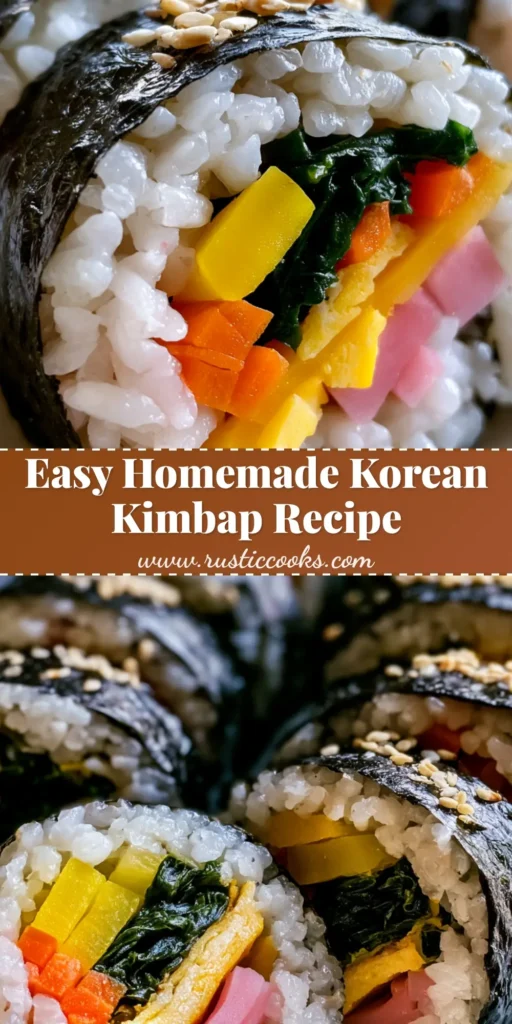
There is something incredibly satisfying about the precision of a Korean Kimbap Recipe. From the glossy rice to the vibrant, colorful center, these rolls are a testament to how simple ingredients can create a stunning culinary experience. We hope you feel inspired to create your own “smartphone-ready” platter of kimbap!
If you enjoyed this recipe, please leave a comment below and let us know your favorite kimbap filling! Don’t forget to follow us on Pinterest for more authentic recipe inspiration and visual guides.