Mango Sticky Rice Rolls take the beloved flavors of Thailand’s most iconic dessert and transform them into a sophisticated, handheld treat. Imagine the textural contrast of translucent, glossy glutinous rice against the buttery smoothness of a sun-ripened mango spear. This recipe isn’t just a dessert; it’s a culinary architecture project that balances sweetness, saltiness, and aromatics in every single bite.
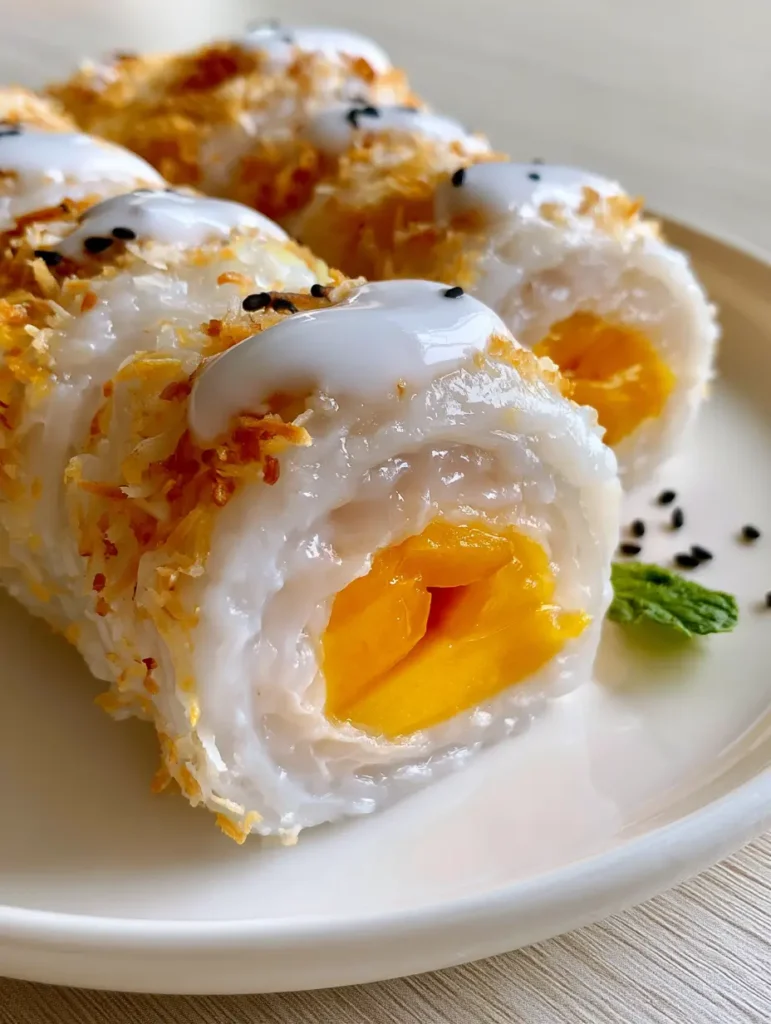
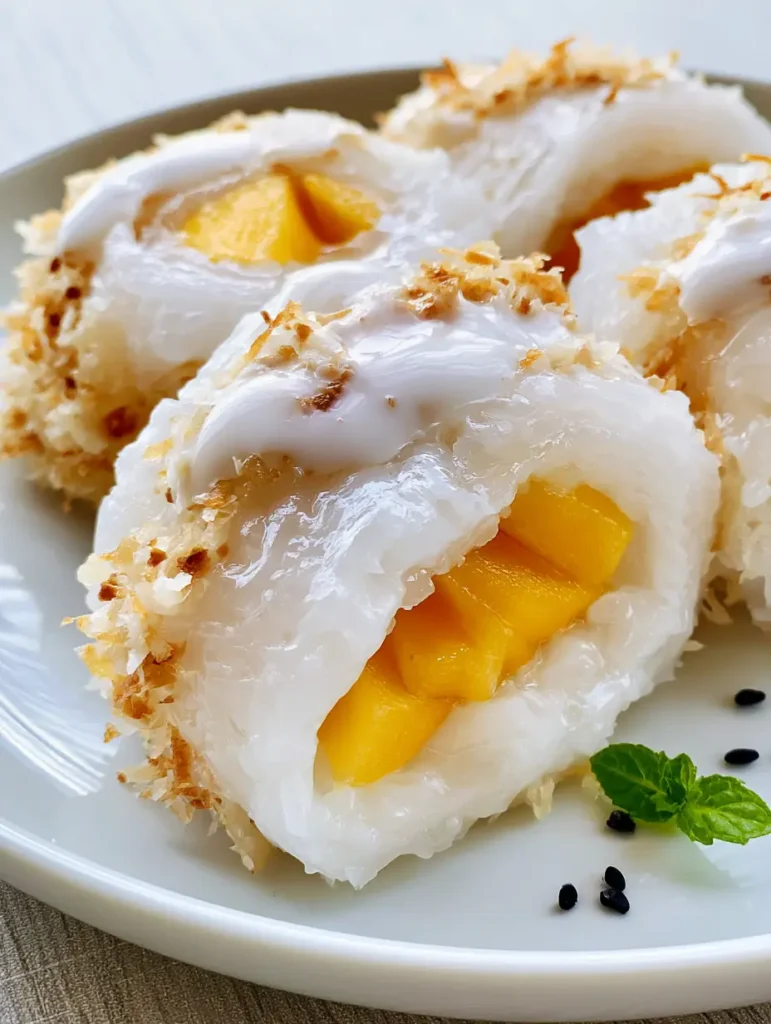
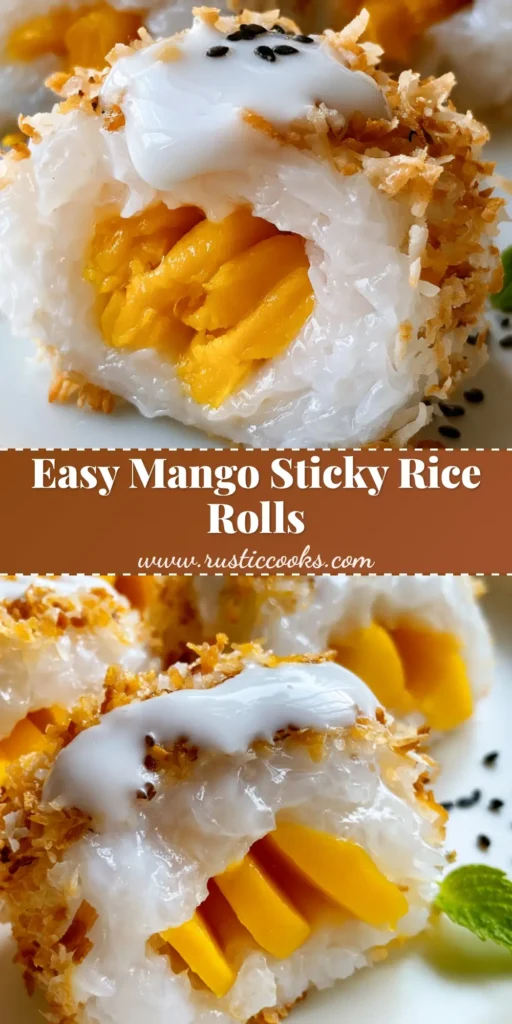
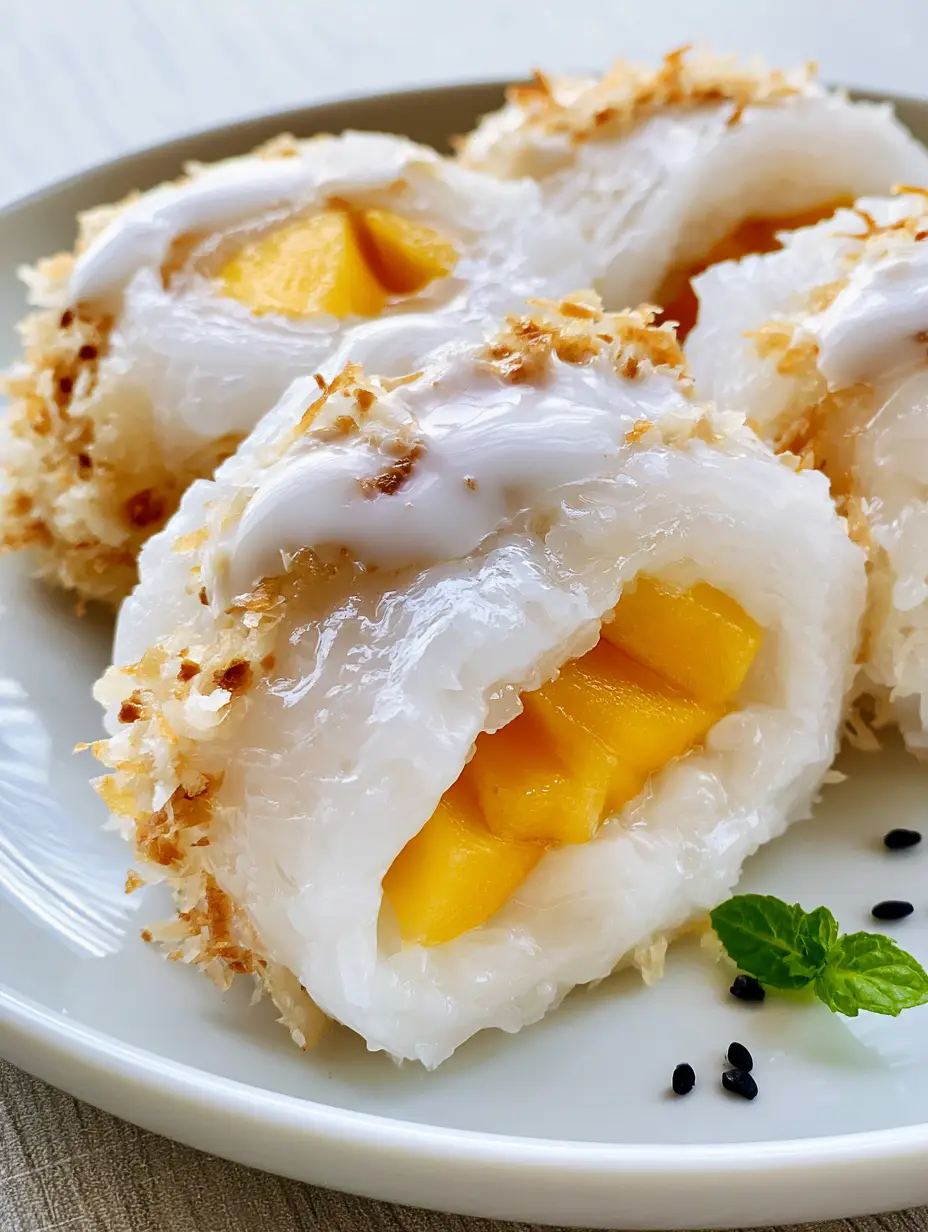
In this guide, we are recreating the exact visual masterpiece seen in our professional photography. We are talking about golden-brown toasted coconut, a thick coconut cream drizzle that stays perfectly in place, and that signature glossy finish on the rice. Whether you are a fan of traditional Thai street food or looking for a show-stopping plant-based dessert, these Mango Sticky Rice Rolls are the answer.
By using specific steaming techniques and a precise coconut milk infusion, we ensure the rice remains “handheld-ready” without losing its soul. Let’s dive into the science of starch and the art of the roll to bring this vibrant orange and white delicacy to your kitchen table.
Why These Handheld Mango Sticky Rice Rolls are a Culinary Game-Changer
- Perfectly Portable: Unlike the traditional bowl-and-spoon version, these rolls are tightly coiled and structurally sound for easy serving at parties.
- Multi-Textural Experience: You get the chew of the glutinous rice, the crunch of toasted coconut, and the silky “melt” of the mango in one mouthful.
- Visually Stunning Contrast: The vibrant orange mango spears popping against the translucent white rice creates a professional, high-end restaurant aesthetic.
- Scientifically Balanced: We use a specific salt-to-sugar ratio in the coconut infusion to ensure the dessert is never cloyingly sweet.
Essential Ingredients for Success with Mango Sticky Rice Rolls
Thai Long-Grain Glutinous Rice: 2 cups (400g). Also known as “sweet rice,” this is the non-negotiable foundation that provides the necessary amylopectin for that sticky, glossy texture.
Full-Fat Canned Coconut Milk: 1.5 cups (360ml). Avoid the carton versions; you need the high fat content from the can to create the rich, opaque white infusion and the thick glaze.
Ripe Mangoes (Preferably Nam Dok Mai or Ataulfo): 2 large mangoes. These varieties provide the deep orange hue and the fiberless, buttery texture required for a clean core in your rolls.
Granulated Sugar or Palm Sugar: 3/4 cup (150g). This sweetens the rice infusion, helping it achieve that glossy, translucent appearance mentioned in our visual blueprint.
Kosher Salt: 1 tsp (6g). This foundational ingredient is “invisible” but vital; it heightens the coconut flavor and provides the necessary savory counterpoint to the fruit.
Unsweetened Shredded Coconut: 1/2 cup (45g). This will be toasted until golden-brown to provide the exterior coating and a nutty, aromatic crunch.
Cornstarch: 1 tsp (3g). A tiny amount mixed into the coconut cream drizzle ensures it becomes a “thick, opaque white glaze” rather than a thin liquid.
Black Sesame Seeds: 1 tsp (2g). These provide a sharp visual contrast and a subtle toasted flavor to the finished plate.
Fresh Mint Leaves: 1 small bunch. A single bright green mint leaf on the final plate acts as the perfect aromatic garnish and color pop.
Must-Have Tools for the Perfect Thai Roll
To achieve the “tightly coiled” look from our prompt, you’ll need a few specific items. A traditional bamboo steamer or a fine-mesh steamer insert is essential for the rice. You will also need a bamboo sushi rolling mat or a sheet of BPA-free plastic wrap to help compress the rice into a cylinder. Finally, a very sharp chef’s knife is required to slice through the sticky rice without tearing the mango spears inside.
Phase 1: Preparing the Glossy Glutinous Rice
The journey to perfect Mango Sticky Rice Rolls begins with the rice. You must rinse 2 cups (400g) of glutinous rice under cold water at least 5-6 times. You are looking for the water to run completely clear, which removes excess surface starch that would otherwise make the rice mushy rather than distinct and glossy.
Soak the rinsed rice in 4 cups (960ml) of water for at least 4 hours, or ideally overnight. This ensures every grain is hydrated to the core, allowing it to steam evenly. Once soaked, drain the rice and spread it onto a cheesecloth-lined steamer basket.
Steam the rice over boiling water for 25-30 minutes. Halfway through, use a wooden spoon to flip the rice “cake” to ensure the top and bottom grains cook evenly. You know it’s ready when the grains are translucent and tender but still have a slight “al dente” bounce.
Phase 2: The Signature Coconut Infusion
While the rice is steaming, combine 1 cup (240ml) of the coconut milk, 3/4 cup (150g) of sugar, and 1/2 tsp (3g) of salt in a small saucepan. Heat over medium-low, stirring constantly until the sugar is fully dissolved. Do not let this mixture boil; you want to preserve the delicate floral notes of the coconut.
As soon as the rice is finished steaming, transfer it to a glass bowl. Immediately pour the warm coconut infusion over the hot rice. Fold gently with a spatula to ensure every grain is coated. Cover the bowl with a clean towel and let it rest for 20-30 minutes.
This resting period is where the magic happens. The rice will absorb the liquid, turning from matte white to a glossy, translucent finish. If you skip this, your Mango Sticky Rice Rolls will be dry and won’t hold their shape during the rolling process.
Phase 3: Preparing the Toppings and Mango Spears
While the rice cures, let’s focus on the visuals. Place 1/2 cup (45g) of shredded coconut in a dry skillet over medium heat. Stir constantly for 3-5 minutes until the coconut turns a rich, golden-brown. Remove immediately from the heat to prevent burning; the residual heat will continue the browning process.
For the mangoes, peel them carefully and slice the flesh away from the flat central pit. Cut the mango into long, uniform spears about 1/2 inch (1.25cm) thick. Consistency is key here; if the spears are too thick, the rice won’t be able to wrap around them completely.
Finally, prepare the glaze. Mix the remaining 1/2 cup (120ml) of coconut milk with a pinch of salt and the cornstarch. Simmer gently until it thickens into a heavy cream consistency. This opaque white glaze is what we will drizzle sparingly over our finished Mango Sticky Rice Rolls.
Phase 4: Rolling and Shaping the Masterpiece
Place a sheet of plastic wrap over your bamboo rolling mat. Spread a thin layer of the infused sticky rice onto the plastic, forming a rectangle roughly 4×6 inches. Wet your fingers with a bit of water or coconut milk to prevent the rice from sticking to your hands.
Place 1-2 mango spears horizontally across the center of the rice. Using the mat for leverage, lift the edge of the plastic wrap and roll the rice over the mango. Apply firm, even pressure to create a “tightly coiled” cylinder. Once rolled, gently press the ends to seal them.
Unwrap the roll and roll it through your toasted shredded coconut until the exterior is partially coated. Use a wet, sharp knife to slice the cylinder into 1-inch (2.5cm) thick rolls. Arrange them on a simple white ceramic plate for that clean, modern Thai aesthetic.
Pro Secrets for Professional-Looking Rolls
- Control the Temperature: Always roll the rice while it is slightly warm. Cold glutinous rice becomes stiff and will crack when you try to bend it around the mango.
- The Wet Knife Trick: Between every single slice, wipe your knife with a damp cloth. This prevents the starch from building up and ensures your Mango Sticky Rice Rolls have clean, sharp edges.
- Mango Ripeness: If your mango is too soft, it will turn to mush during the rolling process. Use a mango that is ripe but still offers a slight resistance when pressed.
- Glaze Consistency: If your glaze is too thin, it will run off the rice and pool on the plate. It should be thick enough to hold its shape when drizzled from a spoon.
The Perfect Pairings for Your Thai Dessert
Mango Sticky Rice Rolls are a fantastic way to end a vibrant meal. If you are planning a full menu, consider starting with something light like a Cucumber Beetroot Salad to cleanse the palate. For the main course, the citrusy notes of Ginger Lime Pork or a savory Greek Chicken Flatbread provide a wonderful contrast to the sweet coconut rice.
If you’re hosting a casual gathering, these handheld rolls pair beautifully with other finger foods. You might serve them alongside Fried Chicken Sliders for a “high-low” dining experience that guests will love. The key is to balance the creamy sweetness of the mango with bright, acidic, or savory elements earlier in the meal.
Storing and Reviving Your Sticky Rice
Sticky rice is notorious for hardening when refrigerated. These Mango Sticky Rice Rolls are best enjoyed within 4 hours of making them at room temperature. If you must store them, wrap them tightly in plastic wrap and keep them in a cool spot (not the fridge) for up to 12 hours.
If the rice does become hard, you can briefly steam the unsliced rolls for 2-3 minutes to soften the grains. However, do not microwave them, as this often makes the rice rubbery and causes the mango to lose its fresh, vibrant texture. Freezing is not recommended for this specific recipe as the mango’s cell structure will break down upon thawing.
Frequently Asked Questions
They are best enjoyed fresh at room temperature. If made in advance, do not refrigerate as the rice will harden; keep them tightly wrapped in a cool, dry place for up to 4-6 hours.
No, jasmine rice lacks the high amylopectin content needed to create the sticky, cohesive texture required for rolling. Only Thai long-grain glutinous rice (sweet rice) will work for this recipe.
Translucency is achieved by thoroughly rinsing the starch off the rice before soaking, and then allowing the steamed rice to ‘cure’ in the warm coconut milk infusion for at least 20 minutes.
Use a very sharp chef’s knife and wipe it with a damp cloth between every single cut. This prevents the sticky rice from clinging to the blade and tearing the roll.
A thick, opaque glaze requires full-fat canned coconut milk and a small amount of cornstarch or rice flour to be simmered until thickened. Light coconut milk or carton versions will be too watery.
The Complete Recipe for Mango Sticky Rice Rolls
Mango Sticky Rice Rolls: The Ultimate Handheld Thai Dessert
Ingredients
Equipment
Method
- Rinse rice 5-6 times. Soak for 4 hours. Steam in a cheesecloth-lined basket for 25-30 minutes until translucent.
- Whisk 1 cup coconut milk, sugar, and salt over low heat until dissolved. Fold into hot steamed rice and rest for 20 minutes.
- Slice mango into long spears. Toast shredded coconut in a dry pan until golden-brown.
- Spread rice on a plastic-wrapped mat. Place mango spears in the center and roll tightly. Coat in toasted coconut.
- Simmer remaining coconut milk and cornstarch until thick. Slice rolls, drizzle with glaze, and garnish with sesame and mint.
Notes
Always use a damp knife for clean cuts.
Sharing the Flavors of Thailand
We hope these Mango Sticky Rice Rolls bring a touch of tropical elegance to your home kitchen. The combination of warm, glossy rice and chilled, sweet mango is a sensory experience that never fails to impress. This recipe is a testament to how traditional ingredients can be reimagined with just a bit of culinary technique and a focus on visual presentation.
If you enjoyed making this recipe, we’d love to see your results! Please leave a comment below and let us know how your rolls turned out. Don’t forget to share your photos and follow us on Pinterest for more visually inspired recipes and cooking tips. Happy rolling!