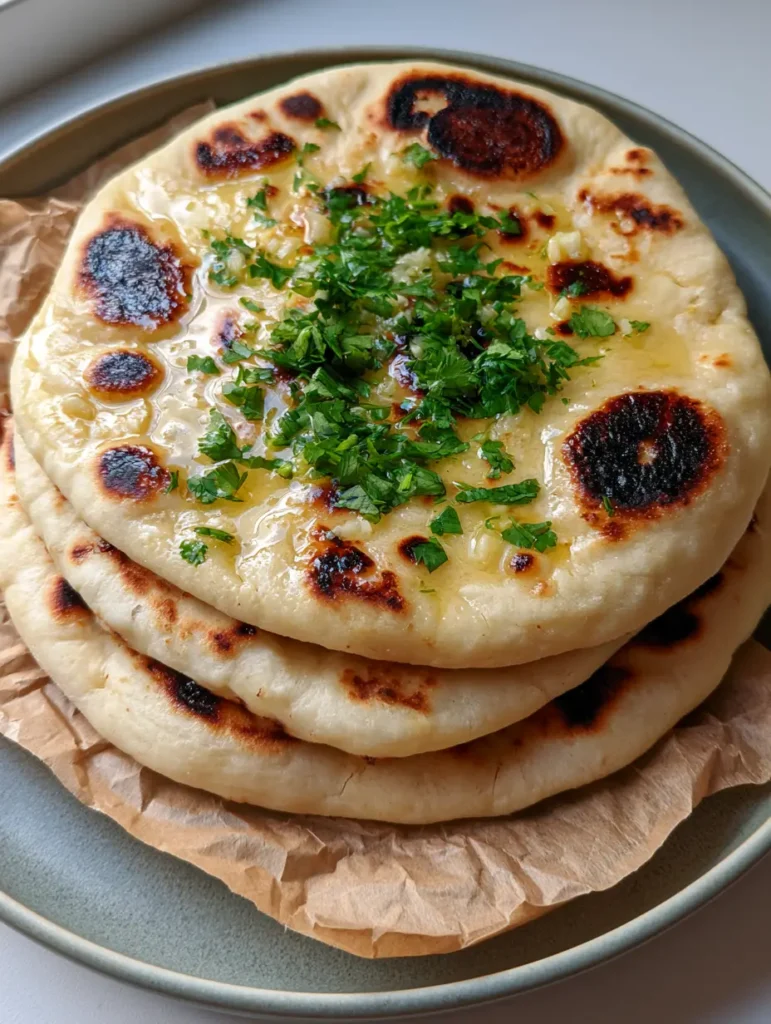
Mastering the perfect Vegan Gluten-Free Naan is often considered the “holy grail” of plant-based baking. If you have spent years settling for stiff, cracker-like gluten-free breads, this recipe is designed to change your culinary world forever. We are recreating that iconic, pale cream-colored dough base, punctuated by those distinct dark brown and black charred circular blister marks that define a true restaurant-quality flatbread.
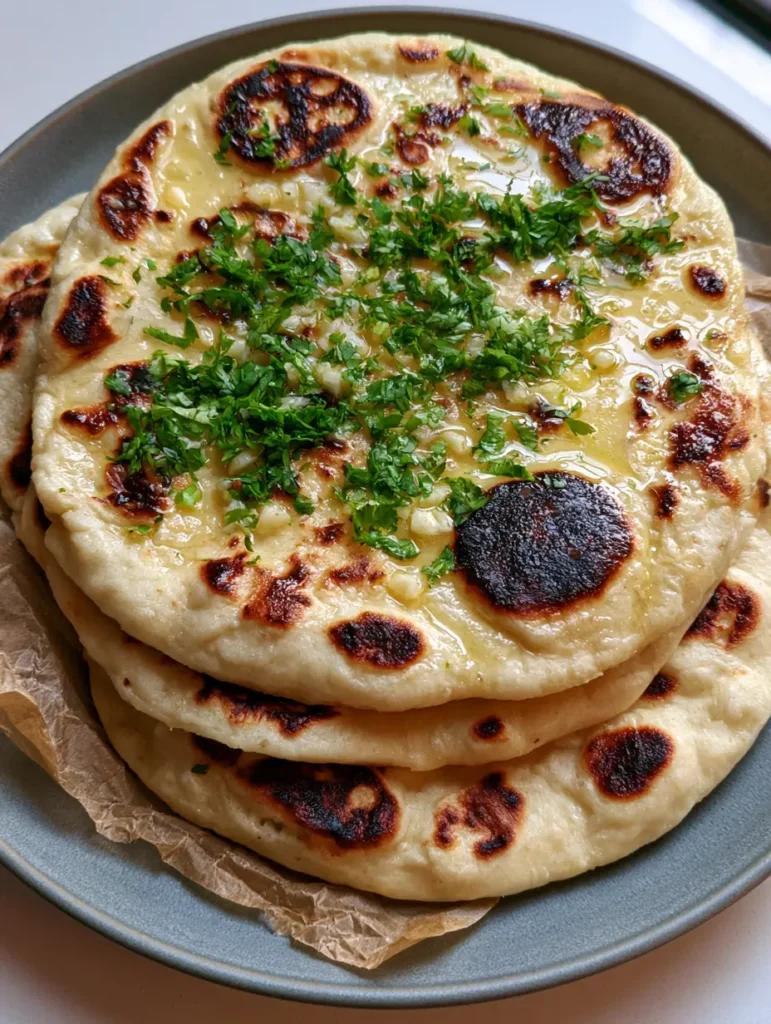
Imagine a stack of three circular homemade naan flatbreads resting on a piece of wrinkled brown parchment paper. The top naan is generously brushed with a glistening layer of melted vegan butter, creating a reflective oily sheen that catches the light. Every bite features a precise scattering of finely chopped vibrant green cilantro leaves and tiny translucent bits of minced garlic, delivering a punch of aromatic flavor that complements any fun family dinner ideas you have planned for the week.
Why This Plant-Based Flatbread Recipe Actually Works
- Structural Integrity: Unlike many crumbly gluten-free recipes, this dough is soft and slightly irregular in shape, allowing it to bend and fold without snapping.
- Authentic Char: Using a high-heat cast iron technique, we achieve the toasted flatbread blisters and blackened spots seen in traditional tandoor ovens.
- Refined Flavor Profile: The combination of vegan yogurt and a hint of sugar creates a complex, fermented taste that mimics traditional dairy-based naan.
- The Glistening Finish: We use a specific garlic-infused vegan butter technique to ensure that signature “reflective oily sheen” on the top naan.
Essential Elements for the Perfect Pliable Dough
To achieve the visual and textural results required for an elite Vegan Gluten-Free Naan, we must select ingredients that provide both lift and elasticity. Gluten-free baking requires “glue” to replace wheat protein, which we achieve here through a combination of psyllium husk and high-quality starch.
Gluten-Free All-Purpose Flour: 3 cups (420g). Use a blend that contains xanthan gum to ensure the edges of the bread are soft and slightly irregular rather than sharp and brittle.
Psyllium Husk Powder: 2 tbsp (18g). This is the secret to a “stretchy” dough; it allows the flatbread to puff up and create those distinct dark brown charred circular blister marks.
Vegan Greek-Style Yogurt: 1/2 cup (120g). The acidity in the yogurt reacts with the leavening agents to create a tender crumb and a pale cream-colored dough base.
Warm Water: 1 cup (240ml). Essential for hydrating the psyllium and activating the yeast; ensure it is between 105°F and 110°F (40°C – 43°C).
Instant Yeast: 2 tsp (7g). Provides the airy pockets necessary for the bread to rise quickly when it hits the hot surface of the skillet.
Organic Cane Sugar: 1 tbsp (12g). This feeds the yeast and aids in the Maillard reaction, helping those charred blisters develop their deep color.
Baking Powder: 1 tsp (5g). A secondary leavener that ensures the naan doesn’t turn out dense or heavy.
Sea Salt: 1 tsp (6g). Crucial for tightening the dough structure and enhancing the buttery garlic notes.
Vegan Butter: 4 tbsp (56g). Melted and used for both the dough and the final glistening brush-on topping.
Fresh Garlic: 3 cloves, minced. These tiny translucent bits of minced garlic provide the aromatic punch seen in our visual blueprint.
Fresh Cilantro: 1/4 cup (10g), finely chopped. The vibrant green cilantro leaves provide the final color contrast against the pale dough.
Professional Tools for Authentic Flatbread Textures
To recreate the handheld smartphone photo aesthetic of a matte gray ceramic plate topped with charred naan, you need the right heat conductivity. A heavy-bottomed cast iron skillet is non-negotiable for achieving those specific toasted flatbread blisters.
You will also need a rolling pin to achieve an even thickness of about 1/4 inch (6mm). A pastry brush is essential for applying the melted vegan butter to create that reflective oily sheen that makes the bread look so appetizing. Finally, keep a piece of wrinkled brown parchment paper nearby for the authentic, rustic presentation.
Step-by-Step Evolution of the Vegan Gluten-Free Naan
Activating the Yeast and Psyllium Gel
In a small glass bowl, combine the warm water, sugar, and instant yeast. Let it sit for about 5-10 minutes until a thick foam forms on the surface, indicating the yeast is alive and active.
Whisk in the psyllium husk powder and let the mixture sit for another 3 minutes. It will transform into a thick, gel-like consistency; this “gel” is what gives our Vegan Gluten-Free Naan its incredible flexibility and prevents it from crumbling.
Mixing the Pale Cream-Colored Dough
In a large mixing bowl, whisk together the gluten-free flour, baking powder, and sea salt. Create a well in the center and pour in the psyllium-yeast gel, the vegan yogurt, and 1 tablespoon (15ml) of melted vegan butter.
Using a sturdy spatula, mix until a shaggy dough forms. Turn the dough out onto a surface lightly dusted with gluten-free flour and knead for 2-3 minutes. The dough should feel soft, slightly tacky, but not stick to your hands, maintaining that beautiful pale cream color.
The Resting and Shaping Phase
Place the dough in a lightly oiled bowl, cover with a damp cloth, and let it rest in a warm spot for 45-60 minutes. While it won’t double in size like wheat dough, it will become significantly fluffier and easier to work with.
Divide the dough into 6 equal portions. Roll each piece into a ball, then use a rolling pin to flatten it into a circular shape. Do not worry about perfect symmetry; the edges of the bread should be soft and slightly irregular for a rustic, homemade look.
Searing the Toasted Flatbread Blisters
Heat your cast iron skillet over medium-high heat until it is nearly smoking. Do not add oil to the pan; a dry, hot surface is key to creating the distinct dark brown and black charred circular blister marks.
Place one dough circle into the skillet. Within 30-60 seconds, you should see the dough begin to puff and bubble. Flip the naan and press down gently with a spatula. Cook for another 30-45 seconds until the underside is charred and the bread is cooked through.
The Garlic Butter Finish
While the naan is still hot, prepare the topping. Mix the remaining melted vegan butter with the minced garlic. Brush a generous layer over the top naan, ensuring it creates a glistening, reflective oily sheen.
Immediately sprinkle with the finely chopped vibrant green cilantro leaves. The residual heat from the bread will slightly soften the garlic bits, making them look like tiny translucent gems embedded in the herbs. Stack the naan in groups of three on wrinkled parchment paper for the final presentation.
Expert Tips for Success
- Heat Control: If your naan is browning too fast without cooking through, drop the heat slightly. The goal is a pale base with localized black char marks.
- Flour Choice: Avoid using bean-based gluten-free flours (like garbanzo) as they will alter the “pale cream” color and add an earthy aftertaste.
- The Roll: Don’t roll the dough too thin. A 1/4 inch (6mm) thickness ensures the interior stays soft while the exterior gets that toasted crunch.
- Moisture Balance: If the dough feels too dry during kneading, add 1 tablespoon of warm water at a time until it reaches a pliable, soft consistency.
Maintaining Freshness: Storage and Reheating
Vegan Gluten-Free Naan is best enjoyed fresh from the skillet while the butter is still glistening. However, you can store leftovers in an airtight container at room temperature for up to 2 days or in the refrigerator for 5 days.
To reheat, avoid the microwave, which can make gluten-free bread gummy. Instead, place the naan back in a dry skillet over medium heat for 1 minute per side, or wrap in foil and bake at 350°F (175°C) until warm. Re-apply a small amount of vegan butter to restore the oily sheen before serving.
Perfect Pairings for Your Homemade Naan
This garlic-infused flatbread is a versatile sidekick for a variety of global flavors. It is the natural companion for a spicy gochujang chicken or a classic, savory homemade chicken shawarma.
If you are looking for a more comforting, fusion-style meal, try serving these warm breads alongside a bowl of creamy garlic butter tortellini to soak up every last drop of sauce. The charred edges of the naan provide a beautiful texture contrast to softer, saucy dishes.
Frequently Asked Questions
It is best to freeze the cooked naan. Wrap each individual naan in parchment paper, place in a freezer bag, and reheat in a skillet for that fresh-made taste.
While you can use extra baking powder, yeast is essential for the authentic pale cream-colored dough base and those light, airy pockets that create the charred blisters.
Yes, for a vegan and gluten-free version, psyllium husk act as the gluten replacement. It allows the bread to be ‘soft and slightly irregular’ rather than stiff.
A dry, preheated cast iron skillet on medium-high heat is the best tool for home cooks to achieve those distinct dark brown and black circular blister marks.
Cracking usually indicates a lack of moisture or binder. Ensure you are using the psyllium husk gel as described and that your flour blend contains xanthan gum to provide the necessary elasticity.
The Ultimate Vegan Gluten-Free Naan Recipe
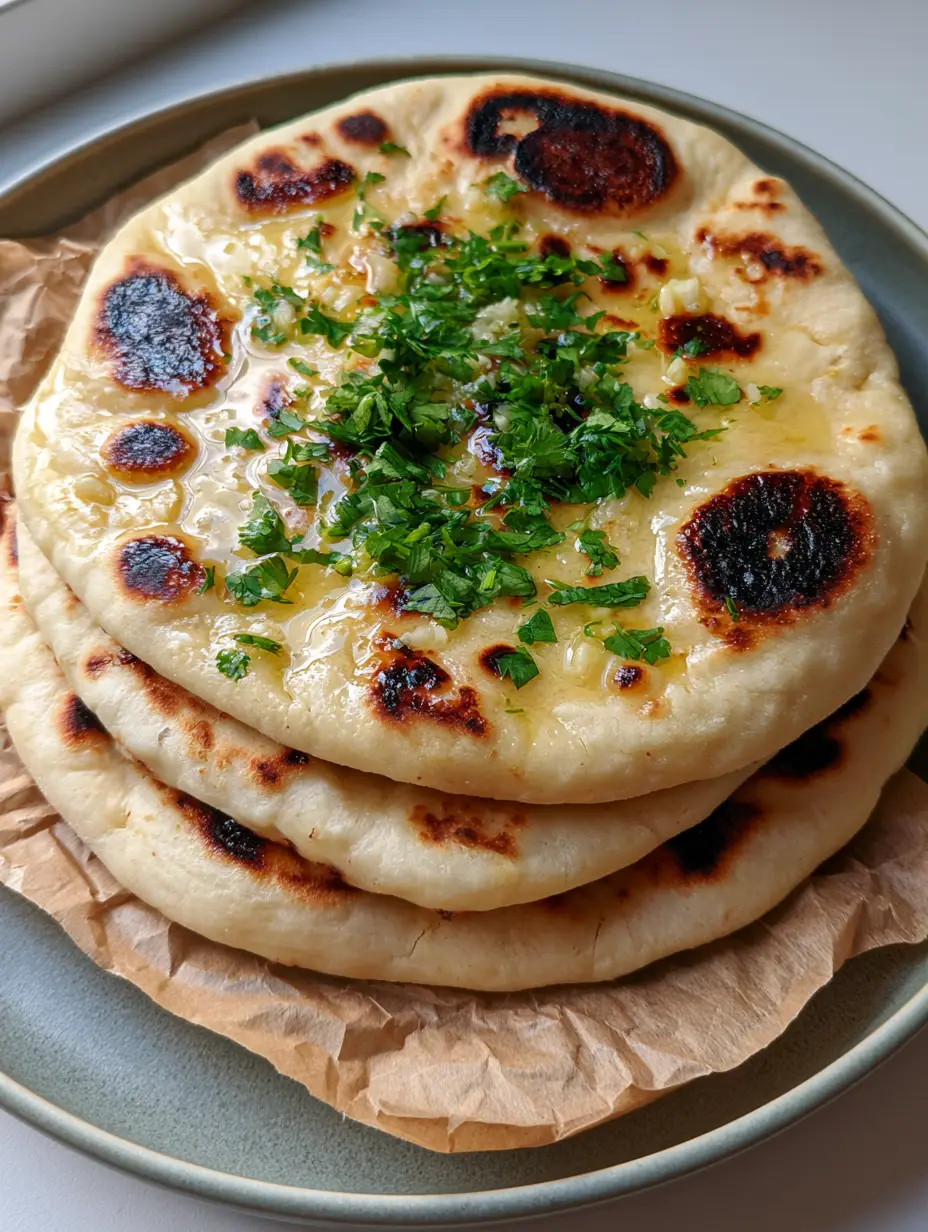
Vegan Gluten-Free Naan: The Ultimate Soft and Garlic-Buttery Flatbread
Ingredients
Equipment
Method
- Combine warm water, sugar, and yeast. Let foam for 10 minutes, then whisk in psyllium husk powder and sit for 3 minutes until a gel forms.
- Whisk dry ingredients. Add yeast gel, yogurt, and 1 tbsp butter. Knead for 2-3 minutes until a soft, pale cream-colored dough forms.
- Place in an oiled bowl, cover, and rest in a warm spot for 45-60 minutes.
- Divide dough into 6 balls and roll into 1/4 inch thick circles with slightly irregular edges.
- Cook in a hot, dry cast iron skillet for 30-60 seconds per side until dark brown and black charred circular blister marks appear.
- Brush with melted garlic butter to create a glistening sheen and sprinkle with fresh cilantro.
Notes
Ensure your gluten-free flour blend has xanthan gum for the softest texture.
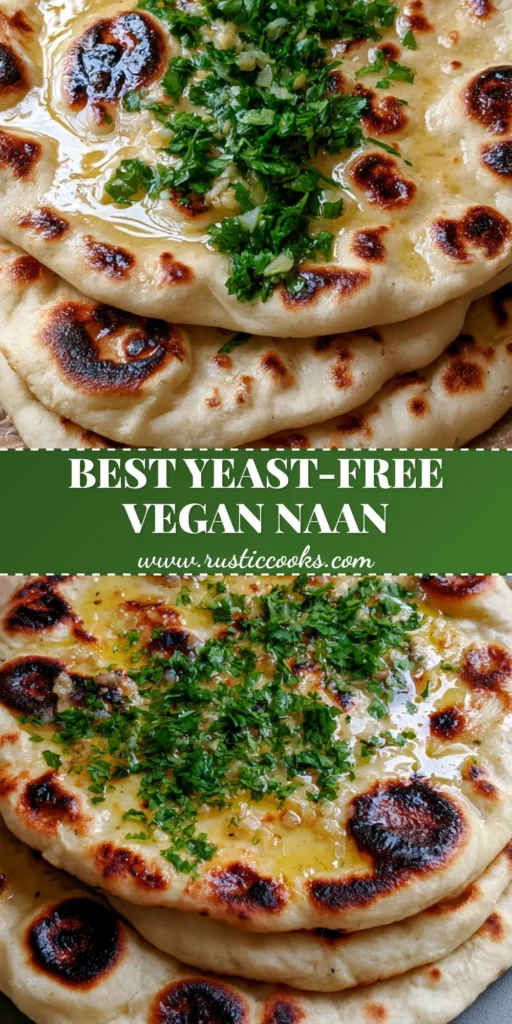
Bring the Indian Restaurant Experience Home
There is nothing quite like the smell of toasted garlic and fresh cilantro filling your kitchen. This Vegan Gluten-Free Naan proves that dietary restrictions don’t have to mean a sacrifice in texture or flavor. Whether you are stacking them high on a matte gray ceramic plate or using them to scoop up your favorite curry, these flatbreads are guaranteed to be a hit.
We would love to see your results! If you make this recipe, please leave a comment below and share your photos with us. Don’t forget to pin this recipe to your favorite boards on Pinterest so you can find it whenever the craving for soft, charred flatbread hits!