When you think of comfort food, few things evoke the rustic charm of Pennsylvania Dutch country like a perfectly fried batch of Amish Onion Fritters. These aren’t your typical heavy, doughy blobs; they are a masterclass in texture, featuring paper-thin, translucent onions bound together by a lacy, golden batter that shatters with every bite. If you’ve ever walked through a farmer’s market and caught the scent of sweet onions hitting hot oil, you know exactly why this recipe is a timeless treasure.
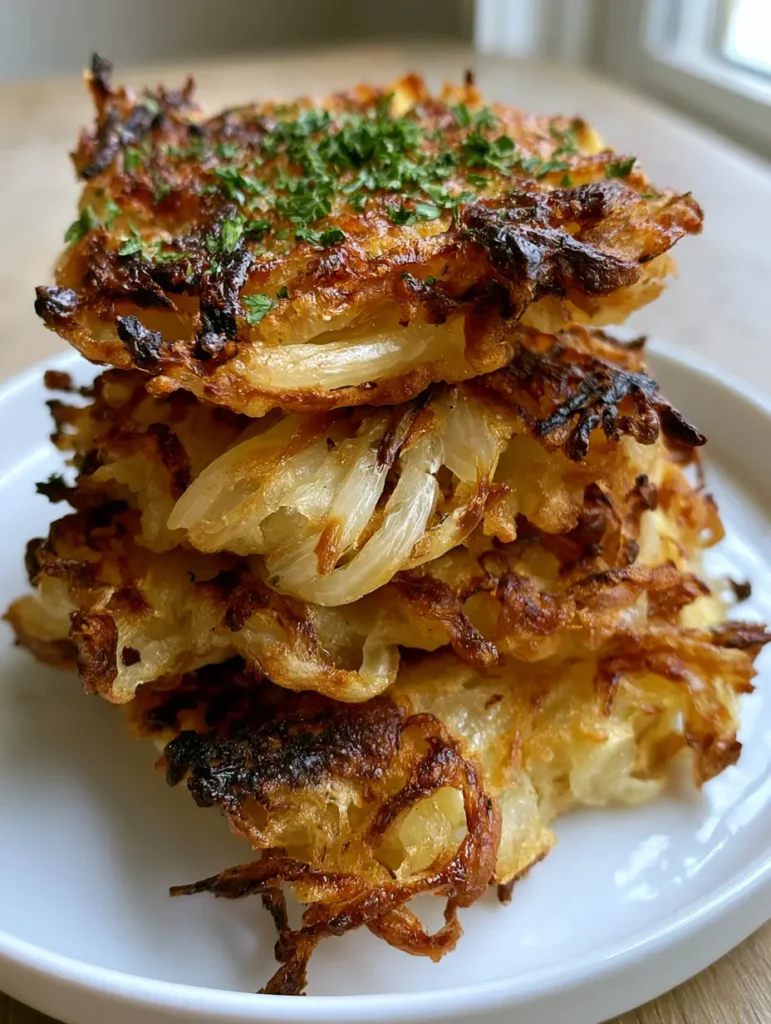
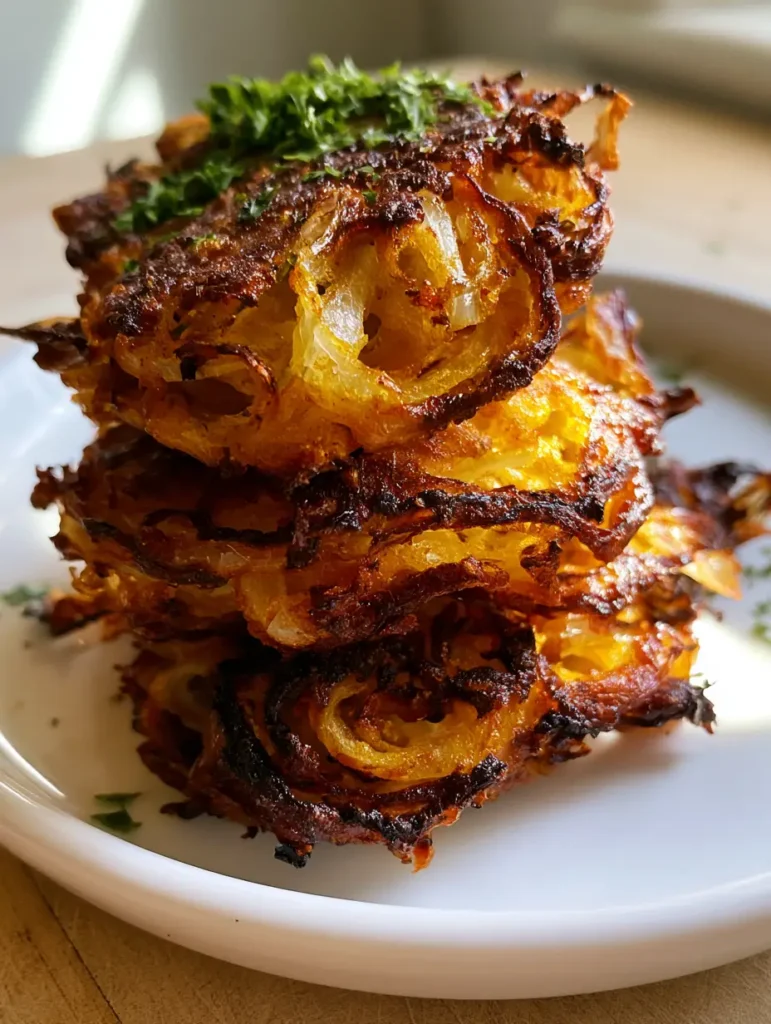
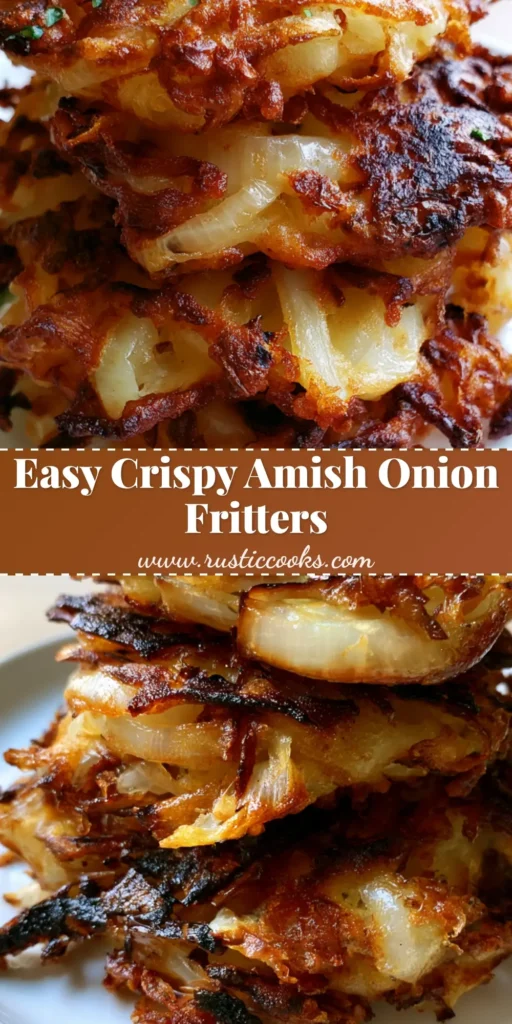
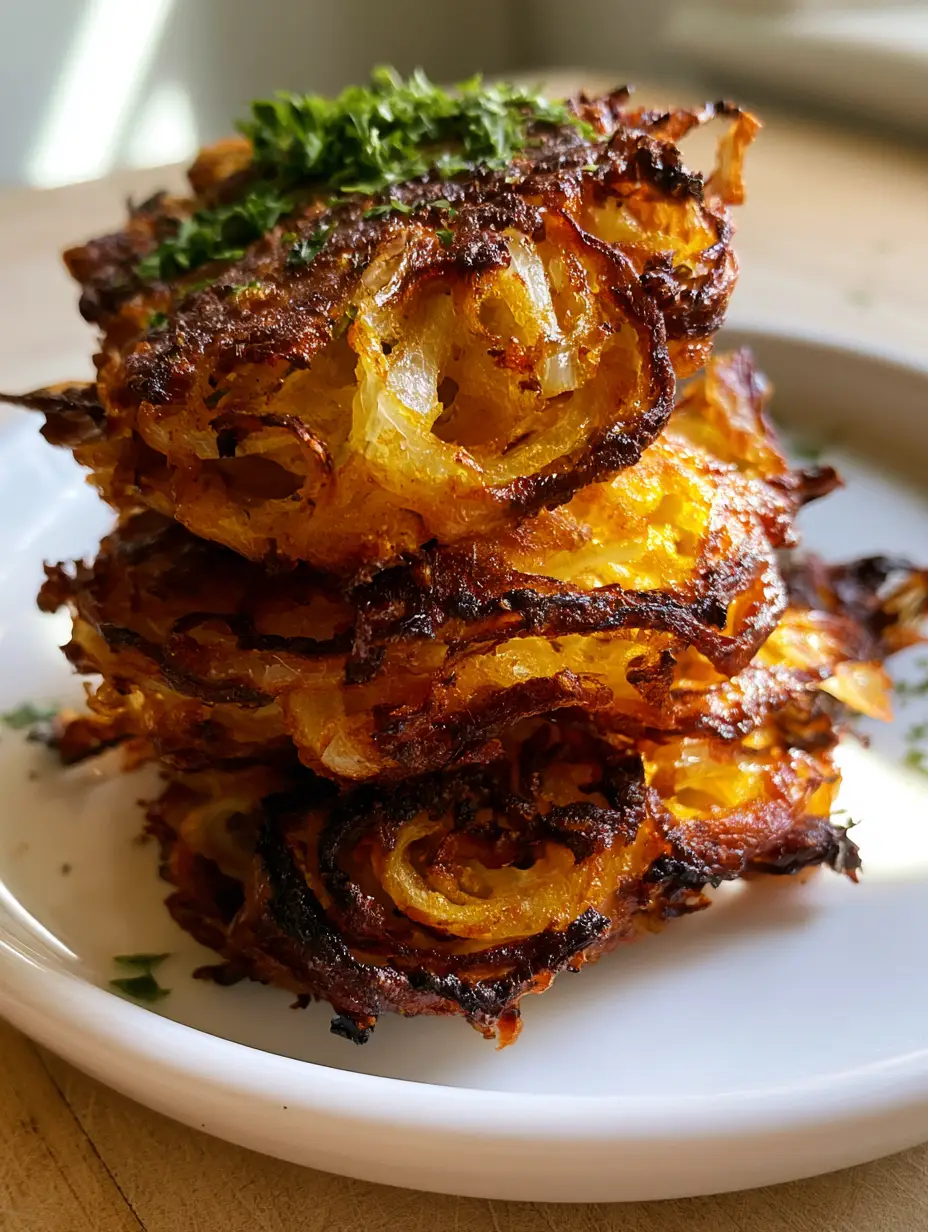
The beauty of the Amish Onion Fritters lies in their simplicity and visual appeal. Imagine a stack of three dark-golden discs, their edges charred to a savory crisp, resting on a clean white plate. The contrast between the vibrant green of freshly chopped parsley and the glistening, slightly oily sheen of the fritter is enough to make anyone’s mouth water. Today, we are going to break down the culinary science and traditional techniques required to achieve that elusive, handheld perfection in your own kitchen.
The Anatomy of a Perfect Fritter: Why This Recipe Works
- Textural Contrast: The combination of a high-heat fry and a leavened batter creates a crunchy exterior that gives way to a tender, steaming onion interior.
- Visual Transparency: By slicing the onions paper-thin, they become translucent during the frying process, creating the “lacy” effect seen in professional culinary photography.
- Maillard Excellence: We focus on achieving those charred, dark-golden edges which provide a complex, slightly bitter counterpoint to the sweetness of the yellow onions.
- Foundational Simplicity: Using basic pantry staples allows the natural flavor of the onions to take center stage without being masked by heavy spices.
The Pantry Staples Behind These Lacy Amish Onion Fritters
To achieve the specific visual and structural results of authentic Amish Onion Fritters, every ingredient serves a dual purpose: flavor and architecture. Here is what you need and why it matters.
Yellow Onions (2 large): We use yellow onions for their high sugar content, which caramelizes beautifully under heat. When sliced thinly, they provide the structural framework for the fritter.
All-Purpose Flour (1 cup / 125g): This acts as the primary binding agent. It coats the moisture-rich onions to ensure the batter sticks rather than sliding off during the fry.
Baking Powder (1 tsp / 5g): This is an “invisible” essential. It creates tiny air pockets in the batter, leading to that signature lacy, light texture rather than a dense, heavy puck.
Whole Milk (3/4 cup / 180ml): The proteins in milk help with the browning process (the Maillard reaction), contributing to the deep golden-brown color described in our visual blueprint.
Granulated Sugar (1 tbsp / 12g): A small amount of sugar doesn’t make these sweet; instead, it accelerates the charring on the edges, giving you those sought-after dark-golden bits.
Vegetable Oil (for frying): A neutral oil with a high smoke point is critical. It allows us to reach the 365°F (185°C) needed for a crisp, non-greasy finish.
Fresh Parsley (2 tbsp / 5g): Finely chopped parsley isn’t just a garnish; it adds a necessary hit of brightness and “herbaceousness” to cut through the richness of the fried batter.
Kosher Salt and Black Pepper: Essential for drawing out the onion’s natural juices and seasoning the flour-based batter from within.
Essential Equipment for Fritter Success
While Amish cooking is rooted in tradition, using the right modern tools can help you achieve professional consistency. To get those thin onions, a mandoline slicer is highly recommended. It ensures every slice is uniform, which leads to even cooking and that beautiful translucent appearance.
A heavy-bottomed cast-iron skillet or a stainless steel pan is vital for heat retention. These pans prevent the oil temperature from dropping too low when the batter hits the surface, which is the secret to avoiding soggy fritters. Lastly, a wire cooling rack is superior to paper towels for draining, as it allows air to circulate, keeping the bottom of your Amish Onion Fritters just as crunchy as the top.
The Art of the Perfect Fry: Step-by-Step Guide
Prepping the Onions for Translucency
Start by peeling your yellow onions and slicing them into extremely thin rounds or half-moons. You want them thin enough that you could almost see through them. Place them in a large bowl and toss them with a pinch of salt. Let them sit for 5 minutes; this draws out just enough moisture to help the flour adhere later.
Mixing the Lacy Batter
In a separate bowl, whisk together your flour, sugar, baking powder, salt, and pepper. Slowly pour in the milk and a lightly beaten egg. The consistency should be similar to a thick pancake batter. It needs to be fluid enough to spread out in the pan (creating those lacy edges) but thick enough to hold the onions together in a stack of three.
The Marriage of Onion and Dough
Fold your sliced onions into the batter gently. Ensure every single strand of onion is coated. You should see more onions than batter—the batter is merely the “glue” that connects the translucent onion layers. This is the key to achieving the look of the Amish Onion Fritters where the vegetables are clearly visible through the crust.
Achieving the Golden-Brown Char
Heat about 1/2 inch (1.25cm) of oil in your skillet until it reaches 365°F (185°C). Drop a small bit of batter in; if it sizzles and rises immediately, you’re ready. Use a large spoon to scoop the onion mixture into the oil, pressing down slightly to flatten them into discs. Fry for 2-3 minutes per side until you see the edges turning a dark, charred golden-brown.
The Final Flourish
Remove the fritters and place them on your wire rack. Immediately sprinkle with a bit more salt while the oil is still wet on the surface. Finally, scatter your finely chopped fresh green parsley over the top. The residual heat will slightly wake up the parsley’s aroma without wilting it completely.
Expert Tips for Fritter Perfection
- Temperature Control: If your oil is too cold, the fritters will absorb grease and become heavy. If it’s too hot, the outside will burn before the onions inside are tender. Use a clip-on thermometer.
- Don’t Overcrowd: Fry only 3 or 4 at a time. Overcrowding the pan drops the oil temperature and prevents the edges from getting that “shattered” crispy texture.
- The Flour Dusting: If your onions are particularly juicy, toss them in a tablespoon of dry flour before adding them to the wet batter. This creates a “primer” that prevents the batter from slipping off.
- Freshness Matters: Use a fresh bottle of vegetable oil. Old oil can impart a “fishy” or heavy taste that masks the sweetness of the onions.
The Best Ways to Store and Reheat
Amish Onion Fritters are best enjoyed immediately while the steam is still trapped inside the crispy shell. However, if you have leftovers, store them in a single layer in an airtight container for up to 2 days. To reheat, avoid the microwave at all costs! Instead, place them in a 375°F (190°C) oven or air fryer for 3-5 minutes until the oil sizzles again. This will restore the crunch and the oily sheen that makes them so appetizing.
What to Serve With Amish Onion Fritters
These fritters are incredibly versatile. In a traditional setting, they might be served alongside a hearty meat dish. They pair beautifully with the tangy profile of fried chicken sliders, providing a crunchy side that rivals standard fries. If you’re looking for a dip, a side of cowboy butter offers a garlic-heavy richness that complements the sweet onions perfectly.
For a lighter lunch, serve these fritters alongside an authentic Greek salad. The acidity of the vinaigrette and the saltiness of the feta provide a brilliant contrast to the fried batter. If you’re hosting a backyard BBQ, these make a great appetizer followed by some pulled pork sliders.
Frequently Asked Questions
While you can reheat them in an air fryer, cooking the raw wet batter in an air fryer is difficult. For the authentic lacy, charred edges, traditional shallow frying in oil is highly recommended.
While yellow onions are traditional for their high sugar content and caramelization, red onions can be used. However, they may change the color of the batter slightly and offer a sharper flavor.
The key is slicing the onions as thin as possible, ideally using a mandoline. Very thin slices cook through quickly, becoming soft and clear while the surrounding batter turns golden brown.
The secret lies in the oil temperature and the leavening agent. Ensure your oil is at 365°F (185°C) so the batter crisps instantly, and use baking powder to create a light, airy, lacy texture.
This usually happens if the onions were too wet or there wasn’t enough flour in the batter. Make sure to pat your sliced onions dry and ensure the batter is thick enough to coat them thoroughly.
The Ultimate Amish Onion Fritters Recipe
Amish Onion Fritters: The Crispy, Golden Secret to Old-Fashioned Comfort
Ingredients
Equipment
Method
- In a medium bowl, combine the flour, sugar, baking powder, salt, and pepper.
- Whisk in the milk and egg until a smooth, thick batter forms.
- Gently fold the thinly sliced onions into the batter until every slice is well-coated.
- Heat oil in a skillet to 365°F. Drop mounds of the onion mixture into the oil. Fry for 2-3 minutes per side until dark golden-brown with charred edges.
- Remove to a wire rack. Sprinkle with salt and garnish with fresh chopped parsley immediately.
Notes
Use a mandoline for the thinnest, most translucent onion slices.
Closing & Call to Action
These Amish Onion Fritters are a testament to the fact that you don’t need expensive ingredients to create a world-class dish. With just a few onions and some basic pantry staples, you can create a side dish that is visually stunning and incredibly satisfying. The secret is all in the thinness of the onions and the temperature of your oil. Once you master the lacy edge, you’ll never go back to standard onion rings again!
Did you try this recipe? We’d love to hear how your fritters turned out! Leave a comment below or share your crispy creations with us on Pinterest. For more rustic, home-style inspiration, be sure to sign up for our newsletter!