The universe has always held a certain mystery, but bringing the celestial wonders of the galaxy into your kitchen creates an experience unlike any other. These Glow In The Dark Moon Rocks are not just a treat; they are a multi-sensory culinary experiment designed to mimic the rugged, chalky, and vibrant aesthetics of lunar debris. Whether you are hosting a space-themed gala or looking for a show-stopping “science-meets-snack” project, these rocks deliver high-impact visual drama.
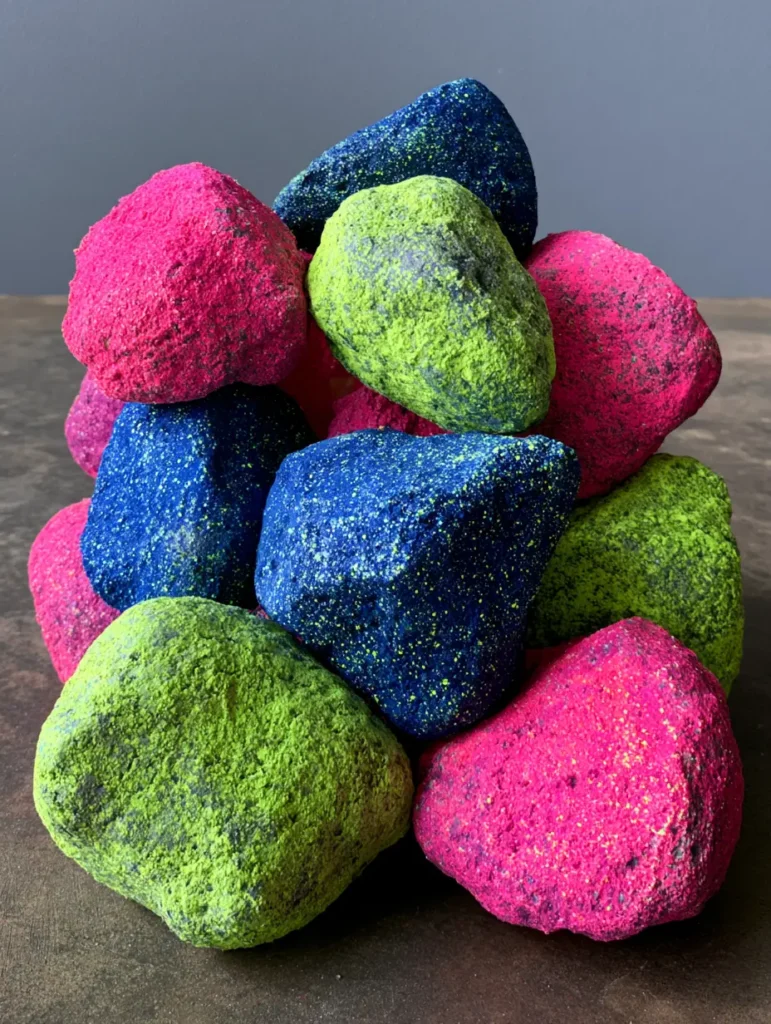
Capturing the exact look of an irregular, textured river stone requires more than just sugar; it requires a deep understanding of edible structural engineering. By utilizing the principles of phosphorescence and matte-finish coatings, we can transform simple ingredients into luminous geological wonders. The result is a gritty, porous surface that looks exactly like a handheld smartphone photo taken in the soft daylight of another planet.
In this guide, we will explore the precise techniques needed to achieve those vibrant shades of hot pink, electric lime green, and cosmic blue. We will also master the art of the luminescent speckle, ensuring your Glow In The Dark Moon Rocks emit a soft, otherworldly glow when the lights go down. This is culinary forensics at its finest, bridging the gap between raw geology and edible art.
Why These Luminous Galactic Stones Are a Must-Make
- Realistic Geological Texture: We use a specific gritty base to mimic the porous, irregular surface of textured river stones.
- Tri-Color Neon Vibrancy: The combination of neon pink, electric lime, and cosmic blue creates a high-contrast palette that pops in any light.
- Authentic Matte Finish: Unlike glossy candies, these feature a chalky, matte finish coating that looks professionally forged in the cosmos.
- True Phosphorescence: Using food-safe glowing agents, these rocks actually emit a soft glow, making them the highlight of any dark-room display.
- Interactive Culinary Science: This recipe serves as a bridge between a kitchen project and a lightning in a jar experiment, perfect for curious minds.
The Essential Components for Your Galactic Glow In The Dark Moon Rocks
Creating the base of these stones requires a “dough” that is both moldable and structurally sound. We use 2 cups (240g) of almond flour combined with 1 cup (200g) of granulated sugar to provide that essential gritty, porous internal structure. The almond flour offers a natural variation in particle size, which is key to mimicking the irregular surface of river rocks.
For the “invisible” structural integrity, 2 large egg whites (60ml) act as the primary binding agent. This protein structure sets firmly, ensuring the rocks don’t lose their irregular shape during the drying process. A pinch of sea salt (2g) is added to enhance the almond flavor while providing a tiny crystalline glint to the surface texture.
The glow comes from a specialized edible paint mixture. You will need 1 tbsp (15ml) of tonic water (containing quinine) or a crushed B2 vitamin (riboflavin) dissolved in water. Quinine is the secret to that cosmic blue glow, while riboflavin provides the electric lime green phosphorescence under UV light. For the neon pink, we utilize high-pigment food gels combined with a matte-drying agent like titanium dioxide.
To achieve the final matte finish coating, we use 1/4 cup (30g) of cornstarch mixed with 1/4 cup (30g) of confectioners’ sugar. This mixture is dusted over the “painted” rocks to kill any synthetic shine, resulting in a chalky, realistic stone appearance. Finally, 1 tsp (5ml) of edible silver or neon luster dust creates those tiny luminescent speckles that catch the light.
Advanced Tools for Space-Age Confections
To craft the perfect Glow In The Dark Moon Rocks, you need tools that allow for precision and “organic” chaos. A fine-mist spray bottle is essential for applying the base glow liquid without saturating the dough. You will also need a set of stiff-bristled food-grade brushes to achieve the flicking motion required for the luminescent speckles.
A blacklight (UV light) is a non-negotiable piece of equipment for this project. While the rocks look stunning in daylight, the blacklight is what activates the quinine and riboflavin to create the phosphorescent effect. Lastly, a silicone mat or parchment paper is necessary to prevent these “stones” from sticking to your work surface while the matte coating sets.
Forging the Moon Rocks: A Step-by-Step Atmospheric Entry
Phase 1: Sculpting the Irregular River Stone Base
In a large bowl, combine the almond flour, granulated sugar, and salt. Gradually fold in the egg whites until a thick, gritty paste forms. It should feel like damp sand—pliable enough to hold a shape but textured enough to look porous.
Pinch off irregular sections of the dough, ranging from 1 inch (2.5cm) to 2 inches (5cm) in diameter. Do not roll them into perfect spheres; instead, press them between your palms to create flat edges and jagged corners. This mimicry of river rocks is essential for the final visual accuracy of your Glow In The Dark Moon Rocks.
Phase 2: Applying the Neon Phosphorescent Paint Layers
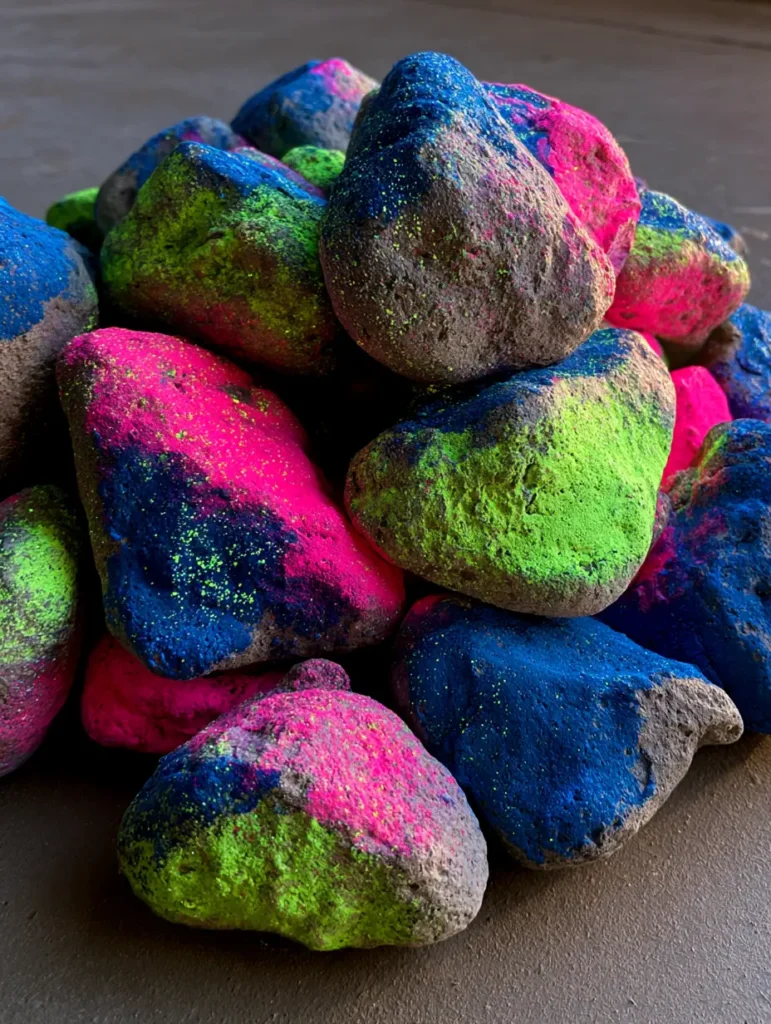
Divide your “stones” into three groups for the three core colors: neon pink, electric lime, and cosmic blue. Mix your food-safe glow liquids (the tonic water or riboflavin mixture) with the neon food gels to create a thick, paint-like consistency. Using your food brushes, dab the paint onto the rocks rather than brushing it on in smooth strokes.
This dabbing technique creates a “thick, matte coating” as described in our visual blueprint. Ensure the paint gets into the crevices of the gritty dough. The electric lime should look radioactive, while the cosmic blue should have a deep, oceanic depth. The pink should be vibrant and hot, providing a stark contrast to the dark surface you will eventually serve them on.
Phase 3: Creating the Matte Finish and Luminescent Speckles
While the paint is still slightly tacky, sift the cornstarch and confectioners’ sugar mixture over the rocks. This creates the “chalky paint finish” that characterizes a realistic moon rock. Blow off the excess powder to reveal the vibrant colors underneath, now softened by a beautiful matte layer.
For the final touch, dip a clean brush into your concentrated glow liquid (pure tonic water for blue or riboflavin for green). Flick the bristles over the rocks to create “tiny luminescent speckles.” These spots will glow more intensely than the base coat, adding a layer of cosmic depth to your Glow In The Dark Moon Rocks.
Expert Tips for a Professional Geological Result
- Avoid Over-Mixing: If you over-work the dough, the almond oils will release, creating a greasy surface that won’t hold the matte coating.
- The “Double Dust” Technique: For a truly chalky look, dust the rocks with cornstarch once before painting and once after. This builds a porous layer that the paint can “sink” into.
- Light Intensity: For the brightest glow, use tonic water that has been reduced by half on the stovetop. This concentrates the quinine, making the cosmic blue incredibly vibrant.
- Drying Time: Allow the rocks to air-dry for at least 4 hours. This sets the egg white binder and ensures the matte coating doesn’t smudge when handled.
Preserving Your Cosmic Collection
These Glow In The Dark Moon Rocks should be stored in a cool, dry place. Because of the cornstarch coating, moisture is the enemy; humidity will turn the matte finish into a sticky glaze. Place them in an airtight container with a small packet of food-safe desiccant if possible.
They will remain visually perfect for 3-5 days. While they are technically edible, they are quite firm and sweet, similar to a hard marzipan or a sturdy macaroon. If you are using them purely for decoration, they can last for weeks if kept away from direct sunlight, which can fade the neon pigments.
Pairing Your Moon Rocks for a Stellar Feast
When serving these Glow In The Dark Moon Rocks, placement is everything. Pile them naturally on a neutral, dark surface like slate or dark wood to emphasize their vibrant colors. They work beautifully as a centerpiece for a spread featuring fried chicken sliders or even a themed grilled shrimp bowl.
If you are leaning into a Mediterranean theme, these rocks provide a whimsical contrast to an authentic greek salad or a rustic caprese-galette. The juxtaposition of natural, earthy foods with these “alien” stones creates a memorable dining experience that your guests will be talking about for lightyears.
Frequently Asked Questions About Galactic Treats
Yes, they are made from almond flour, sugar, egg whites, and food-grade pigments. However, they are quite firm and sweet, designed more for their visual impact than as a standard dessert.
Absolutely! You can make them 2-3 days in advance. Just be sure to store them in a very dry, airtight container to prevent the matte finish from becoming sticky due to moisture.
Yes, while the neon colors are vibrant in daylight, the phosphorescent ‘glow’ effect requires a UV blacklight to activate the quinine and riboflavin.
The secret is sifting a 1:1 mixture of cornstarch and confectioners’ sugar over the rocks while the neon paint is still tacky. This removes the shine and creates a realistic stone texture.
The glow is achieved using food-safe phosphorescent agents: tonic water (containing quinine) for a cosmic blue glow and Vitamin B2 (riboflavin) for an electric lime green glow. These glow brightly under a UV blacklight.
The Final Recipe for Glow In The Dark Moon Rocks
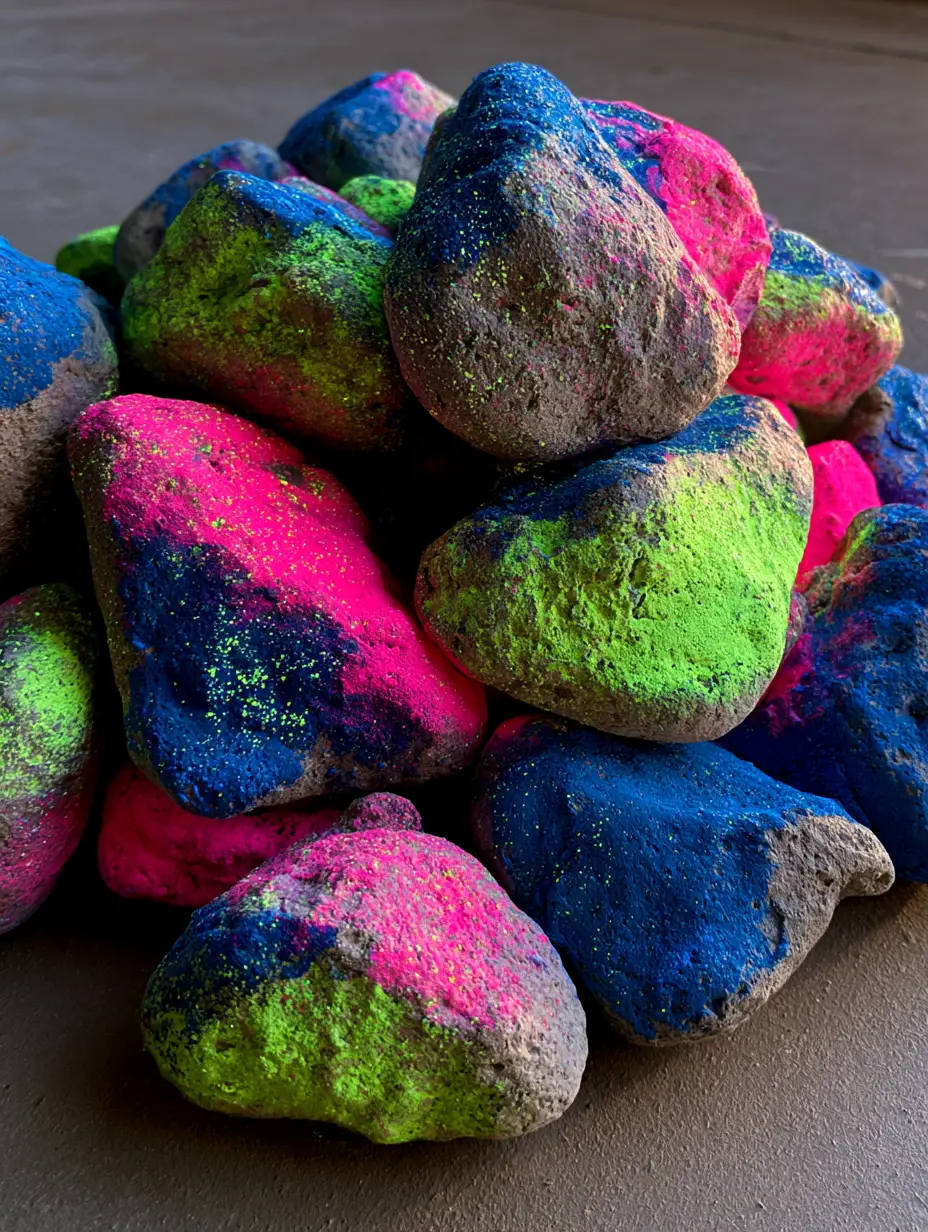
Glow In The Dark Moon Rocks: The Ultimate Cosmic Edible Art
Ingredients
Equipment
Method
- Combine almond flour, sugar, and egg whites in a bowl until a gritty, moldable paste forms.
- Hand-sculpt irregular shapes to mimic river stones, ensuring no two look exactly alike.
- Mix your glow liquids with neon gels and dab onto the stones using a stiff brush for a thick, matte look.
- Sift cornstarch over the damp paint to create a chalky, realistic finish.
- Flick concentrated glow liquid onto the rocks to create tiny luminescent speckles.
Notes
Ensure the almond flour is not too fine to maintain the 'gritty' river rock texture.
Launch Your Own Galactic Kitchen Experiment
Creating these Glow In The Dark Moon Rocks is a journey into the intersection of art and science. By focusing on the gritty textures and the specific phosphorescent cues, you can create a centerpiece that is truly out of this world. We invite you to share your cosmic creations and tag us in your photos!
Don’t forget to follow us on Pinterest for more visually stunning culinary projects. Whether you’re making these for a party or a personal experiment, the glow of success is just one batch away. Leave a comment below and let us know—which color moon rock is your favorite?